• Skip to main content
  • Skip to primary sidebar
  • Skip to footer

LDSPMA

Empowering Latter-day Saints to spread light and truth by connecting them at the intersection of faith, creativity, and professional skill

  • Conference
    • The 2026 LDSPMA Annual Conference
    • Conference Registration
    • 2026 LDSPMA Anthology Submissions
    • Theme Contests
    • Exhibit, Advertise, or Sell at the LDSPMA Conference
    • Sponsor
    • FAQs
    • Volunteer at the LDSPMA Conference
    • Past Conferences
      • 2025 Conference
        • Sessions
        • Workshops
        • Awards Gala
        • Internship Fair
        • LDSPMA’s Got (Secret) Talent!
      • 2024 Conference
        • Sessions
        • Workshops
        • ZIFF Networking Dinner
        • Schedule
  • Membership
    • Email Sign Up (Free)
    • LDSPMA NextGen
    • University Chapters
    • Facebook Group
  • Programs
    • Digital Summit
    • Mentoring Program
    • Monthly Zoom Discussions (Free)
    • Master Classes (2026)
  • Podcast
    • Watch
    • Listen
      • Listen on Apple Podcasts
      • Listen on Spotify
      • Listen on Buzzsprout
    • Called to Create Conversations
  • Articles
    • All Articles
    • Faith & Mindset
      • Gospel Principles
      • Creativity
      • Productivity
    • Craft Skills
      • Writing
      • Media, Film & Theater
      • Podcasting & Speaking
      • Music
      • Fine Art
    • Professional Skills
      • Editing
      • Publishing
      • Business
      • Cultural Diversity
      • Marketing
  • Awards
    • 2026 Award Nominations
    • Praiseworthy Awards
    • Spark Awards
    • Lifetime Achievement Awards
    • Past Award Winners
    • Apply to Be an Awards Judge
  • About
    • Mission
      • LDSPMA in the Media
      • Success Stories
      • Viewpoint on LDSPMA
    • LDSPMA Leadership
    • Volunteers
      • Volunteer Year-Round
      • Volunteer at the LDSPMA Conference
      • Apply to Be a Presenter
      • Apply to Be an Awards Judge
      • Resources for Current Volunteers
    • Policies
    • Contact US
  • Support LDSPMA
    • Donate
    • Volunteer
    • Sponsor

Writing

Writing: A Tool to Process Grief

May 18, 2026 By LDSPMA Leave a Comment

Psychologists often recommend keeping a journal as a way to process thoughts and feelings, creating an outlet that can be shared or kept private. There’s something healing about pouring emotions onto a page. Sometimes this exercise is sufficient to help people process their feelings without any other therapy. At times, it aids the therapy they do undergo by helping them examine their deeper thoughts.

I’ve known all about that for years, but I didn’t realize writing fiction is also an excellent way to explore what I’ve been through.

For example, my parents divorced when I was a teenager. At the time, I chose to bury my feelings rather than work through them because my mother was relying on me for emotional support, and I believed I needed to stay strong and positive for her. Years later, I realized there were things holding me back. I knew it was time to revisit those feelings and give them a voice. I did so by writing a book titled Take My Advice. My main character was actually me. Everything she experienced was something I’d gone through myself. Of course, her story’s plot was fictional because my own life wasn’t exciting enough to write a book about, but everything relating to her parents’ divorce was based on my own thoughts and emotions as a confused and worried teen. Everything I’d wanted to say and everything I’d been afraid to feel ended up in that book. I won’t lie—it was painful, but it helped me understand myself better and recognize things I’d been reluctant to look at before. My feelings of betrayal, abandonment, and insecurity were finally allowed to rise to the surface, freeing me to begin healing from them. (Take My Advice by Tristi Pinkston, 2018.)

Another example came when I was a young mother. My father passed away in 2010, and that was a different kind of grief altogether. I helped coordinate some of his care during his final days, and I spent a lot of time with him then. Because I felt I’d lost him a bit during the divorce—only seeing him once or twice a week—losing him again seemed utterly unfair. I was able to take those feelings and work through my grief by writing a book about a girl who lost her father—this one less autobiographical, but her emotions were still mine. (Turning Pages by Tristi Pinkston, first edition 2012, second edition 2019.)

Although each of my stories contains aspects of myself in one way or another, these two books contain far more of “me” than any others. By having my characters voice something I’ve always wanted to say, I’m able to release some of those pent-up emotions in ways that feel constructive and healing, and that sort of vulnerability makes for a better story because it feels more authentic.

I’ve also found it cathartic to give those characters satisfying endings. I might not have everything figured out myself, but by helping my characters find their answers, I’ve experienced a sense of closure that gives me peace until I can reach that point.

Here are a few things I’ve learned as I took these painful experiences and made them into fiction:

  1. I need to give myself permission to write without restrictions or rules. The first draft is always the messiest because that’s where all the not-so-pretty feelings come out. I allow myself to say anything and everything I’ve been holding back, and it’s both painful and freeing. I don’t edit anything at this point; I just let the words flow until I’ve said everything I want to say.
  1. I’ve had to learn what to leave in and what to take out. A lot of that initial writing wasn’t needed for the book. In fact, much of it wasn’t appropriate to include. I’ve experienced things that were for me alone (such as answers to prayers and personal miracles) that I wouldn’t ever publish. Other things would have exposed me too much and made me even more vulnerable. By being selective about what to incorporate into the story, I can share what feels most valuable without giving too much of myself away. 
  1. I can use my fictional characters not only as the lens through which I see everything, but also as a shield so I can look at my own situation from a safe distance. Giving my thoughts and feelings to my characters allows me to analyze them, deciding which things I’m ready to let go of and which things still need some work to overcome.

Above all, during this process, I’ve learned that the Savior walks with us every step of the way, hoping that we will give our griefs and sorrows to Him and stop trying to carry everything ourselves. We simply aren’t strong enough for that, no matter how hard we try. That’s why He invites us to come unto Him to find rest.

I believe we are each blessed with a creative gift not only to beautify the world and uplift those around us, but as a method of releasing the hurts and the anxieties we feel because of our struggles. Writing is a gift I use to work through my trials, but it’s not the only medium available to us. Dancers, artists, singers, and many others use their own creative talents to strengthen their mental health and work through their own complicated emotions. I encourage each of you to explore ways to use your talents to release things that may be burdening you so that you can find healing.

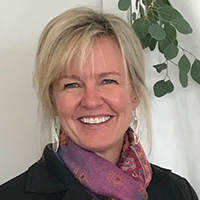
A headshot of Tristi Pinkston.

Tristi Pinkston

Tristi Pinkston is the mother of four, the wife of one, the author of one hundred and seventy-five, and the editor of oodles. She serves as the chairman of the board for the Bear Lake Arts Council and participates enthusiastically (if not with utmost skill) in their theatrical productions. She is currently the editor-in-chief for the resource library here on the LDSPMA website. You can learn more about her on her website.

    Filed Under: Articles, Craft Skills, Faith & Mindset, Writing Tagged With: Author, emotions, feelings, fiction, grief, therapy, trials, Writing

    How to Approach Feedback on Your Writing

    April 19, 2026 By LDSPMA Leave a Comment

    Receiving edits from an editor, beta reader, or even a friend can be both exciting and daunting. It’s natural to feel a mix of emotions: nervousness to see what your reviewer thought about your manuscript, eagerness to dive into revisions, or apprehension about the work ahead. 

    Feedback can come in multiple forms. If it’s feedback from a beta reader, it might be a few paragraphs long and gloss over a handful of portions of your manuscript. If it’s from a copyeditor, you might get a style sheet and an entire manuscript’s worth of punctuation and grammar corrections. If it’s from a developmental editor, you’ll likely receive an editorial letter and pages of notes. No matter what kind of feedback you get, the following tips will help you interpret it and form a plan to revise your manuscript.

    Remember That Revisions Are Normal

    Going through feedback can be overwhelming. After all, you just handed off your book baby to a stranger! Receiving feedback that requires you to adjust a paragraph here and there may feel relatively easy, but it is another matter entirely to hear a suggestion that, if implemented, will require hours of planning and rewriting. Just take a breather and remind yourself that revisions are a normal step in the writing process.

    Recognize that feedback is not a critique of your writing abilities but a constructive assessment aimed at elevating your manuscript to its fullest potential. Every successful manuscript has been revised. It’s even safe to say that most manuscripts have gone through a plethora of revisions. Your manuscript is no different. Embrace the opportunity to learn and grow from the insights provided.

    Consider Others’ Perspectives

    Whether your reviewer is a professional in the publishing industry or a neighbor down the road, it’s important to consider his or her feedback, even if it differs from your own. One of the most valuable aspects of getting your manuscript reviewed is that there is distance between the novel and the reviewer. Unlike the writer of the manuscript, reviewers can look over the manuscript with fresh eyes. This means your reviewers are in a position to provide outside and objective insights that you as the creator may not be able to see. Their feedback will also reflect what other readers would notice as they read your book for the first time.

    Remember, reviewers provide feedback based on their expertise and experience. Editors have been specifically trained to learn how to make your manuscript successful. They bring a wealth of knowledge about what makes a story engaging and marketable to your target audience. Beta readers are avid readers who will recognize themes you should include in your novel. And perhaps a friend will give you some great pointers.

    No matter who your reviewers are, they will bring value to your manuscript.  It’s important to appreciate their time and effort and truly consider their feedback.

    Seek Clarity

    If you’re unsure about any aspect of the feedback, don’t hesitate to ask for clarification. When reaching out to your reviewer, be specific about the areas of the feedback that are unclear or require further explanation. This might involve asking for examples, elaboration on certain points, or additional context to better grasp the reviewer’s perspective.

    Once you clearly understand the feedback, you may want to brainstorm with the reviewer. Or perhaps you have implemented more changes and want his or her perspective on your next draft. Ask your reviewer if you can share new ideas with him or her based on his or her feedback. Going in a new direction with your manuscript or implementing a big change is scary, and receiving additional feedback and validation from another person so intimately acquainted with your work can be extremely motivating, spurring you to tackle the revision with a sense of purpose and confidence.

    Most reviewers are happy to provide more insight or look over your manuscript again. After all, they’re now invested in your story too. However, it is a good idea to check with reviewers to see when or if they have time to give more feedback. And if working with professionals, make sure to review your contract to see how many revisions are covered or if you will need to schedule and pay for a new round.

    Know What Your Feedback Will Look Like

    There are multiple kinds of feedback, and depending on what that feedback is will determine how you will implement it into your next draft. Let’s talk about a few kinds of revisions.

    Developmental Editing: Editors will indicate which big-picture aspects of your story need the most attention. They will provide detailed explanations of existing issues and how they can be changed. You may receive an editorial letter with a list of items to address or you may receive a document with comments in it or both. No matter what format the feedback comes in, it is important to read and digest all the feedback before you start revising. This way, you can get a clear picture of the reviewer’s overall assessment of your novel. From there, you can determine what changes you need to make and in what order they should be done. Then, you can start rewriting, cutting scenes, or shifting paragraphs around.

    Line Editing: Editors will use Track Changes, which is a feature in electronic documents that allows reviewers to track the changes they make so the writer can see what the reviewers do versus their original work. You will be able to accept or reject these changes in the document. If the changes are simple, like changing a word here and there, you can accept or reject them as you read them. But if the suggested changes affect the manuscript as a whole, it’s a good idea to read all the way through the document before accepting or rejecting changes.

    Copyediting: Editors also use Track Changes to make edits to the technical elements of your manuscript, such as punctuation, grammar, and stylistic consistency. Again, you will accept or reject these changes directly in the document. But since these are all changes that affect presentation and not the book overall, you can accept or reject them as you read.

    Proofreading: When editors look over your typeset document, they will either leave comments directly in the document that note the errors they’ve found, or they will send you an additional document containing a list that indicates the page, paragraph, and line of the error. If you typeset the document yourself, you can use these edits to update your document. If you hired a typesetter, forward this feedback on to the typesetter, and he or she will make sure the feedback is incorporated.

    It’s also important to note that there are no industry-standard ways to give feedback. So it may be smart to ask your editor what format he or she uses or to tell a beta reader that you prefer to review feedback in a specific format. Having proactive conversations like these can prepare you for the feedback you will receive.

    Choose Which Feedback to Implement

    Not all feedback needs to be accepted. In fact, you can choose to accept or reject whatever feedback you like. (This may not be true if you have a contract with a publishing firm. So make sure to double-check that.) However, even though you can choose how to shape your manuscript, it is important to consider the reviewer’s expertise and your publishing goals when deciding which revisions to implement.

    Consider the type of edit done. For example, copyediting adheres to established rules and industry standards, meaning these revisions should typically always be accepted. Developmental edits, on the other hand, may involve significant changes to plot, story structure, or character development, which means they are open to interpretation and should be weighed carefully.

    Next, think about what pros and cons come with accepting or rejecting feedback. For example, if your editor advises reducing the word count to meet industry standards, you can choose not to, but be aware that it may be more difficult to get your book traditionally published. On the other hand, if one out of ten of your beta readers has a negative reaction to a certain character and suggests changes to improve that character, you might not need to implement his or her feedback. But if the majority of your beta readers have a negative reaction to that character, implementing their feedback and changing that character may be in your best interest.

    When looking over feedback, you should also think about your reviewer’s background. Does your reviewer have any credentials that would make their feedback more credible? Is your reviewer familiar with the publishing industry and giving suggestions that will make your manuscript more successful in a particular genre? Or is his or her feedback based on personal preference? For example, let’s say your manuscript focuses on a particular culture, and your reviewer has given you feedback suggesting you make changes to the description of that culture. You should evaluate your reviewer’s expertise in this area. Is he or she making this suggestion because he or she wants the story to be more familiar to him or her? Or is he or she a sensitivity reader who is familiar with the culture? If the former, you most likely don’t need to implement the feedback; if the latter, you probably should.

    It’s also important to remember that your story is uniquely yours. If the feedback you receive doesn’t sit well with you, you do not have to incorporate it into your next draft. For instance, let’s say your story is about two sisters growing up on a potato farm in Idaho. Your reviewer suggests making your characters a brother and sister instead of two sisters. Your reviewer may have a list of good reasons behind this change, and these changes may make your book more marketable. However, you may choose not to accept this suggestion because you have tension with your own brother, which would make it difficult to write about a brother and sister in the manuscript. Or perhaps you’ve been envisioning this book being about two sisters for decades and simply can’t part with that idea. Either way, it’s also important to stay true to your own vision for your manuscript.

    Deciding which feedback to implement is a lot of work. Make sure to evaluate each recommendation in light of your creative vision and narrative goals while also accounting for your reviewers’ expertise and industry standards.

    Remember, the editorial process is a collaboration aimed at elevating your work to its fullest potential. Every piece of feedback is a valuable opportunity to enhance your writing skills and bring your manuscript closer to publication. By balancing your writing goals with constructive feedback, you can navigate the editing process and feel great about the story you put out into the world.

    This article was written by and republished with permission from Ever Editing.

    Filed Under: Articles, Craft Skills, Creativity, Editing, Productivity, Professional Skills, Uncategorized, Writing Tagged With: Author, critique, Editing, editors, feedback, improvement, Publishing, revision, writers, Writing

    Margaret Blair Young and the Power of Stories that Matter

    March 31, 2026 By LDSPMA Leave a Comment

    In a small town in the Democratic Republic of the Congo, a man stares at a hand-bound book in disbelief. Inside are the pages of his own story.

    “I’ve been poor my whole life,” he says. “I’ve been cheated out of a lot of things. But look, there’s a book about me.”

    For filmmaker and former Brigham Young University creative writing professor Margaret Blair Young, moments like this emphasize the power of storytelling. Throughout her career, Young has used stories to restore voices that history has overlooked—stories that heal, foster understanding, and illuminate faith.

    Young’s work documenting the history of Black members of The Church of Jesus Christ of Latter-day Saints began in 1998. “I had written quite a few books,” she recalls, “but I wanted to do something that really mattered.”

    After praying for guidance and receiving a blessing from her husband that confirmed her spiritual promptings, she latched onto this idea: “Why don’t I write stories of Black Mormon pioneers?”

    Soon afterward, she met Darius Gray under what she calls “pretty miraculous circumstances.” Gray is a journalist, businessman, and expert in Black Latter-day Saint history. He’s been actively engaged in human rights and civil rights causes for decades.

    “I actually had a cassette tape recording of him in my purse because I had ordered it while doing research,” Young recalls.

    When the two connected, Young had already written about one hundred pages. After reading the manuscript, Gray recognized the importance of the work. He looked over it and said, “Let’s do this together.”

    Young and Gray delved into history and wrote a trilogy of novels, Standing on the Promises, about the lives of early Black Latter-day Saints. When the pair began, these stories were largely undocumented. Even after publication, they continued to uncover new information that corrected earlier assumptions.

    “It’s a history that wasn’t terribly well known,” Young explains, likening the research required to that of three PhD dissertations.

    Confronting Racism in Church History

    Young’s work led to the documentary Nobody Knows: The Untold Story of Black Mormons, which explores the experiences of Black Church members before and after the 1978 revelation extending priesthood and temple blessings to all worthy male members.

    “We could say things that Church leaders couldn’t necessarily say and really hit the complexities and the depths of the issues head on.”

    Before the documentary’s release, Young and her collaborators showed it to the Church History Department and several General Authorities. The project was well received.

    Young’s determination to address such complexities stems from personal experience. She first confronted racism directly at fourteen when her seminary teacher used a racial slur in class.

    “I had a really visceral reaction to it.” She dropped out of seminary because of the incident. “That kind of [intensified] my own realization that we had a problem we needed to deal with.”

    Sharing Jane Manning James’s Story

    Young turned to creative work to confront the problem. She wrote the play I Am Jane about early pioneer Jane Manning James. When it was performed in Springville, Utah, around 2001, the production sold out and drew audiences from across the state. Many said they’d needed to hear Jane’s story, especially her petitions to President John Taylor asking about temple blessings. Young’s play captures the spirit of Jane’s appeal: If this was truly the “fullness of times,” and the promises to Abraham meant all people could be blessed, where was her blessing?

    Jane’s faith and courage invited audiences to open their hearts and recognize Christ in every person they encounter.

    In October 2020, President Russell M. Nelson called on members to “lead out in abandoning attitudes and actions of prejudice.” For Young, that work begins with recognizing when conversations are built on racist assumptions or when history is minimized or ignored.

    Meaningful change, she believes, begins within individuals. Too often, conversations about racism end quickly, dismissed with a clever comment or meme. Real growth begins with humility and willingness to examine one’s own heart. The point is not condemnation but to allow God to reveal attitudes that might otherwise remain invisible.

    “Ask the Lord to help you discern where [racist views] are and how you can clear them out.”

    For Young, confronting prejudice is not separate from faith. It’s a central part of it. Latter-day Saints have a unique foundation for combating racism in the Book of Mormon, which repeatedly emphasizes unity and equality.

    “There were no ‘ites’ among them. That should be the foundation for everything we do.”

    A New Calling In the Congo

    Young’s work eventually expanded beyond American history. “Darius was… the one who told me a whole lot about Africa.”

    At the time, she and her husband were serving in an MTC branch where missionaries were learning to speak French. Through those missionaries—many of whom were preparing to serve in Africa—she began corresponding with individuals in the Democratic Republic of the Congo.

    “Cinema had died about forty years ago in the Congo,” she explains. Government corruption and economic collapse left once-beautiful areas abandoned and in ruins. Yet she believes film offers a path toward renewal. “Cinema allows us to present new narratives.”

    At first, Young thought they would be “making a movie that happened to be set in the Congo, but was maybe filmed somewhere else.” Instead, they discovered they were meant to support a Congolese team in reviving the country’s cinema industry.

    Following the Work

    Young realized that individualized storytelling could bring even more meaning to the community. When the team traveled to a remote town, the Congolese film director discovered his great-aunt living there. His mother had lost her own mother in childbirth, and this aunt had cared for her.

    His great-aunt wept throughout their meeting. Because they spoke different languages, a translator helped them communicate. The following year, the team returned with his mother so the two could reunite.

    Experiences like these confirm the stories of the Congolese people are waiting to be told. Young believes these stories carry a sacred weight, revealing the true character of a nation often portrayed only as a tragedy. She feels called to help share a broader vision of the Congo—one that reveals its beauty and reminds people that its citizens are “our brothers and sisters,” and that “we should strive to have ‘no ‘ites’ among us in our hearts.”

    Young’s team collected oral histories from residents eager to share their experiences.

    “We would bind the books using whatever materials they could find—cardboard, fabric…” With a generator powering the printer, Young helped students produce books featuring their own photographs.

    The long-term vision was to create a library made up entirely of local stories. Many had lived through the devastating war that ended in 2003. “Some of the stories are horrifying, but they matter.”

    Finding Her Path

    Looking back, Young does not describe her path as carefully planned. She says it unfolded simply by being willing to begin.

    “I don’t know that you’d want to follow the way I do things because I’m a little bit crazy,” she laughs. But her approach has always been rooted in openness, paying attention to ideas that feel meaningful, and acting on them before the full path is visible.

    “If you’re not moving, not much will happen.” Her advice is to pray about what kind of work might bring good into the world, then begin. “Be open to anything. Trust that when you start doing something that is truly meant to edify and bring greater light into the world, it will be sustained.”

    For Young, the work has always been about helping people see one another more clearly and remembering that every life holds a story worth telling.

    This article is based on a Called to Create podcast aired season 1, episode 11. To hear the full podcast, click here.

    Filed Under: Articles, Called to Create Conversations, Creativity, Cultural Diversity, Faith & Mindset, Gospel Principles, Professional Skills, Uncategorized Tagged With: Black Latter-day Saints, Called to Create Conversations, church history, diversity, faith and creativity, film, inclusion, inspriation in creativity, stories, Writing

    Why and How to Recognize AI Writing

    February 28, 2026 By LDSPMA 1 Comment

    Can you really spot AI writing? Here are the subtle clues to look for.

    One of the biggest topics being debated in the writing world is how to approach or handle AI in writing. On one hand, AI can be an incredibly helpful tool for authors. It can help brainstorm, organize research, spark ideas, explore alternative verbiage, help you remember how to use a certain phrase—all things that most people agree can boost the writing process in a great way. 

    On the other hand, there are many fears about AI writing becoming a replacement for real writing—whether that means writers relying on AI or AI replacing humans altogether. 

    The key is to use AI responsibly and not let it replace your own voice. Readers can tell when AI has been used too freely, even if they don’t immediately recognize what’s off. When people copy and paste whole paragraphs of AI-generated content, that’s when inaccuracies, fabricated sources, awkward phrasing, or overly formal styles are noticeable. 

    Why Should Writers Learn to Recognize AI Writing?

    Why is it important for writers and readers to recognize AI writing? Here are a few reasons:

    To Stop Misinformation

    AI can and has spread inaccurate facts and information in the publishing industry.

    Imagine following a top summer reading list published by multiple newspapers only to realize that 10 of the 15 books were just made up by AI and, worst of all, were attributed to real authors. That actually happened in May 2025 in newspapers like the Chicago Sun-Times and The Philadelphia Inquirer. Notably, the fake reading list was published just two months after the Chicago Sun-Times had announced that 20% of its staff had accepted buyouts as the paper dealt “with fiscal hardship.” Naturally, subscribers were outraged, and the situation sparked debates online about publishing standards and credibility in a time when AI is being used more and more.

    Now imagine browsing books on Amazon, finding an intriguing one with numerous positive reviews, only to realize the reviews seem to be written by AI. And maybe the book itself is AI-generated. That is all too common now.

    AI-written “companion” books (summaries, workbooks, and guides of legitimate books) are also becoming a widespread problem on Amazon. These low-quality books are designed to piggyback on the success of new, human-written books by using nearly identical titles and the original author’s own name. By the time these books are caught and taken down, damage has already been done in the form of stolen sales, ruined reputations, and confused readers.

    Recognizing AI writing helps writers judge the trustworthiness of certain sources and ensure the accuracy of references. This is especially important for authors of nonfiction books.

    Generative AI chatbots are designed to be very agreeable, and their responses to prompts sound very authoritative and convincing, even when they are completely wrong. Many writers—or, unfortunately, their readers—are finding that AI boldly cites sources that don’t exist, attributes fake quotes to characters, or proclaims wrong details as truth. Authors, reporters, and lawyers who have relied on AI to assist them in writing have taken public hits to their reputations for publishing incorrect information. Learning to spot AI writing can help authors choose credible and real sources. 

    To Protect the Revision Process

    Some authors have paid for beta reading services only to discover later that the “feedback” was produced entirely by AI. The so-called beta readers confidently referenced sentences and ideas that didn’t exist anywhere in the manuscript, leaving the authors with wasted time and money, not to mention reduced confidence in the revision process.

    Being aware of AI writing could help authors—especially those self-publishing—put safeguards in place to find beta readers who won’t use AI and to spot AI-generated feedback.

    Some ways authors can carefully vet beta readers include reading detailed client reviews instead of relying on five-star ratings, utilizing reputable author circles for recommendations, and exchanging a small sample at first. Authors can also request examples of the reviewer’s work, use AI content detectors (imperfect as they currently are) as a preliminary screening tool, and request to pay for services after the feedback is received. For more on this topic, see 7 Ways Writers Can Prevent Beta Readers From Submitting AI-Generated Feedback.

    Occasionally checking out publishing forums, such as r/selfpublish, is a great way to stay informed on recent trends and pitfalls in the publishing industry.

    To Preserve Creative Writing

    From deciding to engage with a lengthy post on Reddit to picking a book, readers want to read content that is original, nuanced, relatable, and real. Aka, the kind of content that comes from lived experience.

    Almost every piece of published creative writing comes with an unspoken agreement between writer and reader: that it is written by another person. We care that care has been put into the media we consume and become invested in.

    AI can suggest ideas, but it struggles to form cohesive storylines or maintain consistent character and plot threads. Writers who can see these shortcomings can better appreciate the skill they bring to their own work.

    How Can Writers Recognize AI Writing?

    When it comes to AI writing, there are no hard and fast methods to determine if a piece of text is, in fact, AI. AI-detection software is getting better, but so is AI. The only indisputable way to tell if someone is using AI models, like ChatGPT, Copilot, and Gemini, in their writing is if they forget to cut out their prompt.

    But the more AI-generated content is used in online discourse, social media, emails, and even creative works, the better we are getting at identifying it. This is because people are wired to recognize faulty patterns, inconsistent tones, and unnatural expressions. That’s why the concept of the uncanny valley—when something looks or sounds almost human, but feels slightly off—is a thing we pick up on fast.

    You can also identify multiple clues found in AI writing patterns that indicate the writing likely wasn’t written by a human. If you see a few of these clues in what you’re reading, be wary of the source.

    First Clue: A Dramatic Change

    The best clue might ultimately be familiarity. If a person’s writing style shifts dramatically within the same piece of content, or if they use more complex vocabulary or grammatical phrases than usual, it stands out. A sudden shift in tone, style, verbiage, etc., is something to take note of.

    Second Clue: Frequent Em Dashes

    A common attribute of AI-generated writing is its frequent use of em dashes. It is no surprise that AI favors em dashes, since AI models are trained on real human writing. And writers love em dashes!

    Em dashes are some of the most versatile punctuation—they can function like a colon, semicolon, parentheses, or even comma. Those of us who love to write probably use em dashes on an hourly basis; however, the general public does not—especially on social media.

    Because em dashes are easily identifiable, a piece of informal content like social media posts or articles that are filled with them may be an early indicator that AI was used, because humans likely wouldn’t use em dashes in these contexts as much.

    Third Clue: Overly Formal and Structured

    Remember the structured paragraph essay format you were taught in school? Introduction (broad overview and thesis statement), body paragraphs (supporting details and transition phrases), and conclusion (restatement of introduction). That structure was designed to teach students how to organize their thoughts clearly and is still used in professional reports, proposals, and academic-adjacent writing. But in everyday situations, few people write this way. AI, on the other hand, often does.

    AI tends to default to professional or academic language. It favors grammatically perfect sentences with predictable connectors like “furthermore,” “in addition,” or “it’s not x but y.” While these phrases aren’t wrong, their overuse can make the writing feel stiff, robotic, and overly polished. The issue is when this formula shows up in places where writing is usually more flexible, like emails, social media, casual articles, or creative writing. The rigid structure of the formula throws the casual tone off.

    In short, if the writing feels like it came out of a textbook or a standardized test—especially in places where a looser or more conversational tone would make sense—it might be AI.

    Fourth Clue: Surface-Level Substance

    AI-generated writing tends to lack substance. This is partly because AI is trained to predict what sounds plausible or typical, not what’s nuanced or new. As a result, its writing often resembles marketing copy: agreeable and inoffensive. But unlike marketing copy, which is typically concise and snappy, AI-generated writing tends to be verbose and overly relies on metaphors to explain simple concepts. You’ll notice familiar buzzwords, vague clichés, and an overall upbeat tone that avoids conflict or complexity.

    In sum, it’s writing that wants to please everyone.

    Fifth Clue: No Mistakes/Too Perfect

    We’ve all encountered the red or blue lines that show up under our misspelled words or incorrectly formatted phrases. And what are the programs that mark our mistakes powered by? AI. So it makes sense that AI-generated writing rarely contains typos, misspellings, or incorrect grammar.

    But flawless grammar and punctuation just isn’t part of the writing process, especially in early drafts. And flawless content is often not the goal in the first place. People bend grammar to sound more natural or to make a point or to simply be creative. We start messy and then revise. We leave a sentence fragment for emphasis. AI can’t make those intentional deviations effectively.

    So, when you encounter flawless and overly professional or stiff text on places like social media, that may be an indication of AI.

    Authors can use AI to support their work, but they must do so responsibly—for their readers and themselves.

    These are all helpful clues—but that’s all they are. Even when several signs point toward AI, there’s still plenty of room for doubt. Writers who use em dashes and ensure their writing is error-free shouldn’t feel afraid that their work will be confused with AI. Unless you have hard evidence, it’s best to assume the writing came from a human.

    Make AI a tool, not a replacement. At the end of the day, readers love, value, cherish, connect with, and pay for books written by humans.

    This article was written by Amy Guan and was republished with permission from Ever Editing.

    A headshot of Amy Guan

    Amy Guan

    Co-Owner and Managing Partner, Ever Editing

    I edit because I love it. I love plotting outlines, treading through unfamiliar topics, and discovering misplaced modifiers. Editing is an adventure, and I wouldn’t give it up for anything. I love playing video games (open world only), eating whatever my husband grabs from the clearance section at Asian Mart, and being taken on walks by my two big dogs. I have a BA in English and a minor in editing.

      Filed Under: Articles, Craft Skills, Creativity, Faith & Mindset, Productivity, Professional Skills, Publishing, Uncategorized, Writing Tagged With: AI, artifical intelligence, Publishing, research, Writing

      Networking and Pitching to Agents (Even When You’re Scared to Death)

      February 16, 2026 By LDSPMA Leave a Comment

      I have the world’s greatest critique group. Not only are the members super smart and talented, they are fun to be with. So why is it that every Thursday night I have to convince myself to get up and go to writers’ group? They don’t even care if I show up in my pajamas, so that can’t be it! The answer is, I’m a huge introvert. I love my down time, hidden in my room, not having to worry about socializing with anyone but Lizzy Bennet and Mr. Darcy, Katniss and Peeta, or my favorite characters of the week (which this week happen to be Anna and St. Clair!). If you’re an introvert like me, you know this feeling. Maybe that’s why we choose to be writers. We don’t get distracted by parties and events, and we’re fine staying home on a Friday night to type away. Writing appears to be a very on-your-own type of career.

      Until you finish your novel and actually want to get noticed.

      Susan Cain, author of Quiet: The Power of Introverts in a World That Can’t Stop Talking, had this same awakening after she finished her book. In an interview on Marie TV, Cain, a proclaimed introvert, said: “I spent seven years happily writing a book in splendid solitude and since then my life has been all about being public.”

      I’m sure there are hundreds of writers out there who would love that type of a “problem,” but for those of us who walk into a room and look for the nearest exits and the quietest corners, it can be a scary thing. Especially when you’re at a con or writing event and you not only need to talk to perfect strangers, but you also have to get them to want to read YOUR book.

      Never fear! Whether you are planning on pitching or just want to network confidently, we’re here with five great tips to keep in mind as you set out to your next con.

      1. Listen to Me.

      Many times, we look at our introverted personalities as a barrier, when actually they can be an advantage. One thing that introverts are usually great at is listening. Just because we’re quiet doesn’t mean we don’t know what’s going on. Listening to others—especially to an agent or presenter—can benefit your career greatly. Half the reason you’re at this particular con is to learn—so don’t be afraid to soak in all the advice you can. You’re sure to find great writing tips. Remember: Agents have hundreds of people who want to talk to them. When you take the time to listen to what the agents really want, you’re sure to be ahead when it comes to the pitching game.

      2. Pitch Perfect.

      If you’ve been listening, you’ll know the right time to bring out your pitch. But when that right time arrives, what should you say? On the introduction page of her website, Cain says, “I like to think before I speak.” This is another great introvert trait. Use it. Nothing is worse than being put on the spot. Knowing what your book is about doesn’t count. Even if you’re the most extroverted person out there, when you’re standing in front of your dream agent, anxiety will kick in and it’ll be nearly impossible to sum up your book in one brilliant sentence. Think about what you’re going to say. Plan out exactly how you want to present your book and yourself before you even leave the house! If this sounds as daunting as actually having to share it with someone, check out this article on writing pitches by our in-house expert Elena Johnson.

      3. Don’t Overdo It.

      Depending on which convention you’re attending, you may have the opportunity to talk to several of the presenters and pitch to several agents. If this makes you want to go back to your room and crawl under the covers, then don’t force yourself to do it. Cain advocates having a quota system. Tell yourself you’re going to network with one, two, or three people. Pick a number you feel comfortable with and stick to it. Wouldn’t you rather give one really great pitch or have one meaningful conversation on improving your skills than stress about having to live through five or ten mediocre ones?

      4. Agents: Big Bad Wolves or Fairy Godmothers?

      Agents are people too, and some of them are as introverted as you are. One member of our writing community, a solid introvert, wrote this after his first-ever pitch session: “This was going to be my first time actually interacting, in person, with actual agents. I follow some agents on Twitter, subscribe to some of their blogs, and read what others say about their experiences, but this was going to be my first pitch. Needless to say, I was extremely nervous—to the point I was worrying over how I should greet them. Did I go with the ‘Hi,’ the ‘Hello,’ or the ‘Nice to meet you’? I think I finally settled on ‘Hi’; it was all a blur. So what happened? All the agents were extremely friendly, open, willing to let me ask questions, responsive to my comments in their classes, and basically made me and the other aspiring authors feel at ease. Some people see agents as the big bad gatekeeping wolves, but for me they are now gracious fairy godmothers doing their best to create happily-ever-afters.”

      Don’t be afraid to look for a kindred spirit among the agents and pitch to that person. He or she may, after all, make your wishes come true.

      5. This, Too, Shall Pass.

      Just because you’re at a con, you don’t have to spend all your time pitching. But if you’re there, chances are you love your book enough to give it a shot. So do it. Make the pitch. According to Cain, we can act out of character for work we really love. But we should do it mindfully and then restore afterward. If you’ve practiced your pitch and set your quota, then you’ll be all right. Make the pitch. Break the shell, then give yourself a break. As Marie Forleo, who interviewed Cain and is, herself, often overwhelmed by being in the world spotlight, says, “When it’s time to fly, don’t deny.” Go ahead and let yourself restore when you need to.

      Trying to convince someone else that your book is the greatest thing since sliced bread can be hard and scary. But it doesn’t have to be. So stop trying to talk yourself into it and get the skills to feel confident. Follow these steps and you, too, “can shake the world in a gentle way.” We believe in you!

      Do This Now

      1. Write your pitch. Check out our How-to Guide.
      2. Start seeing your introversion as an asset to your career and learn how you can be successful without changing yourself. Check out the Susan Cain interview on Marie TV.
      3. Believe in yourself just the way you are. You don’t have to be swinging from the chandeliers to get noticed at a con.

      This article was written by Sabine Berlin and was republished with permission from Eschler Editing.

      A headshot of Sabine Berlin.

      Sabine Berlin

      Editor

      Sabine Berlin is a senior editor at Eschler Editing, where she has worked for over twelve years to help writers bring their stories to life. She is the co-publisher of Mad Cat, the young adult imprint of Roan and Weatherford Publishing. Sabine has also successfully self-published (Oh My Oppa!) and traditionally published (And the Sky Full of Stars). 

        Filed Under: Articles, Business, Marketing, Professional Skills, Publishing Tagged With: agents, authors, conventions, introverts, pitching, Publishing, Writer, Writing

        Writing with Faith: An Interview with LDS Author Gale Sears

        November 27, 2025 By Kami Pehrson Leave a Comment

        Gale Sears’ path to becoming an acclaimed LDS historical fiction author began with writing screenplays. She earned a bachelor’s degree in playwriting from BYU and a master’s degree in theater from the University of Minnesota. For decades, Gale’s creative life revolved around the stage—acting, directing, and crafting stories for live audiences.

        “I didn’t start writing novels until I was almost 50,” she shares, yet storytelling had always been part of her nature. “When I was about seven or eight years old, just after I’d learned about words, we had a little shed out in our backyard in Lake Tahoe, where I grew up. It was a magical place. I’d go out there with paper and pencil and write stories.”

        Exploring Different Genres

        The transition from playwriting to novel writing came naturally. “I had a story in my head that I thought would be a very cool play, but it was kind of epic, and it didn’t fit the genre,” Gale explains. “So, I started jotting down thoughts and a skeletal outline of chapters for a book, which I’d never thought of before because my mind always thought in terms of plays. I had to learn a different writing process because plays are composed of dialogue, but novels must include descriptions of place and setting.”

        That story became Autumn Sky, the first book in a trilogy published by Covenant Communications.

        Writing as a Divine Calling

        For Gale, writing is a sacred practice, centered on divine guidance. “I pray constantly. I have no ego when I’m writing my books. I believe that EGO stands for Edging God Out, and I’m not ever going to do that. When I dedicate my work and consecrate it to His purposes, I must include Him in the process.”

        The Spirit guides Gale throughout her process. “It’s as if I’m walking along and all of a sudden, I stumble, and something makes me pause. I stop and say, ‘Okay, something’s wrong here. Either I’m pushing it too much, or I’m not telling the right story, or I’m not going in the right direction.’ That’s how I know.”

        The Power of Research

        This spiritual foundation shapes every aspect of Gale’s work, especially her research approach. She is tenacious about accuracy. “If you’re going to write historical fiction, it needs to be true to the history,” she emphasizes.

        For The Silence of God, which explores communism and Christianity in revolutionary Russia, she immersed herself in Russian history and communist theory. “I wanted to tell the story of what a society looks like when they rip God out of their lives,” she explains. She thought she’d have to create a fictional Orthodox Christian family—until she experienced what she calls a “God wink.”

        “I thought to myself, I’m never going to find an LDS Russian family back in that time,” she recalls. “Well, I was at the Church History Library and found this article about the Lindelof family—the one and only LDS family in Russia during the Bolshevik Revolution.” This moment of divine serendipity became central to the novel.

        For Letters in the Jade Dragon Box, set in China under Mao Tse-Tung, she studied Chinese culture and government systems. The book juxtaposes Mao’s communist regime with the gospel as experienced by early Latter-day Saints in Hong Kong.

        Belonging to Heaven draws from George Q. Cannon’s actual journal entries about his mission to Hawaii, exploring his relationship with Jonathan Napela, one of the first Hawaiian converts to the Church.

        Her novella, Brilliant, required research into autism, Indian culture, mathematics, and Eastern philosophy to authentically portray its protagonist—a young autistic college professor from India. Gale met with Indian families and individuals who understand autism and reviewed autobiographies to ensure accuracy.

        But Gale doesn’t just rely on books. She travels to the locations she writes about—Italy, Russia, Hawaii—with her husband, George, acting as photographer and videographer. She interviews people from the cultures she depicts and visits ethnic markets.

        “I’ll go up to people and say, ‘Do you have a minute? Can we talk about Indian food?’ or whatever I need to learn,” Gale explains. “Most of the time, people are gracious and thrilled to help.”

        “It’s so important in historical fiction that readers feel as though they’re there,” she says. Whether it’s the food her characters eat, the clothes they wear, or the streets they walk, Gale ensures every sensory detail rings true. Each book ends with an extensive bibliography and notes explaining the historical context. “I stick to the facts as much as possible, but if I need to deviate because of the story, I let readers know.”

        Blending Faith and Story

        When depicting conversations about faith, Gale uses a subtle touch. “I want to tell the story of God’s Saints in a way that all my readers can appreciate, and weave in Christ’s teachings without beating people over the head with the gospel.”

        For example, in The Silence of God, the LDS character Agnes discusses the law of consecration with her Bolshevik friend, Natasha, while chopping cabbage for borscht. The exchange feels natural rather than preachy. “You can push doctrinal discussions too far to where readers feel like they’re in a Sunday school room, or you can just put a little flavor of it,” Gale explains. “You have to honor your readers and trust that they’re smart enough to interpret the story through their own lens.”

        This approach has connected with readers beyond the LDS community. “I have a lot of readers who are not LDS who appreciate the structure of the story and how I involve Christ in it,” she says. Universal themes of faith, courage, sacrifice, and family resonate across religious boundaries.

        Writing Process and Craft

        Despite her theatrical background’s emphasis on structure, Gale describes herself as “pretty much a pantser.” However, she acknowledges the value of structure, particularly in historical fiction, where “the journey has to go through certain historical processes.”

        “Normally, I start with a character,” she explains. “Then I ask, ‘What is this character’s journey?’ With historical fiction, that journey is kind of mapped out for me.”

        Character development comes through revelatory moments. In Letters in the Jade Dragon Box, the protagonist, Chen Wen-Shan, receives a box from her grandfather containing paintings and letters. This catalyst unfolds her family’s story under Mao’s regime.

        Advice for Aspiring Writers

        For young LDS creators and writers, Gale offers perspective gained from her unique journey:

        • Don’t worry about starting late or about success, fame, or money. Just stay true to the story you’re called to tell.
        • Focus on impact, not numbers. If your book only touches 10 people, that’s wonderful. If it only touches your family and they love it, that’s wonderful too. Remember, it’s a success just to get your story down on paper…Well done, you!
        • Remember the importance of the individual reader’s testimony. You’re planting a gospel seed, and you may not see it grow, but someday the Lord will use it. Eternity is long.
        • Write stories that inspire. For example, if you’re writing fantasy, you can still include the quest for good against evil. Your character’s struggles and triumph can encourage and lift a young person who’s questioning their abilities and whether life is worth the effort.
        • Consecrate your work. “When I dedicate my books to the Lord, I say, ‘Lord, take this little offering that I’m making and do with it what you want.’ I might not have a huge readership, but that’s not my path, and I don’t really mind.”    

        A Legacy of Faith

        Gale’s work now extends beyond novels. Her children’s book, Christmas for a Dollar, based on her father’s experiences during the Great Depression after losing his mother and contracting polio, has been adapted into a Christmas movie.

        No matter what form her writing takes, Gale ensures it is an act of discipleship. She reminds fellow writers that life is a tapestry, and we’re only seeing the back side. In seasons of trial, the threads look tangled. But eventually, God will turn that tapestry around, and we will see His divine design. Until then, authors can help readers through difficult times by writing good stories that show them there is light ahead.

        “These stories, these people’s lives—what a blessing it is for me to be able to share them,” Gale reflects. “And hopefully, prayerfully, the stories will resonate with someone and help them and strengthen them. That’s what I want.” 

        Headshot of Kami Pehrson.

        Kami Pehrson

        Kami Pehrson lives with her husband and five teenage children in Stansbury Park, Utah. She recently finished her master’s degree in English and creative writing and has written three novels—but is still trying to figure out what to do with them. She loves editing, reading, and playing word games on her phone. She also enjoys listening to audiobooks while half-heartedly doing Pilates in the living room.


          Filed Under: Articles, Creativity, Faith & Mindset Tagged With: authors, interview, research, Writing

          Twenty of the Most Confused Grammatical Terms

          September 5, 2025 By LDSPMA Leave a Comment

          We love English. Twenty percent of the world’s population speaks it, with about 400 million native speakers and 1.5 billion learning it as a second language. English blends and borrows words from many cultures and languages. It’s a linguistic melting pot. 

          English is fascinating! But let’s face it—it’s also really complicated. English is one of the languages with the most complex grammatical structures. And when you throw in spelling . . . well, English can be rough to nail down.

          But no worries! We’ve collected a list of some of the most confused grammatical terms in the English language. If you learn these, you’ll be speaking and writing English better in no time.

          A lot, Alot, Allot

          A lot is an adverb that means “much” or “frequent.”

          I go to the gym a lot.

          That is a lot of ice cream. 

          Alot is not a word. Don’t write it.

          Allot is a verb that means “to distribute” or “to assign a portion.”

          I will allot half of the posters to my business partner to hang up.

          After her speech, Dimitria will allot ten minutes for questions.

          Affect, Effect

          This one is tricky, but the main rule is affect is used as a verb and effect is used as a noun.

          The new machinery will affect the productivity of the plant.

          The effect of the lights is stunning.

          Among, Between

          Among is used for relationships of three or more items. Between is used for relationships of only two items.

          I can’t choose which among all my shoes to wear.

          I often stand between the stop sign and the fire hydrant when waiting for the bus.

          Assure, Ensure, Insure

          All three of these words are verbs that mean “to make sure.”  Though some of their definitions cross over, there are a few rules of thumb you can remember that will help you place the correct word in the right context.

          Assure removes doubt and suspense from someone’s mind. Ensure can be replaced with guarantee. And insure is mainly used for financial risk. Refer to Merriam-Webster’s dictionary for more examples and definitions.

          I assure my pets I will be home no later than 3:00.

          David ensures he has next week off work.

          Gemma will need to insure her new car. 

          Complement, Compliment

          Complement means “to complete.” Compliment means “to say something nice to or about someone.”

          Her red heels complement her shade of lipstick.

          Jane complimented Michael on his choice of tie for the evening.

          Every day, Everyday

          Every day is a noun or adverb. Everyday is an adjective and is used only before a noun.

          Erika teaches yoga classes every day.

          Erika’s everyday yoga classes will keep you invigorated.

          Farther, Further

          Farther refers to literal distances. Further means “more.”

          Jenna runs farther than Jared every time they jog.

          The team decided they needed to discuss the concept further.

          Fewer, Less

          If you can count it, use fewer. If you can’t count it, use less.

          The fewer pets  you own, the less hair you’ll find on the floor.

          The less flour Halley uses in the mix, the fewer pancakes she’ll be able to make.

          In to, Into

          Into refers to movement and is attached to a noun. When separated with a space, the in and to in in to are normally attached to other parts of the sentence than to each other. For example, in the phrase “call in to order food,” call in and to order go together more than in and to.

          Chloe stepped into the car.

          Please sign in to your computer.

          Its, It’s

          Its is a possessive pronoun showing ownership. It’s is a contraction meaning “it is.”

          The dog lazily gnawed at its bone.

          Kiana assures Luz that it’s happening sooner than she would think. 

          I.E., E.G.

          I.E. means “in other words.” E.G. means “for example.”

          When decorating my home, I prefer to use earth tones (e.g., greens, browns, and tans).

          When decorating my home, I prefer to use earth tones (i.e., warm and muted

          shades found in nature).

          Lay, Lie

          Lay can be replaced with “place.” Lie can be replaced with “recline.”

          After a long day, Noah wants only to lie in his bed.

          I lay six eggs in the carton.

          Like, Such as

          Like is used to give a comparison. Such as is used for specific examples.

          I have read many novels like Dracula, Twilight, and Carmilla. (This sentence implies that the reader has read novels similar to these but not necessarily these novels.)

          I have read many novels, such as Dracula, Twilight, and Carmilla. (This sentence implies that the reader has read these specific novels.)

          Lose, Loose

          These words are mainly mixed up because they are spelled so similarly. Loose is something that is not tight. Lose means “to be deprived of.”

          I lose my keys constantly.

          Stella has a loose tooth.

          Peak, Peek, Pique

          These words can be confusing because they are all pronounced the same. But they each have different meanings. Peak is the “top or apex of something.” Peek is “to take a quick glance.” And pique is “to excite or irritate.”

          Did you see the snow at the peak of the mountain?

          Jill peeked around the corner.

          That topic always piques my interest.

          That, Which

          These words are used pretty interchangeably in speech and writing, but here is the correct grammatical rule: Use that if information that follows is important and should not be taken out of the sentence. Use which if the information that follows can be taken out without changing the meaning of the sentence.

          The peach that is sitting on the end of the table is Gabe’s.

          My favorite fruit, which is a peach, is sitting at the end of the table.

          Their, There, They’re

          These are common words in English and are often confused because they are all pronounced the same. Here’s the difference in their meaning: Their is a possessive pronoun showing that more than one person or thing owns something. There is the opposite of here. (You can remember that because they are almost spelled the same.) They’re is a contraction for “they are.”

          The new car is their blue Subaru.

          You won’t find the blue ball over there.

          They’re as tall as my sister.

          Than, Then

          Here’s another set of words that gets confused because they are often pronounced the same way. Then is linked to a sequence, normally “if . . . then” or “first . . . then.” Than is used for comparisons. 

          If you think you can beat me, then give it your best shot.

          Peter is faster than Sam.

          To, Too

          These words are pronounced the same way and almost spelled the same way too! The difference is that too means “also” or “an excessive amount,” while to is used in every other instance. We won’t list those because there are a lot of them. 

          Vanilla Coke is my go-to drink.

          Do you want to come to my house a quarter to one?

          Annelise is wearing red too.

          That is too much ice cream to eat in one sitting.

          Your, You’re

          These words are pronounced the same but have different usages. Your is a possessive pronoun showing that you own something. You’re is a contraction meaning “you are.”

          You’re going to your grandmother’s tomorrow after lunch.

          Your sweater you’re wearing obviously shrunk in the dryer.

          The examples above are just some of the many grammatical terms that are commonly confused in the English language. But now you have a succinct list to look back on if you get confused. Keep practicing your grammar, and with the help of this tip, you’ll be a grammar master in no time!

          We would like to thank Breanna Call and our friends at Ever Editing for allowing us to share this article with you. To read the other great articles they’ve written, click here.

          Filed Under: Articles, Craft Skills, Writing Tagged With: grammar, Writing

          How I Learned Not to Loathe Revisions

          June 12, 2025 By LDSPMA Leave a Comment

          We’ve all been there. We just put the finishing touches on our creative piece. After hours of work (and perhaps a few tears), we submit it to a professional for review. Often, we receive feedback that requires considerable revision and makes us question whether we should be engaging in this work at all.

          I write historical romance novels, so this feedback usually comes in the form of substantial content edits from an editor. Unfortunately, I haven’t had the best mindset when it comes to editing my work. In fact, the word I often associate with editing is “loathing.”

          My first novel will be published by a small publisher this September. The first thing I wanted to do when I received the content edits? Cry. I had already hired a developmental editor and made significant changes based on her feedback and input from other readers. I even rewrote the entire ending! And still more edits? 

          I know, I know. I should be open to feedback that helps me grow and improve as a writer. But still, I couldn’t get my brain on board with that idea until I applied a few simple principles to my thought process. You might already be familiar with them because they align with the counsel we receive in the gospel. Here are a few simple ways I’ve found to shift my mindset and develop a healthier attitude toward feedback.

          Recognize the True Potential in My Work

          At least fifty—that’s the number of “no’s” I received from agents and editors when querying my manuscript for almost a year. I didn’t handle the rejection well. Remember those tears mentioned above? Yes, there were lots during this phase.

          I had the idea for my novel for more than a decade, but I put off writing it until three summers ago. My degrees and licenses in business and law don’t exactly translate to writing love stories, but I couldn’t ignore the prompting to embark on this creative journey. My work is not what I’d consider gospel centered. I write clean historical romances that don’t typically include characters with a faith arc. I like to call them “kissing books.”

          So, why did every attempt to put that work out into the world lead to a dead end? Even now, despite a contract with a small publisher (the only one who said “yes” instead of “no”), these doubts still manifest themselves. Why isn’t anyone buying or rating my self-published novella? Why do I have fewer than 200 followers on my social media accounts after eighteen months of effort? Why did 2% of my newsletter subscribers unsubscribe after my latest message? The list goes on.

          When “numbers” and “quantities” start niggling at my mind, it helps to view my work’s potential the way Heavenly Father views us—with an eternal perspective.

          Focusing on the quality of connections I make in this industry realigns my perspective. Reaching one person with my writing is far more important than earning ninety-nine likes on my latest Instagram post.

          Removing the “worldly lens” when valuing my work helps me recommit to this creative calling, especially when critiques (and the doubts that accompany them) follow.

          Speak with My Heavenly Father

          After I received the content edits for my first book, I tried to sit and write part of my current book. No words flowed. It was my worst attempt at writing. I doubted each word, erased more than I wrote, and ended up frustrated, discouraged, and dejected—never a good combination, especially when trying to create.

          This pity party lasted far longer than I care to admit. But I had a deadline to meet, so after hoisting myself up by my bootstraps, I decided to act on a thought that had come during the wallowing—pray.

          Perhaps it’s even more embarrassing to admit that I hadn’t really prayed much in my writing career. Again, these are just kissing books. Why would I need inspiration about romantic interactions like brushing hands and flushing cheeks?

          I gave prayer a go, however, because the idea wouldn’t leave me alone. Did I mention I was stubborn, too? I prayed each time I sat down to edit. I prayed to be open to the editor’s comments and recommendations. I prayed for guidance and inspiration as I selected the right words and phrases while rewriting. I prayed that I would complete tasks by the deadlines. And I prayed for help with my other responsibilities, including being a wife and mom of two, holding down a part-time job, and managing other volunteer roles, such as serving as one of the new vice presidents of LDSPMA.

          I’m not suddenly spitting out a masterpiece akin to Jane Austen’s work or tripling my word count, but I can set aside the emotions telling me my work isn’t good enough. I’ve also overcome the feeling of overwhelm that plagued me during the rewriting process. I meet my deadlines, too (I even met one five days early!).

          Most importantly, prayer changed my perspective. I now see revision as a way to ensure that my work is the best it can be. I feel the loving support of Heavenly Father, even if the process isn’t easy.

          Strive to Do Better Each Day

          Through what other process do we try to improve little by little and day by day? Repentance. We are often counseled that repentance should be a joyful process. While I still pray to find true joy in editing, I can safely say I’ve made it to the “not loathing” stage. I see the true potential in my work by speaking with Heavenly Father through prayer.

          And the best part? I can strive to elevate the gift Heavenly Father has given me every day, even after receiving feedback that requires yet another rewrite. I hope that you, too, continue to strive for true joy in your creative journey.

          Headshot of Casey Cline

          Casey Cline

          Casey Cline collects hobbies and pursuits as quickly as she reads books. She likes to believe her degrees and licenses in business, law, and real estate aren’t entirely incongruous with writing historical stories about the ultimate adventure in life—love. Casey is one of the vice presidents of the Latter-day Saints in Publishing Media and the Arts organization and is a member of the Nebraska Writers Guild. She lives in Nebraska with her husband, two daughters, and three cats. You can connect with her at www.caseycline.com.


            Filed Under: Articles, Craft Skills, Editing, Writing Tagged With: Editing, revisions, Writing

            • Page 1
            • Page 2
            • Page 3
            • Go to Next Page »

            Primary Sidebar

            Write for Us

            Would you like to see your article featured here on LDSPMA?

            We are currently seeking article submissions. Learn what you need to know and submit your article here. 

            Recent Articles

            A closeup of a writer's hands, one holding a pen and the other holding a tissue.

            Writing: A Tool to Process Grief

            “I believe that we are each blessed with a creative gift not only to beautify the world and to uplift those around us, but as a method of releasing the hurts and the anxieties we feel because of our struggles.” -Tristi Pinkston

            A woman sleeps on a sofa, cocooned in a blanket

            When Life Says NO: How to Recover from Major Unexpected Events

            “It may not be pleasant or easy, but sometimes life’s challenges turn out to be life-changing, helping us become who God always meant for us to be.” -KaTrina Jackson

            Two women discuss a written manuscript.

            How to Approach Feedback on Your Writing

            “Feedback is not a critique of your writing abilities but a constructive assessment aimed at elevating your manuscript to its fullest potential.”

            Search the Articles Archive

            Article Topics

            Recent Podcast Episodes

            Footer

            • Email
            • Facebook
            • Instagram
            • LinkedIn
            • YouTube

            Copyright © 2026 LDSPMA. All Rights Reserved. LDSPMA is not endorsed by nor affiliated with The Church of Jesus Christ of Latter-day Saints.