Let’s talk about artificial intelligence (AI) and writing. It seems like every other day, there’s a new tool that promises to make writing faster, easier, and maybe even . . . automatic? It’s easy to see how many writers are pulled toward AI. Some people may even ask writers: Why spend days or months putting blood, sweat, and tears into something that AI can do in seconds?
Here’s the thing: No matter how impressive AI gets, it will never compare to the unique voice, experience, and, well, humanity that each writer brings to their work.
It’s true that AI can assist writers in getting through tricky passages and overcoming writer’s block. In later tips in this series about AI, we will discuss the benefits of using AI in your writing in greater detail. But in this article, we’ll focus on what AI can’t replace—your voice!
Voice vs. Style
Writing voice and style are two concepts that are often confused or conflated. There is a difference between the concepts, so let’s break them down:
Voice: The writer’s innate opinions, attitudes, and experiences.
Style: The writer’s word choices, sentence structures, and mechanical—or grammatical—patterns.
Tiffany Yates Martin, an established editor with over twenty years of professional experience, has a beautiful description of voice on her website Fox Print Editorial:
Author voice, though, comes from the truest, most authentic heart of you. Your voice began to be formed even before you were born, and it has been shaped increment by increment by every single circumstance and element of your life since: where you were raised, by whom, how, in what circumstances; your socioeconomic level, your education, your frames of reference and your experiences; your personality, sensibilities, values, and passions.
It can be affected by age and perspective, state of mind and mood. It encompasses your vocabulary, your phrasing and rhythm, your diction and word choice, your verbal tics and habits. It’s reflected in the speed at which you communicate, the way in which you find and express your thoughts, whether you are direct or circuitous, literal or figurative, humorous or serious, and every permutation of all the above.
(Yates Martin, Tiffany. “What Is Author Voice and How Do You Find Yours,” Fox Print Editorial, October 8, 2024, https://foxprinteditorial.com/2023/08/10/what-is-author-voice-and-how-do-you-find-yours.)
Yates’s beautiful description of voice shows just how personal and unique it is. Voice reflects the soul of a writer—their innate perspective and personality—while style is the way ideas are expressed on the page with words.
Some writers have a writing style that is elaborate and embellished—meaning they love crafting long sentences full of imagery and metaphor. Other writers write short, punchy sentences. Some writers enjoy breaking conventional grammar rules, such as sentence fragments, run-on sentences, or omitting punctuation, and others write in sarcastic or mocking styles.
A writer’s style may adapt to suit different genres, tones, or audiences, but their voice remains a consistent reflection of their unique personality and perspective. And while AI can mimic certain writing styles by replicating patterns and techniques, it lacks its own innate personality, or voice.
Voice Is Personal
The stories you tell—whether they are fictional or not—are uniquely your own. No AI, no matter how advanced, can replicate the intricacies of your lived experience. Your life, your choices, and your perspective are shaped by countless factors: your upbringing, culture, relationships, failures, and triumphs. These experiences color the way you see the world and inform the stories you tell.
AI may be able to mimic style and structure, but it can’t capture the one thing that makes each writer unique—their individual way of writing stories and depicting complex human feelings. AI, by nature, uses algorithms to predict what should come next based on existing data, so its output often reads as generic.
Because voice is so uniquely human, we are good at picking up its subtle nuances in the things we read without realizing it. Consider the uncanny valley phenomenon, which is when a “computer-generated figure or humanoid robot bearing a near-identical resemblance to a human being arouses a sense of unease or revulsion in the person viewing it.” (“Uncanny Valley,” Oxford English Dictionary, accessed December 2024, https://www.oed.com/dictionary/uncanny-valley_n?tab=meaning_and_use.)
For example, observe AI-generated photos of people that look extremely realistic—until you look closer and see hands with unnatural fingers or mouths with too many teeth. Similarly to this phenomenon, AI tools like ChatGPT can produce material mimicking different writing styles, but they can’t perfectly embody any author’s voice—or cultivate their own.
Below are three comparable passages from stories that each carry themes of nostalgia, permanent loss, and a painful sense of longing:
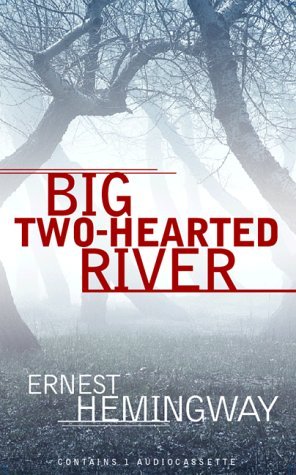
Nick looked down into the pool from the bridge. It was a hot day. A kingfisher flew up the stream. It was a long time since Nick had looked into a stream and seen trout. They were very satisfactory. As the shadow of the kingfisher moved up the stream, a big trout shot upstream in a long angle, only his shadow marking the angle, then lost his shadow as he came through the surface of the water, caught the sun, and then, as he went back into the stream under the surface, his shadow seemed to float down the stream with the current, unresisting, to his post under the bridge where he tightened facing up into the current.
Nick’s heart tightened as the trout moved. He felt all the old feeling.
(Hemingway, Ernest. Big Two-Hearted River. Scribner, 1925.)
Once there were brook trout in the streams in the mountains. You could see them standing in the amber current where the white edges of their fins wimpled softly in the flow. They smelled of moss in your hand. Polished and muscular and torsional. On their backs were vermiculate patterns that were maps of the world in its becoming. Maps and mazes. Of a thing which could not be put back. Not be made right again. In the deep glens where they lived all things were older than man and they hummed of mystery.
(Cormac McCarthy, The Road. Alfred A. Knopf, 2006.)
The trout dart through the clear, cold stream, their silver bodies flickering like fleeting memories beneath the surface. Time here seems to slow, as though the current itself carries echoes of a forgotten summer. Now, the current feels quieter, the air heavier with the weight of things that are no longer. Each ripple in the water seems to stir an old ache, a quiet sorrow that lingers in the spaces between the rocks, where the trout swim without ever looking back. The stream, once so full of life and laughter, now whispers only of what’s been lost.
(ChatGPT. Prompt: “Write a paragraph about trout in a stream with these feelings: nostalgia, loss, and longing.”)
The differences between these three passages highlight the profound gap between human writing and AI-generated text, particularly when it comes to voice, authenticity, and emotional resonance.
Ernest Hemingway’s Big Two-Hearted River is marked by his distinctive, restrained style and voice that speaks volumes in what it leaves unsaid. The description of the trout’s shadow—rising, catching the sun, and then floating back into the current—reflects not just the fish’s physical movement but also Nick’s transient grasp of peace and the inescapable pull of memory. When Nick’s heart tightens, the reader feels the weight of his unspoken longing.
In contrast, Cormac McCarthy’s voice in The Road is lush and poetic, and he evokes awe and reverence for the natural world. His description of the trout doesn’t just show us fish in a stream—it turns them into symbols of something much bigger, something lost that can never be recovered. With lines like “vermiculate patterns . . . maps of the world in its becoming,” McCarthy transforms the details of the trout into a meditation on time and the fragility of existence—a product of a philosophical mind engaging with the world.
The AI-generated passage, while technically fine and polished, lacks the depth and authenticity of the human-authored examples. Descriptions like “their silver bodies flickering like fleeting memories” and “the air heavier with the weight of things that are no longer” attempt to evoke emotion but instead come across as formulaic and generic as if the AI is trying to fit some template of sentimentality. The passage feels like a compilation of poetic tropes, strung together without the lived experience or unique worldview that imbues an author’s voice with sincerity. As a result, the passage reads as imitative and hollow.
Voice Is Experiential
Writers draw from their personal histories—moments of joy, loss, struggle, and triumph—which shape how they perceive the world and how they choose to express it. Each character, scene, and narrative choice is made up of trinkets of the writer’s own life journey.
AI, while impressive in its ability to mimic writing styles, lacks this experiential foundation. It can replicate the mechanics of storytelling, but it cannot draw from a lived history. AI doesn’t know what it feels like to experience love or loss, to face the challenge of a difficult decision, or to observe the world with the nuance of human perception. As a result, AI-generated novels often lack the depth and emotional resonance that comes from the lived experiences of a human writer. It may produce coherent narratives, but without the personal imprint of a real life, the voice it generates remains hollow and detached.
Compare the following excerpts:
Soldiers carry the weight of their weapons, tools of survival and destruction, each one a constant reminder of their purpose and the danger that lurks. Their packs are heavy with rations, medical supplies, and gear—necessary burdens that ground them in the brutal present, yet leave little room for escape. Tucked deep within, they carry the ghosts of past battles, the memories of comrades lost, and the quiet longing for home, all bound in the recesses of their minds. The weight of duty is palpable in every step, as they march forward, burdened by both the physical and emotional tolls of war.
(ChatGPT. Prompt: “Write a paragraph about what soldiers carry in war.”)
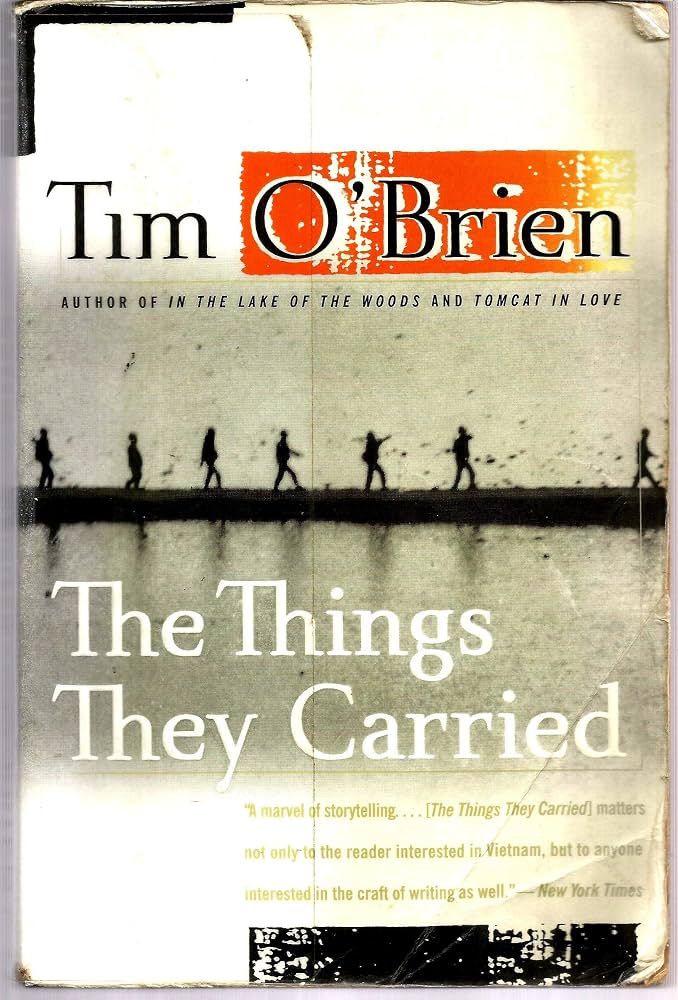
They took up what others could no longer bear. Often, they carried each other, the wounded or weak. They carried infections. They carried chess sets, basketballs, Vietnamese-English dictionaries, insignia of rank, Bronze Stars and Purple Hearts, plastic cards imprinted with the Code of Conduct. They carried diseases, among them malaria and dysentery. They carried lice and ringworm and leeches and paddy algae and various rots and molds. They carried the land itself—Vietnam, the place, the soil—a powdery orange-red dust that covered their boots and fatigues and faces. They carried the sky. The whole atmosphere, they carried it, the humidity, the monsoons, the stink of fungus and decay, all of it, they carried gravity.
(O’Brien, Tim. The Things They Carried. Broadway, 1998.)
Severe trauma and war are examples of things that AI has never experienced and will never experience. For all of ChatGPT’s flowery language, its paragraph above rings incredibly hollow when compared to O’Brien’s excerpt, which draws from his lived experience of serving in the Vietnam war. O’Brien is not using generalizations to speak for every soldier who fought in Vietnam, and he is not even trying to recount every factual detail of his experience. Instead, he speaks about his personal perceptions and feelings developed through his experiences.
There are a huge number of life experiences—emotions felt, moments lived, and connections formed—that are uniquely human. Drawing from these experiences when writing connects writers with readers, even if they haven’t been through the same things, because they reflect the emotions and connections we all share. This connection is something AI may attempt but will likely never replicate.
Voice Is Cultural
Writers also draw from cultural and social dynamics—the gestures, tone, slang, vernacular, and unsaid meanings that make up human interaction. These nuances, shaped by culture, society, and history, enrich a writer’s voice, allowing it to capture the complexities of emotion and experience in ways that resonate with readers.
AI, though skilled at mimicking writing styles, lacks the ability to truly understand or engage with the social intricacies that define human communication. While it can replicate language patterns or historical references, it cannot grasp the deeper layers of meaning embedded in these elements.
In our interconnected and plugged-in modern culture, communication is becoming increasingly fluid. Slang, internet culture, and memes are playful, ever-evolving forms of communication that reflect shared humor, generational trends, and cultural moments. These quirks of language serve as social identity markers—the traits, symbols, and language that help people express who they are and where they come from.
Writers understand how these identity markers operate within communities and use them in novels to create authentic dialogue, relatable characters, and vivid settings. Identity markers in writing can be incredibly subtle. A character’s hesitation before choosing a word might reveal their insecurity or the unspoken weight of their relationship with the person they’re speaking to. The use of the word “demure” might suggest not just modesty but “mindfulness,” “very respectful,” and “not doing too much” to Gen Z readers. A passing mention of the smell of rented bowling shoes could evoke an entire childhood for a reader without being explicitly tied to any narrative arc. These subtleties—rooted in how humans assign meaning to the smallest interactions and details—give writing a depth and resonance that AI may struggle to replicate.
Voice is Irreplaceable
AI can copy certain styles, but it can’t capture you. Your unique way of putting things and the little surprises that come with it? That’s your voice, and that’s something only a real, live person can bring.
So, if you ever feel discouraged by the speed or apparent efficiency of AI, remember this: Your voice matters more than anything a machine could ever produce. Your stories, your emotions, your creativity—they are irreplaceable. Lean into your humanity, trust your unique perspective, and remember that the world is waiting for what only you can write. In the end, no machine can tell your story like you can.
This article was written by Amy Guan and was republished with permission from Ever Editing.

Amy Guan
Co-Owner and Managing Partner, Ever Editing


