• Skip to main content
  • Skip to primary sidebar
  • Skip to footer

LDSPMA

Empowering Latter-day Saints to spread light and truth by connecting them at the intersection of faith, creativity, and professional skill

  • Conference
    • The 2026 LDSPMA Annual Conference
    • Conference Registration
    • The 2026 LDSPMA Annual Conference Schedule
    • 2026 LDSPMA Anthology Submissions
    • Theme Contests
    • Exhibit, Advertise, or Sell at the LDSPMA Conference
    • Partner with LDSPMA
    • FAQs
    • Volunteer at the LDSPMA Conference
    • Past Conferences
      • 2025 Conference
        • Sessions
        • Workshops
        • Awards Gala
        • Internship Fair
        • LDSPMA’s Got (Secret) Talent!
      • 2024 Conference
        • Sessions
        • Workshops
        • ZIFF Networking Dinner
        • Schedule
  • Membership
    • Email Sign Up (Free)
    • LDSPMA NextGen
    • University Chapters
    • Facebook Group
    • NextGen Youth Facebook Group
  • Programs
    • Monthly Zoom Discussions (Free)
    • Mentoring Program
    • Master Classes (2026)
  • Podcast
    • Watch
    • Listen
      • Listen on Apple Podcasts
      • Listen on Spotify
      • Listen on Buzzsprout
    • Called to Create Conversations
  • Articles
    • All Articles
    • Faith & Mindset
      • Gospel Principles
      • Creativity
      • Productivity
    • Craft Skills
      • Writing
      • Media, Film & Theater
      • Podcasting & Speaking
      • Music
      • Fine Art
    • Professional Skills
      • Editing
      • Publishing
      • Business
      • Cultural Diversity
      • Marketing
    • Write for Us
  • Awards
    • 2026 Award Nominations
    • Praiseworthy Awards
    • Spark Awards
    • Lifetime Achievement Awards
    • Past Award Winners
    • Apply to Be an Awards Judge
  • About
    • Mission
      • LDSPMA in the Media
      • Success Stories
      • Viewpoint on LDSPMA
    • LDSPMA Leadership
    • Volunteers
      • Volunteer Year-Round
      • Volunteer at the LDSPMA Conference
      • Mali McKenzie Award Nominations
      • Apply to Be a Presenter
      • Apply to Be an Awards Judge
      • Resources for Current Volunteers
    • Policies
    • Contact US
  • Support LDSPMA
    • Donate
    • Volunteer
    • Partner with LDSPMA
    • Shop LDSPMA

stories

When Is Fair Use Fair?

August 19, 2026 By LDSPMA Leave a Comment

Writers love quotes, songs, and funny or inspirational images. What word-nerd doesn’t? We tape them on our mirrors, dashboards, and walls and post them to our websites. We like them to set the tone for our novels, start our nonfiction chapters off with inspiration and insight, and add authority to our own ideas. But many writers are never quite sure what’s safe to quote—how much, and in what contexts? Are there instances when you can safely borrow material that belongs to someone else without infringing on their copyright? And what happens if you do—accidentally, of course—infringe on someone’s copyright?

Well, it’s not pretty if you happen to use material from someone with deep pockets and powerful attorneys. Using quotes, songs, images, or others’ intellectual property cited, used, or paraphrased in your book (images may include cartoons, comics, photos, stock art, graphics, memes, charts/data, etc.)—without copyright-holder permission—can result in lawsuits that result in a loss of hundreds of thousands of dollars (or more, in some cases) and limit your brick-and-mortar store distribution opportunities.

While you should always seek official legal counsel (from an expert in intellectual property law) before you use quotes, scenes, songs, images, etc., in any of your for-profit/for-fundraising works, we can give you a simplified answer to the basic questions above and where you need to start looking to make sure you’re square with the law. There’s even a software out there to help you determine if your quoted material is likely to fall under fair use or not. If you’re still unsure about what you can fairly use after reading this article, the best practice is to follow the old adages, “better safe than sorry” and “when in doubt, go without,” as evidenced by the myriad court cases that have come about when folks thought  that they were doing it right. (Or you can call in a favor or write a check to that local lawyer and get the nitty-gritty answers to your questions.)

Public Domain

The doctrine of fair use addresses what can be copied: You can copy material to your heart’s content if it’s general public domain. This basically refers to material that is “outdated.” Any work published before 1927 is free game (as of 2023, when this was updated; each year after 2023 adds one year forward in time to the public domain cutoff, making more items published after 1927 accessible for use—depending on what year it is when you’re reading this), and any work after 1967 for which the copyright was not renewed is also free game. And some authors/artists have published works they want to share, which they have declared as public domain.

Outside of public domain, you can’t use others’ ideas as the crux of your own argument in nonfiction, but only as support, and it’s smart to avoid using more than a few lines (and, if you’re worried, get permission even then). In many cases, the copyright holder is happy to have their work shared more broadly and will grant permission with no strings attached. Just be aware that if you’re producing a for-profit work, you’re at risk of someone’s right to sue if you have no permission to use the quoted material/IP. Here is a handy reference defining public domain in its many arenas. And a critical resource for parsing out everything copyright related—for writers—is The Copyright Handbook by Stephen Fishman, JD.

For-Profit Works

Back in the day, fair use allowed one author to use another author’s work in creating their own work if the total amount borrowed was within reason, even if the borrowing author’s book sold thousands of copies. Today, every fair-use violation is examined on a case-by-case basis determined by the rule of thumb that fair use not diminish the “potential market for or value of the copyrighted work ”  (U.S. Code, Title 17, Section 107). According to the code, “There is no specific number of words, lines, or notes that may safely be taken without permission.” In sum, if you use someone else’s ideas in your book and then you make money on your book, the copyright holder might feel he/she were owed royalties/payments for the borrowed ideas—arguing that those ideas helped popularize your book in the first place. Acknowledging the source of the copyrighted material does not substitute for obtaining permission.

When Fair Use Is  Fair to Use

The above said, fair use is supposed to protect the advancement of the arts, sciences, scholarship, commentary and criticism, etc., so the principle generally allows quotation of excerpts in the following cases (when you are):

  • Writing news reports.
  • Doing a review or criticism.
  • Teaching (must be nonprofit, face-to-face).
  • Writing research (these must be “short passages”; refer to a journal’s style guide for specific guidelines).
  • Producing parody.

In general you will find that organizations and publishers have their own rules based on experience (including lawsuits), the advice of lawyers (who we hope keep up on policy changes), and codes of ethics. For example, the American Psychological Association (APA) declares that copyright holders define what they consider fair use and that the responsibility for getting permissions lies with the user (APA style, 6th ed., section 8.04, p. 233; see also sections 1.10 & 6.10).

Obtaining Permissions

Authors should demonstrate a reasonable due diligence, or take steps to satisfy the legal requirements, in using copyrighted material.

The first step in obtaining permission is, of course, to determine who the copyright holder is. This is usually a publisher or producer. Next, contact the copyright holder. Publishers, authors/artists often have a form on their websites where you can request permission to quote something by typing exactly what you’re quoting and in what context. After that, you may need to negotiate payment with the copyright holder (sometimes permission is granted freely, sometimes at a cost—and sometimes copyright holders don’t reply for months). Finally, be sure to get your permission statement in writing; email counts.  If you never hear back after several varied attempts to contact someone, keep the quoting to a minimum and make sure you aren’t using the idea as the crux of your argument (or that you’re using their idea in a way that sounds like it’s your own idea). Also, you’re safest to avoid using the quote in a compendium. And most importantly, make sure to keep records of your attempts to gain permission. As a reminder, please know that that there is no completely safe number of words or images you can use in a for-profit work without permission. If you do not have permission, you are risking the possibility of a lawsuit if the copyright holder feels motivated to pursue one. Bear this in mind in your attempts to stay within fair use.

Cautions for Violations We See Frequently

There are some fair-use violations we see frequently in the book-publishing world. The most common violations with quoted material are authors not properly citing sources for quotes and paraphrased material—and not getting permission to do so even when cited. A second problem we see often is when authors use others’ ideas as the foundation of their argument or point rather than as additional support for their own ideas. Or the author’s point seems to be merely a rephrasing of another author’s work with no original angle or purpose. In addition to those main problems the following items require some caution as well:

Songs and images:  Use caution in quoting lines from songs and such. Publishing houses are super careful about using even one line. Self-publishers take on a significant risk in quoting lyrics without permission. Permission to use lyrics is often granted by the copyright holder—with the expectation of payment or a percentage of the royalties you make. Use of lyrics does not generally come cheap. If you’re looking for permission, check out these organizations that represent composers, writers, and publishers and advocate for performing artists: ASCAP, BMI, and SESAC.

Images (cartoons, graphics, stock art, photos, comics, drawings, memes, etc.) are also often available when you’ve sought written permission or paid for usage rights. However, understand the limitations of your usage rights. The copyright holder may be fine if you use it on a blog, but not fine if you use it in a for-profit work (like a book, inside or on the cover). Or your rights may have limits—you can use the image at x price for up to so many copies sold, but then you’ll need to pay more for copies after that. Or there may be time limits or other boundaries on your usage. Make sure you are crystal clear on when, how, and for how long you may use the material, and get that permission in writing!

Quotes from LDS Authorities:  Since a portion of our authors publish in the local LDS market, a word to the wise for authors quoting LDS Church General Authorities, or any material found on LDS.org: The Church is extremely careful about accuracy in quoting and attribution (and, additionally, doesn’t want quotes from Church authorities to be mistaken as an endorsement of any particular book), and consequently there is no fair use as far as the Church is concerned; anything ever uttered by a General Authority and anything ever printed in a Church-owned publication (like the Ensign ) is owned by the Church, and you have to get permission from them to use it—even if it’s just a phrase or a sentence. The Church is most concerned with authors quoting current authorities, and possibly somewhat less vigilant about very short quotes from long-deceased authorities (keep them under 200 words); however, the Church still prefers authors get permission for any quotes. Lastly, when it comes to quoting scripture, the scriptures themselves now fall under a renewed copyright and are not public domain (unless you are quoting from a version published before 1923 or simply quoting the King James Bible); this copyright protects footnotes, the Bible Dictionary, headings, and maps (and any other modern additions to the standard works). Additionally, distributors that can help get your book into brick-and-mortar LDS stores generally will not accept titles that have not gone through Church approval (if you include quotes, images, songs, etc., from Church-owned materials).

If you want to use Church-owned material, you have to fill out forms and formally request permission; you can do this through the Intellectual Property Office. This includes listing every scripture/quote you’d like to use and their page number, in addition to turning in the manuscript/book for review of the context around your quote. Know that it can sometimes take up to 45 days to get a reply, though many authors have reported a faster response time; so plan as far out as possible in order to avoid delays in publication.

(As a final reminder, this fair-use discussion applies to for-profit works; if you are publishing a book and selling it, that’s a for-profit work.)

Do This Now

  • Run your proposed use of the copyrighted material through a fair-use evaluation tool, which can help you determine if you are abiding by fair use. As of this posting, it’s totally free (and extremely helpful). Please note, however, that this tool is used as an educational resource and not as a substitute for legal counsel.
  • To get a sample of a permission letter and to learn even more about fair use, check out this incredible resource from Jane Friedman.
  • Get a copy of The Copyright Handbook by Stephen Fishman, JD.
  • Be sure to go through your upcoming work with a fine-tooth comb for any quoted material you intend to use; start working on getting permissions now  so that your work doesn’t get put on hold while waiting for permissions. If this seems like a tedious prospect in addition to everything else you’ve got to do, you can hire a personal assistant to do the grunt work!

Sometimes great wordsmiths say something in a way no one else can. It’s nice to be able to use their insight, but make sure it stays their  insight. Enjoy your quotes, but choose wisely as to what you share in your for-profit works.

Resources:

  • For more in-depth information about fair use, check out Stanford’s information on fair use and the U.S. Copyright Office’s article here.
  • Read this article by publishing attorney and literary agent, Joseph Perry. Have more questions for your project? Contact us for a direct referral to Mr. Perry.

This article was written by Michele Preisendorf with Angela Eschler and was republished with permission from Eschler Editing.
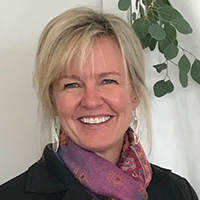
Headshot of Michele Preisendorf

Michele Preisendorf

Senior Editor, Eschler Editing

Michele earned her BA in English from Brigham Young University in 2002 and has worked as a freelance editor for several publishers over the last twenty years, helping hundreds of authors polish their prose and get their messages published. She’s been with Eschler Editing since its inception and has worked as an editorial-production manager and instructor for those wishing to improve their editorial skills. One of the things she loves most about her work is perfecting prose in a way that readers are able to focus on the message and not even realize they’re reading!

    Filed Under: Articles, Craft Skills, Creativity, Faith & Mindset, Fine Art, Media, Film & Theater, Music, Professional Skills, Publishing, Uncategorized, Writing Tagged With: copyright, derivative works, fair use, Inspiration, intellectual property, legal, media, stories, Writing

    Margaret Blair Young and the Power of Stories that Matter

    March 31, 2026 By LDSPMA Leave a Comment

    In a small town in the Democratic Republic of the Congo, a man stares at a hand-bound book in disbelief. Inside are the pages of his own story.

    “I’ve been poor my whole life,” he says. “I’ve been cheated out of a lot of things. But look, there’s a book about me.”

    For filmmaker and former Brigham Young University creative writing professor Margaret Blair Young, moments like this emphasize the power of storytelling. Throughout her career, Young has used stories to restore voices that history has overlooked—stories that heal, foster understanding, and illuminate faith.

    Young’s work documenting the history of Black members of The Church of Jesus Christ of Latter-day Saints began in 1998. “I had written quite a few books,” she recalls, “but I wanted to do something that really mattered.”

    After praying for guidance and receiving a blessing from her husband that confirmed her spiritual promptings, she latched onto this idea: “Why don’t I write stories of Black Mormon pioneers?”

    Soon afterward, she met Darius Gray under what she calls “pretty miraculous circumstances.” Gray is a journalist, businessman, and expert in Black Latter-day Saint history. He’s been actively engaged in human rights and civil rights causes for decades.

    “I actually had a cassette tape recording of him in my purse because I had ordered it while doing research,” Young recalls.

    When the two connected, Young had already written about one hundred pages. After reading the manuscript, Gray recognized the importance of the work. He looked over it and said, “Let’s do this together.”

    Young and Gray delved into history and wrote a trilogy of novels, Standing on the Promises, about the lives of early Black Latter-day Saints. When the pair began, these stories were largely undocumented. Even after publication, they continued to uncover new information that corrected earlier assumptions.

    “It’s a history that wasn’t terribly well known,” Young explains, likening the research required to that of three PhD dissertations.

    Confronting Racism in Church History

    Young’s work led to the documentary Nobody Knows: The Untold Story of Black Mormons, which explores the experiences of Black Church members before and after the 1978 revelation extending priesthood and temple blessings to all worthy male members.

    “We could say things that Church leaders couldn’t necessarily say and really hit the complexities and the depths of the issues head on.”

    Before the documentary’s release, Young and her collaborators showed it to the Church History Department and several General Authorities. The project was well received.

    Young’s determination to address such complexities stems from personal experience. She first confronted racism directly at fourteen when her seminary teacher used a racial slur in class.

    “I had a really visceral reaction to it.” She dropped out of seminary because of the incident. “That kind of [intensified] my own realization that we had a problem we needed to deal with.”

    Sharing Jane Manning James’s Story

    Young turned to creative work to confront the problem. She wrote the play I Am Jane about early pioneer Jane Manning James. When it was performed in Springville, Utah, around 2001, the production sold out and drew audiences from across the state. Many said they’d needed to hear Jane’s story, especially her petitions to President John Taylor asking about temple blessings. Young’s play captures the spirit of Jane’s appeal: If this was truly the “fullness of times,” and the promises to Abraham meant all people could be blessed, where was her blessing?

    Jane’s faith and courage invited audiences to open their hearts and recognize Christ in every person they encounter.

    In October 2020, President Russell M. Nelson called on members to “lead out in abandoning attitudes and actions of prejudice.” For Young, that work begins with recognizing when conversations are built on racist assumptions or when history is minimized or ignored.

    Meaningful change, she believes, begins within individuals. Too often, conversations about racism end quickly, dismissed with a clever comment or meme. Real growth begins with humility and willingness to examine one’s own heart. The point is not condemnation but to allow God to reveal attitudes that might otherwise remain invisible.

    “Ask the Lord to help you discern where [racist views] are and how you can clear them out.”

    For Young, confronting prejudice is not separate from faith. It’s a central part of it. Latter-day Saints have a unique foundation for combating racism in the Book of Mormon, which repeatedly emphasizes unity and equality.

    “There were no ‘ites’ among them. That should be the foundation for everything we do.”

    A New Calling In the Congo

    Young’s work eventually expanded beyond American history. “Darius was… the one who told me a whole lot about Africa.”

    At the time, she and her husband were serving in an MTC branch where missionaries were learning to speak French. Through those missionaries—many of whom were preparing to serve in Africa—she began corresponding with individuals in the Democratic Republic of the Congo.

    “Cinema had died about forty years ago in the Congo,” she explains. Government corruption and economic collapse left once-beautiful areas abandoned and in ruins. Yet she believes film offers a path toward renewal. “Cinema allows us to present new narratives.”

    At first, Young thought they would be “making a movie that happened to be set in the Congo, but was maybe filmed somewhere else.” Instead, they discovered they were meant to support a Congolese team in reviving the country’s cinema industry.

    Following the Work

    Young realized that individualized storytelling could bring even more meaning to the community. When the team traveled to a remote town, the Congolese film director discovered his great-aunt living there. His mother had lost her own mother in childbirth, and this aunt had cared for her.

    His great-aunt wept throughout their meeting. Because they spoke different languages, a translator helped them communicate. The following year, the team returned with his mother so the two could reunite.

    Experiences like these confirm the stories of the Congolese people are waiting to be told. Young believes these stories carry a sacred weight, revealing the true character of a nation often portrayed only as a tragedy. She feels called to help share a broader vision of the Congo—one that reveals its beauty and reminds people that its citizens are “our brothers and sisters,” and that “we should strive to have ‘no ‘ites’ among us in our hearts.”

    Young’s team collected oral histories from residents eager to share their experiences.

    “We would bind the books using whatever materials they could find—cardboard, fabric…” With a generator powering the printer, Young helped students produce books featuring their own photographs.

    The long-term vision was to create a library made up entirely of local stories. Many had lived through the devastating war that ended in 2003. “Some of the stories are horrifying, but they matter.”

    Finding Her Path

    Looking back, Young does not describe her path as carefully planned. She says it unfolded simply by being willing to begin.

    “I don’t know that you’d want to follow the way I do things because I’m a little bit crazy,” she laughs. But her approach has always been rooted in openness, paying attention to ideas that feel meaningful, and acting on them before the full path is visible.

    “If you’re not moving, not much will happen.” Her advice is to pray about what kind of work might bring good into the world, then begin. “Be open to anything. Trust that when you start doing something that is truly meant to edify and bring greater light into the world, it will be sustained.”

    For Young, the work has always been about helping people see one another more clearly and remembering that every life holds a story worth telling.

    This article is based on a Called to Create podcast aired season 1, episode 11. To hear the full podcast, click here.

    Filed Under: Articles, Called to Create Conversations, Creativity, Cultural Diversity, Faith & Mindset, Gospel Principles, Professional Skills, Uncategorized Tagged With: Black Latter-day Saints, Called to Create Conversations, church history, diversity, faith and creativity, film, inclusion, inspriation in creativity, stories, Writing

    The Lady and the Map of Sorrow: How Stories can Offer Direction in Dark Times

    September 23, 2021 By Bridgette Tuckfield 5 Comments

    By Bridgette Tuckfield   

    How Do You Know It Is Going to Be All Right?

    There are a few neurological explanations for why time moves much slower when you’re younger, which I reflected on recently when showing the film Howl’s Moving Castle to my niece Sadie, who is four.

    Sadie (aka the Lady) is a beautiful and sweet little girl with chubby cheeks, dimples, and the precise and uncanny ability to immediately and perfectly size up your insecurities and then unerringly cut you down to your core with a single sentence (a trait which I both marvel at and fear). She enjoys magic and peril and romance, and I thought Howl might appeal to her.

    There is a scene near the beginning of the film when the wizard Howl saves the young protagonist Sophie from some soldiers in an alley. He walks her away, when they begin to be pursued by Howl’s enemies—amorphous undulating black humanoid blobs, sporting dapper hats.

    It’s right before the first magical moment of the film—when Howl and Sophie take off flying, literally walking through the air to safety.

    When this happened, Sadie crawled into the crevice of the couch, terrified. “FAST FORWARD,” she yelled, and I paused it.

    “Sadie,” I said. “Don’t worry. It’s going to be fine. I promise Sophie is going to be fine. Just wait a minute.”

    She was incredibly dubious. “How do you know?” she asked.

    “I’ve seen the movie before,” I said, which left her unimpressed. I tried a few other tactics, to no avail: I promise you. I wouldn’t show you something terrible. I know it’s scary, but it’s only a few seconds, and then it will be magical (perhaps all the more so, given the peril). Actual time before the magic rescue? About fifteen seconds. I fast-forwarded it that time around; I’m not a monster. After we finished the film, it became Sadie’s favorite movie for a few months, which she could happily watch over and over with no fast-forwarding, but at the time, absolutely nothing worked to console her.

    My mother always told Sadie and her sister something when they were afraid during a kid’s movie—something like, “Nothing bad ever happens in a kid’s movie.” Whatever it was, it always seemed to work.

    Which was too bad, as I couldn’t ask her.

    Mom had died a few months earlier, at age 55.

    Grief: Both Universal and Isolating

    Grief is, I believe, maybe mostly beyond words. As Daniel Handler put it in his children’s series: “If you have ever lost someone very important to you, then you already know how it feels; and if you haven’t, you cannot possibly imagine it.”

    I will say that nowhere and with nothing else have I felt as keenly the conflation of time and space.

    What grief can feel like, sometimes, is a wound that will not stop bleeding—and bleeding and bleeding. When you look back it seems you have left a blood trail back to the time and place you cannot get to—the last place in the past where your loved one once lived, and where it seems they still wait as you move further and further away in time, leaving them behind.

    What it can do, sometimes, is shrink your entire world to only your loss and pain. Only your lack. With no hope of joy or meaning on the horizon—all that lies in the past, the only land you can never reach again.

    It is then, of course, that you are most vulnerable to despair. And once despair sets in around you, it seems like you will never live anywhere else again.

    I believe too that it can feel like this for everyone.

    Our Sorrow Shall Be Turned Into Joy

    Elder S. Mark Palmer addressed those feelings and fears for those of us mired in grief in his recent talk, “Our Sorrow Shall Be Turned Into Joy.” He centers his talk around what are the fundamental principles of our religion: that Jesus Christ died, was buried and rose again on the third day—that Jesus Christ lives and what that means for us:

    1. We will live again after we die. 
    2. This is possible through Christ. 
    3. We will see our loved ones again.

    As he puts it:

    This knowledge [of Christ’s resurrection] gives meaning and purpose to our lives. If we go forward in faith, we will be forever changed, as were the Apostles of old. We, like them, will be able to endure any hardship with faith in Jesus Christ. This faith also gives us hope for a time when our “sorrow shall be turned into joy.”

    Palmer also supports his message with the story of his parents, and how they navigated the loss of his sister Ann.

    By illustrating and testifying of these gospel principles, Palmer does a few things:

    He gives us an endpoint: the point at which our sorrow will be turned to joy.

    He gives us a way to get there: having faith, and following Christ:

    He gives us the truth. A way of understanding the world, as it is.

    And, in this case, a way out of despair and grief and sorrow.

    And what that truth is—what maybe all truths are—

    Is a map.

    A map to help us find the way through the dark.

    Stories Are Maps

    What I speak of here—the interrelatedness and importance of maps and narratives (and respectively, space and time)—is not a new concept.

    “To ask for a map,” writer Peter Turchi says, “is to say: tell me a story.”

    He goes on to say about the similarity: “Maps themselves are stories. They’re simplifications, distillations, and interpretations of a hugely complex world.  Maps provide meaning and context; they reveal patterns and relationships…sometimes maps can reveal hidden stories.”

    If a lifetime is a space, then times of grief and loss are a wasteland.

    This is perhaps why Elder Palmer ends his talk by stressing the steps you can take through sorrow (although perhaps never out of it), and the place you will find yourself if you do:

    I invite all who feel sorrow, all who wrestle with doubt, all who wonder what happens after we die, to place your faith in Christ. I promise that if you desire to believe, then act in faith and follow the whisperings of the Spirit, you will find joy in this life and in the world to come.

    As someone amid despair myself, this map spoke to my heart.

    Wrestling With Despair as a Saint

    All that said, it is not always easy to see the whole picture or the way forward.

    Sometimes—perhaps most times—we can only take it on faith.

    After all, some things can seem too good to be true, and thus to be regarded with suspicion.

    Stories tell us all this, too (Sadie knows this, even at four years old).

    Elder Palmer illustrates these difficulties with the story of the apostle Thomas. When Thomas is told of Christ’s resurrection, he doesn’t believe it:

    Later Jesus admonished Thomas, “Be not faithless, but believing.” Then the Lord taught the vital role of faith: “Blessed are they that have not seen, and yet have believed.”

    I have always felt for Thomas—it’s very human, to not want to believe something so longed for. It’s also human, with our limited perspective, to fail to see the whole picture because we only perceive the bad.

    Often in scripture, Christ encourages taking a broader perspective. Peter in particular seems to struggle with this (which I love him for).

    In Matthew 16:21-25, Christ is walking with and teaching his disciples. He tells them he needs to go to Jerusalem and says he will suffer and die there, to rise again.

    Peter objects; he says surely this doesn’t need to happen.

    Christ admonishes him and says, functionally, you’re looking at this from a narrow framework.

    You’re not looking at this from the view of God and seeing my true mission: the redemption of mankind, and that my death will not separate us for eternity but only for a brief moment. You’re looking at this from your limited mortal eyes, where my death would be just a catastrophe and separate us forever.

    In short:

    You lack perspective.

    You are not seeing the end.

    The whole picture.

    Darkness Can Delineate Light

    Elder Palmer also speaks of the wrenching ways this perspective can be gained and what else can come of it.

    He tells the story of the tragic loss of his sister Ann when she was only a toddler, and how it affected his parents:

    “Many years later Dad told me that if not for Ann’s tragic death, he would never have been humble enough to accept the restored gospel. Yet the Spirit of the Lord instilled hope that what the missionaries taught was true. My parents’ faith continued to grow until they each burned with the fire of testimony that quietly and humbly guided their every decision in life.”

    This illustrates how important contrast can be: dark and light, sorrow and joy.

    I know that I have fundamentally changed for the better as a person after the loss of my mother. My faith and connection to Heavenly Parents and Christ have improved.

    This does not mean, I must stress, that a specific loss or pain is good or warranted or just or necessary, but rather that it can point us in the right direction.

    It can make truths resonate with us more, just as the black ink of a map delineates meaning and space. Just as you can’t know light without dark.

    Small Truths

    Howl’s Moving Castle is not gospel, of course; it’s just a little gem of a film. And although I didn’t have my mother’s words or presence anymore in this time and place, I could at least comfort Sadie by sitting with her and promising her it would end well.

    When it came to Howl at least, I had the whole picture. I knew what was going to happen, and how, and why.

    Sadie had to find out for herself. She (like the protagonist Sophie) had to take the next steps, go through the (literally) fifteen seconds of dark (or in this case, again, very mild animated peril), to get to the magic part.

    But in that moment, and in that film, are small truths. Facts that resonate, and that you can hold on to in times of fog and despair.

    That you can never be certain of exactly how the end will look until you get there.

    That you have reserves of strength and power and beings who care for you, that you aren’t even aware of right now.

    And that ultimately, everything is going to be all right.

    Maybe—almost certainly—it will be better than anything you can imagine right now.

    Our Role: To Show a Way Through the Dark, as Best We Can, With the Truths We Know

    Truths (and the stories they’re embedded in) can be maps through darkness and despair. This is the case whether they are an ultimate truth such as Elder Palmer spoke of, or a small one like in Howl’s Moving Castle.

    I appreciate talks like Elder Palmer’s because his message was the promise of the purpose and the ending, given to us.

    He gave us a map to follow. Like all narratives do.

    For me, taking this message to heart meant flipping around the proverbial map of sorrow I was working with.

    I was not moving away from my mother, as I once believed — I am moving towards her. The lines between myself and her in the time and space that separates us are not trails of blood and tears as they felt and sometimes still feel, but bonds.

    The world around us is getting darker and brighter all the time.

    And storytelling is—and has perhaps always been—a “deeply spiritual act,” as the poet Clarissa Pinkola Estés says.

    It’s our job to add to the light.

    I believe we do this not by shying away from the dark — by timidly skirting a way around it, as we seldom get to do in life.

    I believe we do this by, instead, showing a way through it.


    Bridgette Tuckfield is a writer and semiotician.

    Filed Under: Articles, Craft Skills, Faith & Mindset, Gospel Principles, Writing Tagged With: blog, direction, generalconference, stories, tuckfield

    Primary Sidebar

    Write for Us

    Would you like to see your article featured here on LDSPMA?

    We are currently seeking article submissions. Learn what you need to know and submit your article here. 

    Recent Articles

    A green chalkboard, featuring the word COPYRIGHT in capital letters, surrounded by related keywords such as "licensing," "ownership," "media," "legal," etc.

    When Is Fair Use Fair?

    “Sometimes great wordsmiths say something in a way no one else can . . . Enjoy your quotes, but choose wisely as to what you share in your for-profit works.” -Michele Preisendorf

    A man sits on the forest floor in a meditative pose.

    When Your Brain Needs a Vacation

    “As creators, everything we do requires brainpower; we need to care for our most essential creative tool.” -KaTrina Jackson

    A woman reading a book while standing between two shelves full of books in a library or bookstore.

    3 Ways to Research the Genre You’re Writing

    “Successful writers know their readers … And successful writers write books that fulfill their readers’ wants while also adding unique and thrilling angles.” -Christina Crosland

    Search the Articles Archive

    Article Topics

    Recent Podcast Episodes

    Footer

    • Email
    • Facebook
    • Instagram
    • LinkedIn
    • YouTube

    Shop the LDSPMA Store

    Support LDSPMA with branded merch, including shirts, hats, water bottles, notebooks, stickers and more! Every purchase helps fund LDSPMA programs.

    Shop Now!

    Copyright © 2026 LDSPMA. All Rights Reserved. LDSPMA is not endorsed by nor affiliated with The Church of Jesus Christ of Latter-day Saints.