• Skip to main content
  • Skip to primary sidebar
  • Skip to footer

LDSPMA

Empowering Latter-day Saints to spread light and truth by connecting them at the intersection of faith, creativity, and professional skill

  • Conference
    • The 2026 LDSPMA Annual Conference
    • Conference Registration
    • The 2026 LDSPMA Annual Conference Schedule
    • 2026 LDSPMA Anthology Submissions
    • Theme Contests
    • Exhibit, Advertise, or Sell at the LDSPMA Conference
    • Partner with LDSPMA
    • FAQs
    • Volunteer at the LDSPMA Conference
    • Past Conferences
      • 2025 Conference
        • Sessions
        • Workshops
        • Awards Gala
        • Internship Fair
        • LDSPMA’s Got (Secret) Talent!
      • 2024 Conference
        • Sessions
        • Workshops
        • ZIFF Networking Dinner
        • Schedule
  • Membership
    • Email Sign Up (Free)
    • LDSPMA NextGen
    • University Chapters
    • Facebook Group
    • NextGen Youth Facebook Group
  • Programs
    • Monthly Zoom Discussions (Free)
    • Mentoring Program
    • Master Classes (2026)
  • Podcast
    • Watch
    • Listen
      • Listen on Apple Podcasts
      • Listen on Spotify
      • Listen on Buzzsprout
    • Called to Create Conversations
  • Articles
    • All Articles
    • Faith & Mindset
      • Gospel Principles
      • Creativity
      • Productivity
    • Craft Skills
      • Writing
      • Media, Film & Theater
      • Podcasting & Speaking
      • Music
      • Fine Art
    • Professional Skills
      • Editing
      • Publishing
      • Business
      • Cultural Diversity
      • Marketing
    • Write for Us
  • Awards
    • 2026 Award Nominations
    • Praiseworthy Awards
    • Spark Awards
    • Lifetime Achievement Awards
    • Past Award Winners
    • Apply to Be an Awards Judge
    • Mali McKenzie Award
  • About
    • Mission
      • LDSPMA in the Media
      • Success Stories
      • Viewpoint on LDSPMA
    • LDSPMA Leadership
    • Volunteers
      • Volunteer Year-Round
      • Volunteer at the LDSPMA Conference
      • Mali McKenzie Award Nominations
      • Apply to Be a Presenter
      • Apply to Be an Awards Judge
      • Resources for Current Volunteers
    • Policies
    • Contact US
  • Support LDSPMA
    • Donate
    • Volunteer
    • Partner with LDSPMA
    • Shop LDSPMA

media

When Is Fair Use Fair?

August 19, 2026 By LDSPMA Leave a Comment

Writers love quotes, songs, and funny or inspirational images. What word-nerd doesn’t? We tape them on our mirrors, dashboards, and walls and post them to our websites. We like them to set the tone for our novels, start our nonfiction chapters off with inspiration and insight, and add authority to our own ideas. But many writers are never quite sure what’s safe to quote—how much, and in what contexts? Are there instances when you can safely borrow material that belongs to someone else without infringing on their copyright? And what happens if you do—accidentally, of course—infringe on someone’s copyright?

Well, it’s not pretty if you happen to use material from someone with deep pockets and powerful attorneys. Using quotes, songs, images, or others’ intellectual property cited, used, or paraphrased in your book (images may include cartoons, comics, photos, stock art, graphics, memes, charts/data, etc.)—without copyright-holder permission—can result in lawsuits that result in a loss of hundreds of thousands of dollars (or more, in some cases) and limit your brick-and-mortar store distribution opportunities.

While you should always seek official legal counsel (from an expert in intellectual property law) before you use quotes, scenes, songs, images, etc., in any of your for-profit/for-fundraising works, we can give you a simplified answer to the basic questions above and where you need to start looking to make sure you’re square with the law. There’s even a software out there to help you determine if your quoted material is likely to fall under fair use or not. If you’re still unsure about what you can fairly use after reading this article, the best practice is to follow the old adages, “better safe than sorry” and “when in doubt, go without,” as evidenced by the myriad court cases that have come about when folks thought  that they were doing it right. (Or you can call in a favor or write a check to that local lawyer and get the nitty-gritty answers to your questions.)

Public Domain

The doctrine of fair use addresses what can be copied: You can copy material to your heart’s content if it’s general public domain. This basically refers to material that is “outdated.” Any work published before 1927 is free game (as of 2023, when this was updated; each year after 2023 adds one year forward in time to the public domain cutoff, making more items published after 1927 accessible for use—depending on what year it is when you’re reading this), and any work after 1967 for which the copyright was not renewed is also free game. And some authors/artists have published works they want to share, which they have declared as public domain.

Outside of public domain, you can’t use others’ ideas as the crux of your own argument in nonfiction, but only as support, and it’s smart to avoid using more than a few lines (and, if you’re worried, get permission even then). In many cases, the copyright holder is happy to have their work shared more broadly and will grant permission with no strings attached. Just be aware that if you’re producing a for-profit work, you’re at risk of someone’s right to sue if you have no permission to use the quoted material/IP. Here is a handy reference defining public domain in its many arenas. And a critical resource for parsing out everything copyright related—for writers—is The Copyright Handbook by Stephen Fishman, JD.

For-Profit Works

Back in the day, fair use allowed one author to use another author’s work in creating their own work if the total amount borrowed was within reason, even if the borrowing author’s book sold thousands of copies. Today, every fair-use violation is examined on a case-by-case basis determined by the rule of thumb that fair use not diminish the “potential market for or value of the copyrighted work ”  (U.S. Code, Title 17, Section 107). According to the code, “There is no specific number of words, lines, or notes that may safely be taken without permission.” In sum, if you use someone else’s ideas in your book and then you make money on your book, the copyright holder might feel he/she were owed royalties/payments for the borrowed ideas—arguing that those ideas helped popularize your book in the first place. Acknowledging the source of the copyrighted material does not substitute for obtaining permission.

When Fair Use Is  Fair to Use

The above said, fair use is supposed to protect the advancement of the arts, sciences, scholarship, commentary and criticism, etc., so the principle generally allows quotation of excerpts in the following cases (when you are):

  • Writing news reports.
  • Doing a review or criticism.
  • Teaching (must be nonprofit, face-to-face).
  • Writing research (these must be “short passages”; refer to a journal’s style guide for specific guidelines).
  • Producing parody.

In general you will find that organizations and publishers have their own rules based on experience (including lawsuits), the advice of lawyers (who we hope keep up on policy changes), and codes of ethics. For example, the American Psychological Association (APA) declares that copyright holders define what they consider fair use and that the responsibility for getting permissions lies with the user (APA style, 6th ed., section 8.04, p. 233; see also sections 1.10 & 6.10).

Obtaining Permissions

Authors should demonstrate a reasonable due diligence, or take steps to satisfy the legal requirements, in using copyrighted material.

The first step in obtaining permission is, of course, to determine who the copyright holder is. This is usually a publisher or producer. Next, contact the copyright holder. Publishers, authors/artists often have a form on their websites where you can request permission to quote something by typing exactly what you’re quoting and in what context. After that, you may need to negotiate payment with the copyright holder (sometimes permission is granted freely, sometimes at a cost—and sometimes copyright holders don’t reply for months). Finally, be sure to get your permission statement in writing; email counts.  If you never hear back after several varied attempts to contact someone, keep the quoting to a minimum and make sure you aren’t using the idea as the crux of your argument (or that you’re using their idea in a way that sounds like it’s your own idea). Also, you’re safest to avoid using the quote in a compendium. And most importantly, make sure to keep records of your attempts to gain permission. As a reminder, please know that that there is no completely safe number of words or images you can use in a for-profit work without permission. If you do not have permission, you are risking the possibility of a lawsuit if the copyright holder feels motivated to pursue one. Bear this in mind in your attempts to stay within fair use.

Cautions for Violations We See Frequently

There are some fair-use violations we see frequently in the book-publishing world. The most common violations with quoted material are authors not properly citing sources for quotes and paraphrased material—and not getting permission to do so even when cited. A second problem we see often is when authors use others’ ideas as the foundation of their argument or point rather than as additional support for their own ideas. Or the author’s point seems to be merely a rephrasing of another author’s work with no original angle or purpose. In addition to those main problems the following items require some caution as well:

Songs and images:  Use caution in quoting lines from songs and such. Publishing houses are super careful about using even one line. Self-publishers take on a significant risk in quoting lyrics without permission. Permission to use lyrics is often granted by the copyright holder—with the expectation of payment or a percentage of the royalties you make. Use of lyrics does not generally come cheap. If you’re looking for permission, check out these organizations that represent composers, writers, and publishers and advocate for performing artists: ASCAP, BMI, and SESAC.

Images (cartoons, graphics, stock art, photos, comics, drawings, memes, etc.) are also often available when you’ve sought written permission or paid for usage rights. However, understand the limitations of your usage rights. The copyright holder may be fine if you use it on a blog, but not fine if you use it in a for-profit work (like a book, inside or on the cover). Or your rights may have limits—you can use the image at x price for up to so many copies sold, but then you’ll need to pay more for copies after that. Or there may be time limits or other boundaries on your usage. Make sure you are crystal clear on when, how, and for how long you may use the material, and get that permission in writing!

Quotes from LDS Authorities:  Since a portion of our authors publish in the local LDS market, a word to the wise for authors quoting LDS Church General Authorities, or any material found on LDS.org: The Church is extremely careful about accuracy in quoting and attribution (and, additionally, doesn’t want quotes from Church authorities to be mistaken as an endorsement of any particular book), and consequently there is no fair use as far as the Church is concerned; anything ever uttered by a General Authority and anything ever printed in a Church-owned publication (like the Ensign ) is owned by the Church, and you have to get permission from them to use it—even if it’s just a phrase or a sentence. The Church is most concerned with authors quoting current authorities, and possibly somewhat less vigilant about very short quotes from long-deceased authorities (keep them under 200 words); however, the Church still prefers authors get permission for any quotes. Lastly, when it comes to quoting scripture, the scriptures themselves now fall under a renewed copyright and are not public domain (unless you are quoting from a version published before 1923 or simply quoting the King James Bible); this copyright protects footnotes, the Bible Dictionary, headings, and maps (and any other modern additions to the standard works). Additionally, distributors that can help get your book into brick-and-mortar LDS stores generally will not accept titles that have not gone through Church approval (if you include quotes, images, songs, etc., from Church-owned materials).

If you want to use Church-owned material, you have to fill out forms and formally request permission; you can do this through the Intellectual Property Office. This includes listing every scripture/quote you’d like to use and their page number, in addition to turning in the manuscript/book for review of the context around your quote. Know that it can sometimes take up to 45 days to get a reply, though many authors have reported a faster response time; so plan as far out as possible in order to avoid delays in publication.

(As a final reminder, this fair-use discussion applies to for-profit works; if you are publishing a book and selling it, that’s a for-profit work.)

Do This Now

  • Run your proposed use of the copyrighted material through a fair-use evaluation tool, which can help you determine if you are abiding by fair use. As of this posting, it’s totally free (and extremely helpful). Please note, however, that this tool is used as an educational resource and not as a substitute for legal counsel.
  • To get a sample of a permission letter and to learn even more about fair use, check out this incredible resource from Jane Friedman.
  • Get a copy of The Copyright Handbook by Stephen Fishman, JD.
  • Be sure to go through your upcoming work with a fine-tooth comb for any quoted material you intend to use; start working on getting permissions now  so that your work doesn’t get put on hold while waiting for permissions. If this seems like a tedious prospect in addition to everything else you’ve got to do, you can hire a personal assistant to do the grunt work!

Sometimes great wordsmiths say something in a way no one else can. It’s nice to be able to use their insight, but make sure it stays their  insight. Enjoy your quotes, but choose wisely as to what you share in your for-profit works.

Resources:

  • For more in-depth information about fair use, check out Stanford’s information on fair use and the U.S. Copyright Office’s article here.
  • Read this article by publishing attorney and literary agent, Joseph Perry. Have more questions for your project? Contact us for a direct referral to Mr. Perry.

This article was written by Michele Preisendorf with Angela Eschler and was republished with permission from Eschler Editing.
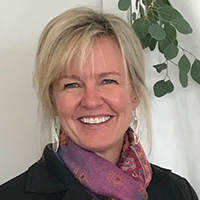
Headshot of Michele Preisendorf

Michele Preisendorf

Senior Editor, Eschler Editing
Michele earned her BA in English from Brigham Young University in 2002 and has worked as a freelance editor for several publishers over the last twenty years, helping hundreds of authors polish their prose and get their messages published. She’s been with Eschler Editing since its inception and has worked as an editorial-production manager and instructor for those wishing to improve their editorial skills. One of the things she loves most about her work is perfecting prose in a way that readers are able to focus on the message and not even realize they’re reading!

    Filed Under: Articles, Craft Skills, Creativity, Faith & Mindset, Fine Art, Media, Film & Theater, Music, Professional Skills, Publishing, Uncategorized, Writing Tagged With: copyright, derivative works, fair use, Inspiration, intellectual property, legal, media, stories, Writing

    Zoom Discussion: August 10, 2026: Promoting Healthy Relationships in Media

    August 3, 2026 By Marie Leslie Leave a Comment

    Emma Heggem

    with Emma Heggem

    Monday, August 10, 2026, 2 pm Mountain Daylight Time

    view recording

    Promoting Healthy Relationships in Media

    As Latter-day Saints, we have a divinely inspired perspective on relationships with our family, our spouse, and our fellow children of God. Using theme structures, we can make sure those perspectives come through in our creative works.

    Join Emma Heggem in this month’s Zoom Discussion to learn how we can accomplish this.

    About Emma: Emma Heggem is a freelance fiction editor who specializes in developmental and substantive editing. Learn more about Emma and her work at www.editsbyemma.com

    view recording

    Filed Under: Monthly Zoom Discussion Tagged With: business, media, Writing, Zoom Discussion

    LDSPMA Member Spotlight: Julie Spencer!

    August 14, 2021 By Trina Boice Leave a Comment

    What are some names of the books or other media you have created?

    I have over 30 publications, mostly romance and love stories. My most controversial novel is called Combustion, which is a powerful love story that readers have suggested should be on the required reading list for every high school in the world. In Combustion, readers see an emotional sexual assault through the eyes of the guy. My most popular fiction is a YA sports romance series is called All’s Fair in Love and Sports. I also have a romance/coming-of-age series called Rock Star Redemption, an action/adventure/romance series called Royal Family Saga, and several stand-alone romance/love stories that are LDS Christian fiction.

    What inspired you to become a creator of media?

    I’ve been writing and playacting since I was a little girl. I wrote my first novel in junior high but threw it away! What I wouldn’t give to have that manuscript back! My first published work was a poem in my junior high yearbook. My second published work was my master’s thesis. I didn’t write fiction again until I ran out of Twilight novels to read. Now I write the books I’d like to find on the shelves of bookstores and libraries. I love my characters and I love my readers.

    What has been the highlight of your career so far?

    Oddly, the highlights of my career so far come in the little moments. Every day, I publish a blog called Chapter-A-Day where I (courageously) publish unedited chapters from my current Work-in-Progress on my website and readers give me feedback. Sometimes, the feedback is critical. Usually, I’m told all the things my readers loved about the chapter and how they refresh the screen every little while, hoping the next chapter has been posted. The best compliments I receive are “I cried during chapter ten!” or “I didn’t see that twist coming!” or “I couldn’t put the book down!” Those are the highlights.

    What was the best advice you’ve ever been given in your creative journey?

    Get better covers for your books! People really do judge a book by its cover. My first published book was called The Cove and I found a beautiful photograph of the lake where I grew up with a pretty sunset. The book is not about the lake and the sunset. It’s a love story between the two main characters. Once I had a professional cover designed, the book started selling. Also, research the names of books and carefully select a title that conveys the genre. People search for books with keywords. Learn the keywords for your genre.

    What advice do you have for someone just starting out in your field?

    Write as much as you possibly can. Learn your craft. Don’t get distracted by the newest exciting thing but be open to new technology. Hire professionals to do the things you’re not good at or things that don’t have to be done by you. Anyone can do the dishes, mow the lawn, balance the checkbook, or shop for groceries. Only you can write the words in your head.

    What keeps you inspired in your daily creative work?

    My readers keep me inspired. I’ve had many readers tell me they refresh their screen hoping my next chapter has been posted. I can’t let them down. Receiving positive reviews buoys my resolve to put out the next book. Plus, I just love my own stories. I read back a particular passage and think, Dang, I’m a good writer! What the heck? Did I really write that? Yeah, I did. Vain? Maybe? Delusions of grandeur? Maybe. Do I care? No, not really. Go away, world. I’ve got more stories to write.

    What would you like others to know about you or your creative process?

    I write all day, every day, as much as I can fit into my day. I don’t find writing to be a job or inconvenience or a chore. My ideal vacation would be for everyone else to go away and let me write all day, every day. I have more stories in my head than I’ll ever be able to get on paper in my lifetime. Until the Lord intervenes and finds a way to force me to stop writing, you will continue to see content emerging from my brain. Writing is my happy place.

    In what ways do you feel you have been able to be a voice for good in your creative pursuits?

    My stories contain a lot of my religious convictions, including maintaining the laws of chastity and healthy living, such as avoiding drugs and alcohol. Although I don’t mean for my books to be preachy, my characters learn things the hard way and thus my readers learn the same lessons. As a convert to the gospel, I’ve seen the world outside the Church, and there are a lot of challenges, especially related to alcohol. A huge percentage of the world’s problems would go away by removing alcohol. I want to be a positive influence on the world.

    If you want your spotlight to link to your website or any of your social media platforms, include the URLs here.
    https://www.authorjuliespencer.com/

    Filed Under: Member Spotlight Tagged With: alcohol, All's Fair in Love and Sports, Author, Christian fiction, Combustion, Julie Spencer, Latter-day Saint Publishing and Media Association, Law of Chastity, LDS, LDS author, LDS fiction, love story, media, romance, romance books, romance genre, romance novels, romance writer, Royal Family Saga, Twilight, writers, YA

    Member Spotlight: Lisa Gregg!

    April 24, 2021 By Trina Boice Leave a Comment

    Lisa Gregg lives in Southeastern Utah.

    What inspired you to become a creator of media?

    I have loved stories and wanted to contribute creatively to the world since childhood. The desire to edit and help refine other people’s stories came later as a natural extension of that.

    When I was five or six, I tried to get my dad to write down a story for me. I knew my childish handwriting was hard to read and that my spelling was bad, so I wanted a shortcut. My dad wisely used it as a learning opportunity, as dads do, and convinced me to write it myself (though he did correct my spelling).

    What has been the highlight of your career so far?

    I recently finished and have begun revising my first full novel. Writing “the end” on the last page brought on a rush of relief and a feeling of achievement unparalleled by any I’ve previously experienced.

    I also highly enjoy attending writing conferences and classes and consider them highlights as well. They’re great, both for the chance to learn and for the opportunity to interact with other lovers of the written word.

    What was the best advice you’ve ever been given in your creative journey?

    The best advice I’ve received, I think, is to solicit and gracefully accept feedback. You don’t need to take every piece of criticism or correction, but it is important to realize that you are not perfect and other people can help you improve. I think that advice is helpful in writing and in life. Humility and a willingness to be corrected can be difficult to develop—I’m definitely not a master at it—but it is very helpful in the long run.

    What advice do you have for someone just starting out in your field?

    The advice is the same for both writing and editing: just keep practicing. Write, write, write, and read, read, read. Read stories, read history books, read books on writing. Find podcasts and classes and videos online about writing, and see what they have to teach you. If you are a big fan of a movie or book, try writing fanfiction for it. Then, put it online and get feedback on your writing. Practice may not make perfect, but it will certainly make you better.

    What keeps you inspired in your daily creative work?

    The world is full of inspiration. However, I personally think the most interesting story inspirations come from combining two or more interesting things together in a “what if” scenario.

    What would you like others to know about you or your creative process?

    I am a writer of sci-fi, fantasy, and whatever else tickles my fancy. In the past, I have been a poetry editor for a literary magazine and a corporate editor in an office, but now I edit fiction (and very occasionally nonfiction) on a freelance basis. I’ve also recently taken a position as an assistant librarian, which is great fun.

    As far as my process goes, I’m a night-writer generally, and I spend the day letting words and ideas digest. I believe in going on walks and seeking stillness. I think pondering, putting in the work spiritually, is necessary to put out good creative work.

    How do we find you online?

    You can find me on Instagram @lisatgreggwrites and my website www.lisatgregg.com.

    Filed Under: Member Spotlight Tagged With: fantasy book, Latter-day Saint, LDSPMA, LDSPMA Member Spotlight, media, sci-fi book, Writer, writing conferences

    Latter-day Profiles

    January 3, 2021 By Trina Boice 2 Comments

    Latter-day Profiles is a collaborative effort of students, faculty, and staff at Brigham Young University-Idaho. The program features in-depth interviews with noteworthy members of The Church of Jesus Christ of Latter-day Saints.

    Guests range from leaders in business and industry to educators, to musicians and authors to volunteers. All have stories to tell that are interesting, informative, and thought-provoking.

    Latter-day Profiles is produced by students in coordination with faculty and staff advisors. That means the students research the guests, schedule the interviews, run the cameras, and edit the programs.

    BYU-Idaho Communication faculty, Brian Howard, hosts the program and works closely with the students in the production process. Currently, Latter-day Profiles airs Sunday afternoons at 2:35 Mountain Time on BYUTV. Twenty-eight new episodes are produced every year.

    We thought you might be interested in seeing the schedule for the first quarter of 2021!

    LDPRF_39_01 / Carmen Rasmusen Herbert / Speaker, Singer & Author

    Airs January 3rd 2021 / February 28th 2021

    Carmen Rasmusen Herbert was a Top 6 finalist on the second season of FOX’s “American Idol” in 2003. She has appeared on many talk and entertainment shows including David Letterman, the Today show, MSNBC, and Good Morning America. 

    LDPRF_39_02 / Ed Sexton / Dean, College of Business and Communication at BYU-Idaho

    Airs January 10th 2021 / March 7th 2021

    Ed Sexton is the dean of the College of Business and Communication at BYU-Idaho. He has served in the Sixth Quorum of the Seventy and as a bishop, high councilor, mission president, stake mission president, stake president’s counselor, and stake president.

    LDPRF_39_03 / Meg Johnson / Speaker & Author

    Airs January 17th 2021 / March 14th 2021

    Meg Johnson is a founding partner for Jumping Turtle LLC and Our Turtle House. Her work as an influencer has touched many on a local, national, and international level, and Meg is a recipient of the Athena Leadership Award. Meg was a ballroom dancer and professional party planner. Then a weekend trip changed it all, and Meg was paralyzed on March 6, 2004, when she was hiking in Southern Utah.

    LDPRF_39_04 / Joel Bishop / Speaker & Actor

    Airs January 24th 2021 / March 21st 2021

    Joel Bishop is the president of Rise to Your Challenge, which offers speaking, training, and consulting services. Joel is an accomplished actor, speaker, and presenter.

    LDPRF_39_05 / David Christensen / Author

    Airs January 31st 2021 / March 28th 2021

    David Christensen is a senior advisor to the non-profit organization Mentors International. David is an author and has served as a mission president in Chile and as MTC President in Guatemala.

    LDPRF_39_06 / Trina Boice / Author, Podcaster, BYU-I Instructor & Entrepreneur
    Airs February 7th 2021 / April 11th 2021

    Dr. Trina Boice is a #1 best-selling author of 31 non-fiction books. She is an author coach at FromBooks2Business.com and creates online courses at LifelongLearningEducation.com.  Trina also writes movie reviews at MovieReviewMom.com. A popular international keynote, she has gone on many speaking tours around the world. 

    LDPRF_39_07 / Sharla Goettl / Author
    Airs February 14th 2021 / April 18th 2021

    Sharla Goettl is the author of “Spiritual Resilience: Leading Our Youth to Go and Do.”

    LDPRF_39_01 / Charlie Bird / Author

    Airs February 21st 2021 / April 25th 2021

    Charlie Bird was Cosmo the Cougar at Brigham Young University from 2016 to 2018. He received national acclaim for his multiple dance performances with the BYU Cougarettes. As Cosmo, he performed across the country, including on the ESPN College Football Awards and on America’s Got Talent. 2017 was dubbed “Year of the Mascot” by NBC Sports in honor of Cosmo’s character and performance. Charlie was born and raised in Southwest Missouri and served a two-year mission for The Church of Jesus Christ of Latter-day Saints in Redlands, California. He graduated from BYU in 2018. Charlie is an active LBGTQ advocate and is involved with multiple nonprofit LGBTQ organizations nationally and across Utah.

    Filed Under: Craft Skills, Media, Film & Theater, Podcasting & Speaking Tagged With: Brian Howard, Brigham Young University Idaho, BYU-I, BYU-I Communication, BYU-I faculty, Carmen Rasmusen Herbert, David Christensen, Ed Sexton, interviews, Joel Bishop, Latter-day Profiles, LDS, media, Meg Johnson, Sharla Goettl, Trina Boice

    Primary Sidebar

    Write for Us

    Would you like to see your article featured here on LDSPMA?

    We are currently seeking article submissions. Learn what you need to know and submit your article here. 

    Recent Articles

    A green chalkboard, featuring the word COPYRIGHT in capital letters, surrounded by related keywords such as "licensing," "ownership," "media," "legal," etc.

    When Is Fair Use Fair?

    “Sometimes great wordsmiths say something in a way no one else can . . . Enjoy your quotes, but choose wisely as to what you share in your for-profit works.” -Michele Preisendorf

    A man sits on the forest floor in a meditative pose.

    When Your Brain Needs a Vacation

    “As creators, everything we do requires brainpower; we need to care for our most essential creative tool.” -KaTrina Jackson

    A woman reading a book while standing between two shelves full of books in a library or bookstore.

    3 Ways to Research the Genre You’re Writing

    “Successful writers know their readers … And successful writers write books that fulfill their readers’ wants while also adding unique and thrilling angles.” -Christina Crosland

    Search the Articles Archive

    Article Topics

    Recent Podcast Episodes

    Footer

    • Email
    • Facebook
    • Instagram
    • LinkedIn
    • YouTube

    Shop the LDSPMA Store

    Support LDSPMA with branded merch, including shirts, hats, water bottles, notebooks, stickers and more! Every purchase helps fund LDSPMA programs.

    Shop Now!

    Copyright © 2026 LDSPMA. All Rights Reserved. LDSPMA is not endorsed by nor affiliated with The Church of Jesus Christ of Latter-day Saints.