• Skip to main content
  • Skip to primary sidebar
  • Skip to footer

LDSPMA

Empowering Latter-day Saints to spread light and truth by connecting them at the intersection of faith, creativity, and professional skill

  • Conference
    • The 2026 LDSPMA Annual Conference
    • Conference Registration
    • The 2026 LDSPMA Annual Conference Schedule
    • 2026 LDSPMA Anthology Submissions
    • Theme Contests
    • Exhibit, Advertise, or Sell at the LDSPMA Conference
    • Partner with LDSPMA
    • FAQs
    • Volunteer at the LDSPMA Conference
    • Past Conferences
      • 2025 Conference
        • Sessions
        • Workshops
        • Awards Gala
        • Internship Fair
        • LDSPMA’s Got (Secret) Talent!
      • 2024 Conference
        • Sessions
        • Workshops
        • ZIFF Networking Dinner
        • Schedule
  • Membership
    • Email Sign Up (Free)
    • LDSPMA NextGen
    • University Chapters
    • Facebook Group
    • NextGen Youth Facebook Group
  • Programs
    • Monthly Zoom Discussions (Free)
    • Mentoring Program
    • Master Classes (2026)
  • Podcast
    • Watch
    • Listen
      • Listen on Apple Podcasts
      • Listen on Spotify
      • Listen on Buzzsprout
    • Called to Create Conversations
  • Articles
    • All Articles
    • Faith & Mindset
      • Gospel Principles
      • Creativity
      • Productivity
    • Craft Skills
      • Writing
      • Media, Film & Theater
      • Podcasting & Speaking
      • Music
      • Fine Art
    • Professional Skills
      • Editing
      • Publishing
      • Business
      • Cultural Diversity
      • Marketing
    • Write for Us
  • Awards
    • 2026 Award Nominations
    • Praiseworthy Awards
    • Spark Awards
    • Lifetime Achievement Awards
    • Past Award Winners
    • Apply to Be an Awards Judge
  • About
    • Mission
      • LDSPMA in the Media
      • Success Stories
      • Viewpoint on LDSPMA
    • LDSPMA Leadership
    • Volunteers
      • Volunteer Year-Round
      • Volunteer at the LDSPMA Conference
      • Mali McKenzie Award Nominations
      • Apply to Be a Presenter
      • Apply to Be an Awards Judge
      • Resources for Current Volunteers
    • Policies
    • Contact US
  • Support LDSPMA
    • Donate
    • Volunteer
    • Partner with LDSPMA
    • Shop LDSPMA

Inspiration

When Is Fair Use Fair?

August 19, 2026 By LDSPMA Leave a Comment

Writers love quotes, songs, and funny or inspirational images. What word-nerd doesn’t? We tape them on our mirrors, dashboards, and walls and post them to our websites. We like them to set the tone for our novels, start our nonfiction chapters off with inspiration and insight, and add authority to our own ideas. But many writers are never quite sure what’s safe to quote—how much, and in what contexts? Are there instances when you can safely borrow material that belongs to someone else without infringing on their copyright? And what happens if you do—accidentally, of course—infringe on someone’s copyright?

Well, it’s not pretty if you happen to use material from someone with deep pockets and powerful attorneys. Using quotes, songs, images, or others’ intellectual property cited, used, or paraphrased in your book (images may include cartoons, comics, photos, stock art, graphics, memes, charts/data, etc.)—without copyright-holder permission—can result in lawsuits that result in a loss of hundreds of thousands of dollars (or more, in some cases) and limit your brick-and-mortar store distribution opportunities.

While you should always seek official legal counsel (from an expert in intellectual property law) before you use quotes, scenes, songs, images, etc., in any of your for-profit/for-fundraising works, we can give you a simplified answer to the basic questions above and where you need to start looking to make sure you’re square with the law. There’s even a software out there to help you determine if your quoted material is likely to fall under fair use or not. If you’re still unsure about what you can fairly use after reading this article, the best practice is to follow the old adages, “better safe than sorry” and “when in doubt, go without,” as evidenced by the myriad court cases that have come about when folks thought  that they were doing it right. (Or you can call in a favor or write a check to that local lawyer and get the nitty-gritty answers to your questions.)

Public Domain

The doctrine of fair use addresses what can be copied: You can copy material to your heart’s content if it’s general public domain. This basically refers to material that is “outdated.” Any work published before 1927 is free game (as of 2023, when this was updated; each year after 2023 adds one year forward in time to the public domain cutoff, making more items published after 1927 accessible for use—depending on what year it is when you’re reading this), and any work after 1967 for which the copyright was not renewed is also free game. And some authors/artists have published works they want to share, which they have declared as public domain.

Outside of public domain, you can’t use others’ ideas as the crux of your own argument in nonfiction, but only as support, and it’s smart to avoid using more than a few lines (and, if you’re worried, get permission even then). In many cases, the copyright holder is happy to have their work shared more broadly and will grant permission with no strings attached. Just be aware that if you’re producing a for-profit work, you’re at risk of someone’s right to sue if you have no permission to use the quoted material/IP. Here is a handy reference defining public domain in its many arenas. And a critical resource for parsing out everything copyright related—for writers—is The Copyright Handbook by Stephen Fishman, JD.

For-Profit Works

Back in the day, fair use allowed one author to use another author’s work in creating their own work if the total amount borrowed was within reason, even if the borrowing author’s book sold thousands of copies. Today, every fair-use violation is examined on a case-by-case basis determined by the rule of thumb that fair use not diminish the “potential market for or value of the copyrighted work ”  (U.S. Code, Title 17, Section 107). According to the code, “There is no specific number of words, lines, or notes that may safely be taken without permission.” In sum, if you use someone else’s ideas in your book and then you make money on your book, the copyright holder might feel he/she were owed royalties/payments for the borrowed ideas—arguing that those ideas helped popularize your book in the first place. Acknowledging the source of the copyrighted material does not substitute for obtaining permission.

When Fair Use Is  Fair to Use

The above said, fair use is supposed to protect the advancement of the arts, sciences, scholarship, commentary and criticism, etc., so the principle generally allows quotation of excerpts in the following cases (when you are):

  • Writing news reports.
  • Doing a review or criticism.
  • Teaching (must be nonprofit, face-to-face).
  • Writing research (these must be “short passages”; refer to a journal’s style guide for specific guidelines).
  • Producing parody.

In general you will find that organizations and publishers have their own rules based on experience (including lawsuits), the advice of lawyers (who we hope keep up on policy changes), and codes of ethics. For example, the American Psychological Association (APA) declares that copyright holders define what they consider fair use and that the responsibility for getting permissions lies with the user (APA style, 6th ed., section 8.04, p. 233; see also sections 1.10 & 6.10).

Obtaining Permissions

Authors should demonstrate a reasonable due diligence, or take steps to satisfy the legal requirements, in using copyrighted material.

The first step in obtaining permission is, of course, to determine who the copyright holder is. This is usually a publisher or producer. Next, contact the copyright holder. Publishers, authors/artists often have a form on their websites where you can request permission to quote something by typing exactly what you’re quoting and in what context. After that, you may need to negotiate payment with the copyright holder (sometimes permission is granted freely, sometimes at a cost—and sometimes copyright holders don’t reply for months). Finally, be sure to get your permission statement in writing; email counts.  If you never hear back after several varied attempts to contact someone, keep the quoting to a minimum and make sure you aren’t using the idea as the crux of your argument (or that you’re using their idea in a way that sounds like it’s your own idea). Also, you’re safest to avoid using the quote in a compendium. And most importantly, make sure to keep records of your attempts to gain permission. As a reminder, please know that that there is no completely safe number of words or images you can use in a for-profit work without permission. If you do not have permission, you are risking the possibility of a lawsuit if the copyright holder feels motivated to pursue one. Bear this in mind in your attempts to stay within fair use.

Cautions for Violations We See Frequently

There are some fair-use violations we see frequently in the book-publishing world. The most common violations with quoted material are authors not properly citing sources for quotes and paraphrased material—and not getting permission to do so even when cited. A second problem we see often is when authors use others’ ideas as the foundation of their argument or point rather than as additional support for their own ideas. Or the author’s point seems to be merely a rephrasing of another author’s work with no original angle or purpose. In addition to those main problems the following items require some caution as well:

Songs and images:  Use caution in quoting lines from songs and such. Publishing houses are super careful about using even one line. Self-publishers take on a significant risk in quoting lyrics without permission. Permission to use lyrics is often granted by the copyright holder—with the expectation of payment or a percentage of the royalties you make. Use of lyrics does not generally come cheap. If you’re looking for permission, check out these organizations that represent composers, writers, and publishers and advocate for performing artists: ASCAP, BMI, and SESAC.

Images (cartoons, graphics, stock art, photos, comics, drawings, memes, etc.) are also often available when you’ve sought written permission or paid for usage rights. However, understand the limitations of your usage rights. The copyright holder may be fine if you use it on a blog, but not fine if you use it in a for-profit work (like a book, inside or on the cover). Or your rights may have limits—you can use the image at x price for up to so many copies sold, but then you’ll need to pay more for copies after that. Or there may be time limits or other boundaries on your usage. Make sure you are crystal clear on when, how, and for how long you may use the material, and get that permission in writing!

Quotes from LDS Authorities:  Since a portion of our authors publish in the local LDS market, a word to the wise for authors quoting LDS Church General Authorities, or any material found on LDS.org: The Church is extremely careful about accuracy in quoting and attribution (and, additionally, doesn’t want quotes from Church authorities to be mistaken as an endorsement of any particular book), and consequently there is no fair use as far as the Church is concerned; anything ever uttered by a General Authority and anything ever printed in a Church-owned publication (like the Ensign ) is owned by the Church, and you have to get permission from them to use it—even if it’s just a phrase or a sentence. The Church is most concerned with authors quoting current authorities, and possibly somewhat less vigilant about very short quotes from long-deceased authorities (keep them under 200 words); however, the Church still prefers authors get permission for any quotes. Lastly, when it comes to quoting scripture, the scriptures themselves now fall under a renewed copyright and are not public domain (unless you are quoting from a version published before 1923 or simply quoting the King James Bible); this copyright protects footnotes, the Bible Dictionary, headings, and maps (and any other modern additions to the standard works). Additionally, distributors that can help get your book into brick-and-mortar LDS stores generally will not accept titles that have not gone through Church approval (if you include quotes, images, songs, etc., from Church-owned materials).

If you want to use Church-owned material, you have to fill out forms and formally request permission; you can do this through the Intellectual Property Office. This includes listing every scripture/quote you’d like to use and their page number, in addition to turning in the manuscript/book for review of the context around your quote. Know that it can sometimes take up to 45 days to get a reply, though many authors have reported a faster response time; so plan as far out as possible in order to avoid delays in publication.

(As a final reminder, this fair-use discussion applies to for-profit works; if you are publishing a book and selling it, that’s a for-profit work.)

Do This Now

  • Run your proposed use of the copyrighted material through a fair-use evaluation tool, which can help you determine if you are abiding by fair use. As of this posting, it’s totally free (and extremely helpful). Please note, however, that this tool is used as an educational resource and not as a substitute for legal counsel.
  • To get a sample of a permission letter and to learn even more about fair use, check out this incredible resource from Jane Friedman.
  • Get a copy of The Copyright Handbook by Stephen Fishman, JD.
  • Be sure to go through your upcoming work with a fine-tooth comb for any quoted material you intend to use; start working on getting permissions now  so that your work doesn’t get put on hold while waiting for permissions. If this seems like a tedious prospect in addition to everything else you’ve got to do, you can hire a personal assistant to do the grunt work!

Sometimes great wordsmiths say something in a way no one else can. It’s nice to be able to use their insight, but make sure it stays their  insight. Enjoy your quotes, but choose wisely as to what you share in your for-profit works.

Resources:

  • For more in-depth information about fair use, check out Stanford’s information on fair use and the U.S. Copyright Office’s article here.
  • Read this article by publishing attorney and literary agent, Joseph Perry. Have more questions for your project? Contact us for a direct referral to Mr. Perry.

This article was written by Michele Preisendorf with Angela Eschler and was republished with permission from Eschler Editing.

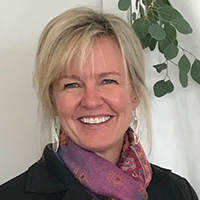
Headshot of Michele Preisendorf

Michele Preisendorf

Senior Editor, Eschler Editing

Michele earned her BA in English from Brigham Young University in 2002 and has worked as a freelance editor for several publishers over the last twenty years, helping hundreds of authors polish their prose and get their messages published. She’s been with Eschler Editing since its inception and has worked as an editorial-production manager and instructor for those wishing to improve their editorial skills. One of the things she loves most about her work is perfecting prose in a way that readers are able to focus on the message and not even realize they’re reading!

    Filed Under: Articles, Craft Skills, Creativity, Faith & Mindset, Fine Art, Media, Film & Theater, Music, Professional Skills, Publishing, Uncategorized, Writing Tagged With: copyright, derivative works, fair use, Inspiration, intellectual property, legal, media, stories, Writing

    A Complete Life of Color

    December 12, 2025 By LDSPMA Leave a Comment

    I can’t remember a time when art hasn’t been part of my life. It’s always been more than just a hobby—it’s been a way for me to make sense of things that words can’t really explain. It taught me how to slow down, give details the attention they deserve, and prioritize quality over just a completed product.

    Learning these qualities helped with my perfectionism. I have a desire for excellence that honestly isn’t always healthy and threatens to turn my hobbies into chores. But art taught me to enjoy the process rather than fixating on getting everything perfect. The more patient I was with myself and the process, the more I could enjoy creating and developing my skills.

    The lessons I learned through my paint, canvas, colored pencils, and sketchbooks served as metaphors for life. Through the application of color, I learned to appreciate the whole spectrum of human experiences. I can apply that artistic mindset to every challenge and triumph. That perspective helped me realize that just as I use complementary colors like yellow and purple to create depth, life is built on that same principle of contrast and opposition.

    But it’s a lot easier to understand this principle than to live it. Opposition isn’t just something that we must endure—it’s a fundamental truth that has existed since the beginning of time. The world needs night to have day. Animals graze, and predators prey on them. Summer gives way to winter. Life guarantees we’ll face opposition, and the wise understand that struggles are actually a gift, that enduring hardships helps us live a richer life.

    Good artists know that complementary colors create depth because they’re opposite each other on the color wheel, making them more vivid when placed side by side. Life works the same way—if we never experience the deep purples of sorrow, we can never fully appreciate the brilliant yellows of joy. Without one, the other loses its meaning. A life carefully sheltered from hardship might feel safe and comfortable. Some might argue that it is not worth the risk of another failed relationship, trying out for the team again, or taking a chance that might result in pain, but I invite you to appreciate your heartbreak. A person who avoids all adversity can’t fully experience the depth that struggle makes possible.

    The next time sadness comes—and it will—try to resist shaking your fist at it or rushing past it. Instead, take time to feel it. Notice what emotions are moving through your heart and soul. With time, something good will eventually happen. One day, someone good will come around, you’ll make the team, or you’ll triumph in some way. Your spectrum will be complete, and you will live a life full of all the best colors.

    In contrast to your previous sadness, this good thing will illuminate your soul in a way that shallow pleasure never could. There’s no replacement for that happiness—the joy that comes from emerging through genuine sorrow.

    I’ve walked through my share of dark valleys. I felt the grief of my friend’s drowning, and the loss of my grandfather when I was thousands of miles from home. Each brought intense pain—the deep purples and blues of my emotional spectrum. Yet the worst moments of my life were when I shut down completely, and my spectrum converted to grayscale.

    By the end of my senior year, the numbness from school pressures and responsibilities had turned into creative burnout. I was making art for portfolios and grades—not because I was inspired or excited to do it. Each piece was assigned to me, so every brushstroke seemed forced. I wasn’t connected to my work anymore. My art, which had taught me about patience and joy, had become just another source of stress. During that time, I felt nothing at all. Not sadness, not joy, not even anger—just a dull gray that stretched across my landscape. I would have given anything to feel sadness again, to feel anything. I needed to know I could still feel. I pleaded with God, “Please just let me cry again.”

    I learned that even the darkest colors are necessary. My struggles were specific to me and my journey, and they became essential preparation for what came next.

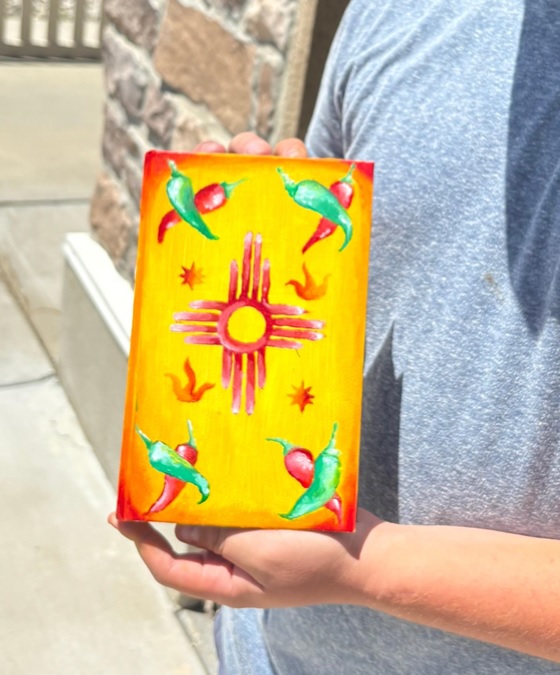
    At the beginning of summer, a friend asked me to paint his copy of the Book of Mormon. It felt like an epiphany. It was a way for me to step back into art, to use one of my talents to serve other people. I made an Instagram post offering to paint custom copies of the Book of Mormon for friends who’d received mission calls, and I got a lot of excited responses.

    When I paint those books, I make them as specific as possible to each person so my friends know they mean something to me. For one of my friends serving in New Mexico, I painted the state flag, with hot chili peppers and colors that capture that New Mexico vibe. For my friend who had won the state championship in a track-and-field relay with his teammate—who was also called to the same mission in Australia—I painted a hand exchanging a baton over two different books. When you put them together, you get the whole picture, all in Australia’s colors.

    The Spirit prompted me to write a letter to one of my friends in his book. He later texted me, saying, “That message really meant a lot to me. I was going through a really hard time.”

    I may never know how much receiving a painted book truly means in the moment. I’m sure my friends are grateful and think it’s cool. But I hope they realize later that it came from my desire to serve my Lord. As the scriptures say, “When ye are in the service of your fellow beings, ye are only in the service of your God.” I serve others because I love Him and because I love the people I’m serving.

    I learned that darkness is necessary in life and art, and that creating without purpose and intention makes the process feel incomplete. Because I knew what it felt like to be disconnected from my gifts, I now treasure the connection between creativity and service. The gray numbness I experienced helped me recognize color and feeling as sacred gifts. The contrast is what makes it meaningful—the purple makes the yellow more brilliant.

    Painting those books didn’t just reignite my love for art. It taught me, in the most tangible way, what it means to live a Christlike life—to embrace the full spectrum as He did. Christ is my ultimate inspiration for creating art and living fully. He is the first creator and encourages us to be creators as well. He is the light and the life of the world. His birth brought light, and his death brought darkness. He taught us that sadness is often the price we pay for lasting joy, and that the contrast itself is sacred.

    That’s how you live a beautiful, full-spectrum life. It’s actually pretty simple—but simple in a grand way, as all profound truths are when you take everything else away. Not by avoiding the hard colors or muting them, but by embracing them as essential parts of the complete picture. When you do, you discover that the contrast isn’t just bearable—it’s beautiful, and it’s what makes life worth living.

    A headshot of Aidan Pehrson.

    Aidan Pehrson

    Aidan Pehrson is a track-and-field athlete competing for Snow College. In addition to running, he enjoys painting, boating, surfing, and spending time with friends and family. He plans to leave on an LDS mission this summer.

      Filed Under: Articles, Craft Skills, Creativity, Faith & Mindset, Fine Art, Gospel Principles Tagged With: art, Inspiration, opposition

      Art Can Make You a Better Writer

      December 15, 2023 By LDSPMA Leave a Comment

      I am a visual learner. Images help me remember and understand things more thoroughly. Art has helped me become a better writer as well. Here are four ways to harness the creative power of art in your writing.

      Turn to Art for Mental Respite

      Art can inspire creativity by activating the part of your brain that is responsible for contemplation and daydreaming. Your brain isn’t designed to stay in work mode constantly. Giving your mind a break from structured assignments allows it to relax—it’s like a brain vacation. When my kids were small, they once sent me to my room for a time-out. It made for the best day ever! Sometimes your brain just needs a break.

      Reflect on Art to Inspire Your Writing

      Slow down and take time to analyze artwork or an interesting photo. Give yourself a moment to ponder about the details and reflect on your impressions. Doing this can lead to new ideas and give you insights that will spark your writing.

      A painting called Pirates by Ned Young, an artist from Brigham City, Utah, hangs on our living room wall. It depicts two young boys standing atop a haystack next to a barn. One boy holds a sword and wears an eye patch, while the other boy looks through a telescope. Beside them, a skull-and-crossbones flag waves on a pole. When I look at that painting, it takes me to a place in my childhood. I can smell the hay. I can feel the summer heat. It makes me wonder if cats live in the barn. Are the boys looking for a place to hide treasure, or are they escaping from hungry cannibals? I get all these impressions from a watercolor painted in Utah.

      Art isn’t just displayed in galleries—it’s all around us. You can find artistry in the way leaves overlap and create interesting compositions. Cloud formations are one of my favorite works of art. Look closely at a spider web or ripple patterns in the water. Find music in the sounds around you. Our Father in Heaven is the ultimate artist.

      If you make art appreciation part of your life, your observation skills will grow. Your ability to write accurate descriptions will improve as you increase your awareness of the world around you.

      Cultivate Empathy through Art

      Elevating your awareness of the creativity around you can increase empathy toward others. As you pay more attention to the subjects in art and how they are portrayed, you may notice details that evoke an emotional response. For example, The Child’s Bath by Mary Cassat holds a special place in my heart because it depicts a woman bathing a toddler, and it elicits feelings of comfort, love, and contentment.

      The Child’s Bath by Mary Cassat

      On the flip side, The Scream by Edvard Munch also reminds me of motherhood, particularly when my kids haven’t picked up their Legos, and I step on one.  

      The Scream by Edvard Munch

      Find Story Ideas in Art

      When you ask questions about what you’re seeing and why the artist portrayed the image in the way they did, it can kickstart your creativity. You can explore even further by inserting yourself into the picture and asking questions from a new perspective. What made the artist choose this subject? If you were the person in the painting, why are you in that setting? What is your story? Engage your senses as you ask these questions. What might you taste, smell, or hear in this situation? Use your enhanced focus to sharpen the way you write your descriptions.

      Take the opportunity for an art break, whether it’s enjoying a painting, a sculpture, or the intrinsic beauty of nature. Art will stimulate your mind, boost your creativity, and help you become a better writer.

      A headshot of Cathy Witbeck

      Cathy Witbeck

      Cathy Witbeck is a Canadian-born author-illustrator transplanted to the USA. She remembers writing and drawing ever since she could pick up a pencil. She did an especially lovely piece of artwork on the side of the septic tank with house paint at a very young age. Perhaps that’s when it was discovered that she was gifted, or maybe it’s why she was sent to the USA.
      She has five grown kids and one grown husband. When she isn’t writing and illustrating, she is chasing after grandkids intent on making their own artwork.

        Filed Under: Articles, Craft Skills, Fine Art, Writing Tagged With: art, Creativity, Inspiration

        Called to Create: Interview with New Host Connie Sokol

        March 10, 2022 By Rachelle Christensen Leave a Comment

        I am excited to introduce the new host of LDSPMA’s podcast Called to Create, Connie Sokol. Connie is a bestselling author, a national speaker, a media personality, and a program founder. She is a regular contributor on the top-rated lifestyle show Studio Five with Brooke Walker. She hosts Disciple Thought Leaders Retreats which teach women how to be influential writers, speakers, and media personalities. She is also the mother of seven.

        —-

        RACHELLE: The podcast’s name is Called to Create. Can you tell us what that means?

        CONNIE: Yes, we chose the title Called to Create because it resonates with creative people. There was discussion and prayer about what it could be that would reach the audience, which includes speakers, writers, musicians, publishers, and people trying to express the gospel through creative abilities. 

        RACHELLE: You definitely nailed the title. How did you get into media?

        CONNIE: I feel like Heavenly Father has plugged me in and out of experiences. I started speaking for the Church Education System. I was doing Education Week and Especially for Youth. One thing led to another, and I started doing professional speaking on the side. I had seven kids, so I would do a little bit at a time. 

        Then Bonneville Communications KSL approached me and asked me to be a host of a women’s radio show. You know that phrase, “Start as you mean to go on”? That was poignant for me. I was going to have another baby, and I said, “I cannot do every day from three to six, but I can give you two days a week from noon to three, because I’m a mom.” 

        They ended up having three hosts do one schedule for the week so we could all put our families first. And it was beautiful. The radio show kicked this off for me in a big way, and then I was invited to do TV with Brooke Walker. I’ve been doing that for 16 years now. I sort of fell into it, but I was looking for opportunities for the Lord to use me.

        It’s not a talk at you podcast. It’s very much like you’re sitting at the kitchen table enjoying a conversation with people who are extraordinary.

        RACHELLE: You’re a best-selling award-winning author, you’ve written 18 books, you do TV and podcasting, and you’re a media personality. How does that impact your ability to interview the guests on Called to Create? 

        CONNIE: I see profoundly how Heavenly Father has placed me in different situations so that when I’m interviewing these guests—like Lisa Valentine Clark, Al Carraway, The Jets—I’m able to connect. I understand what it takes to publish a book. I’ve done traditional publishing and self-publishing. I’ve had an agent. I have all these different experiences that the Lord has plugged me in and out of, just enough to be able to connect. 

        That’s one of the things I love about this podcast. It’s not a talk at you podcast. It’s very much like you’re sitting at the kitchen table enjoying a conversation with people who are extraordinary. They’re showing us by their process how they made it happen. My experience really helps me to go deep, fast. Through shared experiences we can laugh and learn together and have juicy, enriching conversations.

        RACHELLE: We are lucky to have you. Tell us how you connected with LDSPMA?

        CONNIE: Well, I’ve had my own podcast. We’re coming up on 180 episodes, and it’s been great. I’ve had wonderful guests on there, like New York Times bestselling authors. Then at the beginning of last year, I had this feeling like I needed to do more with my podcast. But it was already going well, and I didn’t understand what it meant. 

        A few months later, the thought of LDSPMA resonated, and I was like, I wonder if they have a podcast? When I asked, it just so happened that their original host, who had done a great job, was leaving and they were looking for a new host. 

        I contacted them and we immediately connected. We had the same vision, of getting this out and increasing the reach, and it’s been incredible already. We put 14 episodes in the can within two and a half months. It was unbelievable. The miracles fell into place.

        RACHELLE: Can you tell us what’s your favorite part of the podcast process?

        CONNIE: We have a beautiful team, and we laugh, and we have all these incredibly talented volunteers. We’re all volunteers. We’re just doing this for Him. So that’s a really fun piece. 

        But I think the guests have been incredible—the things that they’ve shared from their heart, the way they’ve shared the gospel in unexpected ways. I’m interviewing The Jets, and they’re talking about a Book of Mormon with Boy George; and then Al Caraway and how when she first came on the scene she was so passionate about the gospel, and then people just shredded her, and she really had to get tight with Heavenly Father. Moments like that where one minute you’re laughing, and one minute you’re crying. 

        It’s just the most wonderful experience and blessing to peek into the lives of these amazing people, and I am bettered by every single interview that I have done.

        If you have felt called to share His message through your creative abilities, this is the podcast for you.

        RACHELLE: What will audience members get from listening to this podcast?

        CONNIE: So much. I think tools might be your biggest surprise. We make sure they give takeaways so that you’ll come away with something every podcast to help on your creative journey. What are some of the how-tos? How did they get started in the speaking business? When you hear a show tool, you will just be blown away. You will want to jump out of your chair and become a speaker.

        But it’s these tools, these takeaways, these tips that you can start putting into your life regardless of what genre you’re in. You can apply them and start seeing the difference. You’re going to get great stuff.

        RACHELLE: For people who don’t listen to many podcasts or don’t think they have the time, what would be a reason to check this one out?

        CONNIE: Because it will impact your life. If you have felt called to share His message through your creative abilities, this is the podcast for you, even if you don’t listen to any other podcast. If you have felt a rumble, if you felt called to speak or write a book, or to do something in social media, or to be a musician or an artist or whatever, this will help you on your creative journey for Him. 

        This is all about: How do we apply the gospel? How do we navigate the intersection of faith, creativity, and professional skill? How do we make those hard choices that keep us on the straight and narrow to do what we came here to do? That’s the difference in this podcast. It is part devotional, part scripture, part life experience, part kitchen table chat. You’re getting all the things in one podcast.

        RACHELLE: Connie, what is one thing that you feel Called to Create?

        CONNIE: As you know, I help women with the Disciple Thought Leadership Retreats to do this very thing, so they can get in and make it happen. But beyond that and my family, it’s this podcast. 

        I really do feel “called to create” with this wonderful team. We feel so strongly about Elder Bednar’s invitation to sweep the earth as with a flood on media, particularly social media. 

        We yearn to help every person who feels called to be able to get their message out, to be distinct and different and articulate, to have the tools and the inspiration. And when they’re like, “I’m so done,” like in Alma when they talk about “when our hearts were depressed and we were ready to turn back,” right? They listen to this podcast, they listen to an episode, and they’ll be like, I can do this. I can keep going. I get what He wants me to do, and I’ll just take the next right step. That’s what we hope.

        —-

        Fabulous. I love that. This is such a treat. I am really glad that we got to know Connie Sokol a little bit better today. We are so fortunate to have her, I am so excited for the podcast this new season, so everybody listen in. We have a lot of great information in store for you.

        Author Profile

        Rachelle J. Christensen is the award-winning author of over 20 books, a mother of 5, and organizer of 75+ chickens raised annually by her family. Rachelle enjoys online marketing and harnessing the power of social media. She has worked with a multi-million dollar worldwide company, publishers, and dozens of authors, including New York Times bestseller David Farland and celebrity Merrill Osmond.

        Rachelle carves out writing time in between home-schooling kids and her work as a writing and marketing coach for authors. She graduated cum laude from Utah State University with a degree in Psychology and a minor in Music.

          Filed Under: Articles, Craft Skills, Faith & Mindset, Gospel Principles, Member Spotlight, Podcasting & Speaking Tagged With: creative people, developing talents, Inspiration, interviews, podcasting

          Member Spotlight: Brittany Passmore!

          April 10, 2021 By Trina Boice Leave a Comment

          This week’s member spotlight is Brittany Passmore from Logan, Utah!

          What inspired you to become a writer/musician/publisher/creative in media?

          In high school, I read The Wheel of Time series by Robert Jordan (finished by Brandon Sanderson). I was so moved by the journey I’d gone on in this fictional world that I knew I had to have a career involved with fiction. I went to college hoping to improve my writing skills and ended up falling in love with editing. Someday, I hope I can share my love of writing with the world too, but I’m really passionate about helping other writers refine their writing and accomplish their publishing dreams.

          What has been the highlight of your career so far?

          I’ve loved seeing how the authors I work with grow through the various phases of revising and editing. It’s amazing to see how not only their stories but their writing skills can completely transform for the better from manuscript to manuscript with just a little guidance!

          What was the best advice you’ve ever been given in your creative work?

          I think the best advice I’ve been given has actually been in the example of one of my professors at BYU, Matt Baker. He was always so kind and generous in the way he interacted with others. But also so careful in how he carried out his responsibilities so that he truly gave his best work. I think that combination of attributes is what makes others trust and respect you and helps you find satisfaction in your daily work.

          What advice do you have for someone just starting out in your field?

          If you want to be an editor, you need to be willing to really study and learn about language. I started out thinking I knew a lot about writing and grammar (and I did, to an extent), but I quickly learned that you need to be humble enough to know that you have a lot to learn and you need to train yourself to always double check yourself so you don’t add your own errors to another’s work.

          What keeps you inspired in your daily creative work?

          My family is a big inspiration for me right now. My husband is still in school, so I’m taking a big role in helping to provide for us. When I think of my little boy, Parker (who is almost two!), I just want to work harder to give him everything I can. But I’m also really inspired by Christ’s example of service. When I think about how I’m really providing a service for others and not just trying to make money, I look at my daily work in a better way and find true joy in helping others in their creative writing.

          What would you like others to know about you or your creative process?

          I’m learning that my creative work goes a lot better when I keep my priorities balanced. For instance, I’m trying to be better about praying before I work to show the Lord that He is the most important aspect of my life and so I can have His spirit and strength to guide me.

          Tell us about your work!

          In my freelance editing service, I provide developmental editing, substantive editing, copyediting, proofreading, and manuscript evaluations for novelists, especially those writing in science fiction and fantasy genres. (If you’re confused about what these different kinds of editing are, just head over to my website; I explain the difference on my contact page!) Sometimes I blog about writing tips, too.

          What are the names of your books/products you’ve created?

          I have a freelance editing service called “Passmore Edits.”

          What is your website URL?

          https://brittanympassmore.wixsite.com/passmoreedits

          What are your social media URLs?

          Facebook: https://www.facebook.com/passmoreedits

          Instagram: https://www.instagram.com/passmore_edits

          Twitter: https://www.twitter.com/passmoreedits

          Pinterest: https://www.pinterest.com/passmoreedits

          LinkedIn: https://www.linkedin.com/in/brittany-passmore

          Filed Under: Member Spotlight Tagged With: Freelance, Inspiration, Member Spotlight, Writer

          Seeking and Creating Praiseworthy Works

          April 7, 2021 By tfinch Leave a Comment

          By Ted Finch

          Our Thirteenth Article of Faith proclaims, “If there is anything virtuous, lovely, or of good report or praiseworthy, we seek after these things.” My original goal for this blog post was to share quotes from a handful of articles I’ve studied over the last few months that have had an impact on my growth as a creative person trying to figure out how to share my light through praiseworthy works.

          As I worked through several paragraphs, I started asking myself questions such as, “Why am I writing this?” and “Should I include this?” Finally, it dawned on me that I don’t need to write about what is in the articles themselves; rather, write about the idea that we have to work on our spiritual development and our artistic development in tandem. That is the moment the words started to flow.

          The Spiritual and Artistic in Tandem

          Artist James C. Christensen stressed the idea to many of his BYU students, “We cannot separate our spiritual development from our artistic development. We must work at both.” There is wonderful insight that comes when we involve God in our creative pursuits. Keeping our connection with the Spirit is key to receiving the guidance we need to grow spiritually and creatively. 

          Elder Bruce R. McConkie said that the “Spirit of Christ . . . is the medium of intelligence, that guides inventors, scientists, artists, composers, poets, authors . . . when they set their hands to do that which is for the benefit and blessing of their fellow men.”

          In 1995, President M. Russell Ballard stated at the Tuachan Mormon Arts Festival (later published in the July 1996 Ensign), “God’s purpose for the artist is to inspire. To give us visions of ourselves that we might not otherwise see, to make us better than we would have been.” 

          Think about that. Our purpose as creatives is to inspire ourselves and others to see the world differently—in a better way. We can be guided to create things that will benefit and bless the lives of others. 

          A hand holding out a candle. Sharing light, symbolic of creating and seeking praiseworthy works.
          A Call to Share Our Light

          In his speech, President Ballard stated, “This is the time, brothers and sisters to make our voices heard.” I think that call still rings true almost 21 years later. As we see more winds of commotion and confusion blow across the plains of the world, we must rise to the call to fill our quarters of the world with light and truth. 

          How do we do this? As creatives, we “express [ourselves] in universal symbols, images, sounds, and feelings.” We have the “unique opportunity to present [our] opinions, and perspectives on Eternity” through “universal symbols, images, sounds, and feelings” (Ballard, 1995).

          Now it’s time for you to discover how the Lord wants you to make your voice heard. It may be in the walls of your home, to your extended family, to your community, or to the world. You might share your praiseworthy stories, ideas, music, or other unique opinions from your perspective. Now is the time to share.

          Enjoy your journey. Bring others with you.

          ~~~~~~~~~~~~~~~~~~~~~~~~

          Author’s Note: I linked articles I cited in the article and have included a few others below to help start you on your path of creative discovery.

          “The Sweep the Earth as a Flood” talk by Elder David A. Bednar
          “The Arts and the Spirit of the Lord” speech by President Boyd K. Packer
          “Seeking after the Good in Art, Drama, Film, and Literature” essay by Travis T. Anderson

          ———————————————————————————–

          Ted Finch is a husband, father, disciple, and storyteller. He loves stories through novels, poetry, and film. Ted loves baking bread, fishing, and spending time outdoors. He is also passionate about creating learning experiences for audiences around the world.

          Twitter – @tedthewriter

          Instagram – @tedthewriter

          Website – tedthewriter.wixsite.com/home

          Filed Under: Articles, Faith & Mindset, Gospel Principles Tagged With: Articles of Faith, Creating, Creative, Creativity, good works, Inspiration, LDSPMA, Mormon, Praiseworthy, praiseworthy works, Ted Finch

          Primary Sidebar

          Write for Us

          Would you like to see your article featured here on LDSPMA?

          We are currently seeking article submissions. Learn what you need to know and submit your article here. 

          Recent Articles

          A green chalkboard, featuring the word COPYRIGHT in capital letters, surrounded by related keywords such as "licensing," "ownership," "media," "legal," etc.

          When Is Fair Use Fair?

          “Sometimes great wordsmiths say something in a way no one else can . . . Enjoy your quotes, but choose wisely as to what you share in your for-profit works.” -Michele Preisendorf

          A man sits on the forest floor in a meditative pose.

          When Your Brain Needs a Vacation

          “As creators, everything we do requires brainpower; we need to care for our most essential creative tool.” -KaTrina Jackson

          A woman reading a book while standing between two shelves full of books in a library or bookstore.

          3 Ways to Research the Genre You’re Writing

          “Successful writers know their readers … And successful writers write books that fulfill their readers’ wants while also adding unique and thrilling angles.” -Christina Crosland

          Search the Articles Archive

          Article Topics

          Recent Podcast Episodes

          Footer

          • Email
          • Facebook
          • Instagram
          • LinkedIn
          • YouTube

          Shop the LDSPMA Store

          Support LDSPMA with branded merch, including shirts, hats, water bottles, notebooks, stickers and more! Every purchase helps fund LDSPMA programs.

          Shop Now!

          Copyright © 2026 LDSPMA. All Rights Reserved. LDSPMA is not endorsed by nor affiliated with The Church of Jesus Christ of Latter-day Saints.