• Skip to main content
  • Skip to primary sidebar
  • Skip to footer

LDSPMA

Empowering Latter-day Saints to spread light and truth by connecting them at the intersection of faith, creativity, and professional skill

  • Conference
    • The 2026 LDSPMA Annual Conference
    • Conference Registration
    • The 2026 LDSPMA Annual Conference Schedule
    • Conference Recordings
    • Instruments in God’s Hands
    • Theme Contests
    • Exhibit, Advertise, or Sell at the LDSPMA Conference
    • Partner with LDSPMA
    • FAQs
    • Volunteer at the LDSPMA Conference
    • Past Conferences
      • 2025 Conference
        • Sessions
        • Workshops
        • Awards Gala
        • Internship Fair
        • LDSPMA’s Got (Secret) Talent!
      • 2024 Conference
        • Sessions
        • Workshops
        • ZIFF Networking Dinner
        • Schedule
  • Membership
    • Email Sign Up (Free)
    • LDSPMA NextGen
    • University Chapters
    • Facebook Group
    • NextGen Youth Facebook Group
  • Programs
    • Monthly Zoom Discussions (Free)
    • Mentoring Program
    • Master Classes (2026)
  • Podcast
    • Watch
    • Listen
      • Listen on Apple Podcasts
      • Listen on Spotify
      • Listen on Buzzsprout
    • Called to Create Conversations
  • Articles
    • All Articles
    • Faith & Mindset
      • Gospel Principles
      • Creativity
      • Productivity
    • Craft Skills
      • Writing
      • Media, Film & Theater
      • Podcasting & Speaking
      • Music
      • Fine Art
    • Professional Skills
      • Editing
      • Publishing
      • Business
      • Cultural Diversity
      • Marketing
    • Write for Us
  • Awards
    • 2026 Award Nominations
    • Praiseworthy Awards
    • Spark Awards
    • Lifetime Achievement Awards
    • Past Award Winners
    • Apply to Be an Awards Judge
  • About
    • Mission
      • LDSPMA in the Media
      • Success Stories
      • Viewpoint on LDSPMA
    • LDSPMA Leadership
    • Volunteers
      • Volunteer Year-Round
      • Volunteer at the LDSPMA Conference
      • Mali McKenzie Award Nominations
      • Apply to Be a Presenter
      • Apply to Be an Awards Judge
      • Resources for Current Volunteers
    • Policies
    • Contact US
  • Support LDSPMA
    • Donate
    • Volunteer
    • Partner with LDSPMA
    • Shop LDSPMA

personal growth

Writing Real Life: Eight Fiction Techniques for Narrative Nonfiction

October 14, 2026 By Kami Pehrson Leave a Comment

Two years ago, my friend Christi asked for my help framing a book about her breast cancer journey. Although she had previously written and published a memoir and self-help books, she was struggling to arrange these painful new experiences into a clear narrative.

The storytelling techniques I’d learned from studying fiction helped us uncover the dramatic structure already present in Christi’s story. By combining those techniques with her vision, her clinical knowledge as a psychologist, and her hard-won wisdom as a cancer survivor, we shaped her experiences into an inspiring memoir and guide to emotional healing.

As Christi related her memories, I realized interviewing her was like researching to write historical fiction. When plotting my novels, I mine old books and archives, scanning the text for interesting details and events to form the bones of the story. I found I could apply the same methods to narrative nonfiction.

This October, Christi and I published Reluctant Warrior on Amazon, just in time for Breast Cancer Awareness Month.

Here are eight lessons I learned about using fiction techniques in narrative nonfiction:

1. Establish Character and Perspective

Christi, of course, is the main character; her family, friends, and doctors serve as supporting characters. Just like in a close first-person point of view, the reader experiences events through Christi’s perspective and senses. I asked many questions to drill down into that experience . . .

  • “What did you notice?”
  • “What scared you?”
  • “What did you see as you walked into the hospital room?”
  • “Did you notice any smells or noises?”

She wrote, “I tried not to flinch as the thick, long needle penetrated my right breast. It went ‘click, click, click’ as the doctor removed three samples.”

When Christi describes her biopsy, the reader feels as if they are watching the scene unfold.

2. Set the Scene to Ground the Narrative

Whether Christi is hooked up to an IV in the hospital, resting in her bedroom, or traveling to the Mayo Clinic, her surroundings reflect her mood, beliefs, and actions.

In this passage, she describes her return to a hospital where she’d earlier undergone treatments:

The physical therapist had offices in the hospital where I’d had several of my surgeries. I’d pull up outside the west campus of Flagstaff Medical Center and already feel my body tense. Walking in was triggering, or looking up at the window of the room where I’d spent a week marinating in heavy-duty antibiotics. The same halls. The same smells. The same furniture in the lobby.

Here, the setting carries emotional weight. Common sights and smells link her current experience to the stress of earlier hospital stays.

3. Find Each Chapter’s Theme

Themes emerged as we discussed the central insights Christi wanted to convey in each chapter. She made a list of things she wished someone had told her during treatment: that recovery can continue long after treatment ends, that completing chemotherapy can feel unexpectedly lonely, that losing friendships during illness can add another layer of grief . . . We focused our conversations on these themes to explore how they influenced Christi’s beliefs about herself and her recovery.

4. Identify Conflicts

To find the main conflict in each chapter, I would ask her, “What happened that changed things for you?” Her answers included difficulties such as a loss of identity, the death of a dear friend from cancer, and the emotional effect her cancer diagnosis had on her loved ones.

In both fiction and real life, external challenges create internal struggles and shape thought processes. Christi’s surgical complications, familial strain, and judgments from online and real-life friends become emotionally meaningful as they challenge her beliefs about herself, her relationships, and her recovery.

For example, Christi received online messages such as, “Stop milking a diagnosis you no longer have,” and “Quit whining. It happened. So what?”

These messages prompted her to ask herself, Am I whining? Am I making a bigger deal out of this than it is? Do I just need to try harder?

5. Structure the Plot

Using plot beats as prompts helped us find the story structure inside Christi’s memories. We talked about where to start, what obstacles arose, how Christi responded, and what changed inside her. Because most of the problems she faced didn’t have clear endings, most chapters ended with a new insight instead of a final resolution.

I recorded our conversations with Microsoft Word’s Transcribe feature. Then we went through the transcripts, looking for parts that:

  • moved the story forward,
  • conveyed the emotions that accompanied Christi’s experiences, and 
  • supported each chapter’s main theme.

To find the inciting incident—the event that interrupts the main character’s normal life and starts the story—I asked, “What happened that changed things or made it impossible to continue as you had before?”

Christi’s cancer diagnosis is the inciting incident for the book as a whole. In each chapter, we also looked for an event that pushed the story forward and generated tension: a situation, a disruption, and a response.

In one chapter, we presented the situation in which Christi attended her final appointment with her plastic surgeon, still feeling far from healthy and whole. The disruption came when he told her she was “done.” Her response was confusion and disbelief:

A cold hollowness opened up in my chest. I said out loud: ‘I’m done? What does that even mean?’ His verdict didn’t inspire relief or an ending. Instead, it felt more like dismissal—or like the medical system was saying, ‘We’re done with you. Good luck.’

To explore how challenges developed, I asked Christi: “What did you try?”; “What obstacles did you encounter?”; and “How did you respond?”

In a later chapter, a series of emotionally taxing, embarrassing tests at Mayo Clinic let readers follow her through the uncertainty and strain of her search for answers. We also explored moments when she felt she had reached rock bottom. One such moment occurred when a doctor blamed her surgical complications on her attendance at her brother’s wedding.

Finally, we looked at the results of these experiences by asking, “What did you feel then? What happened afterward? Did the experience change what you believed or did next?” Her answers helped us link outside events to their emotional effects and see how her beliefs changed.

6. Revise Wisely

Carving out the story required a lot of editing, but we didn’t want to remove anything important. We decided which sections to cut by asking, “What does this moment add that we haven’t already established?” We aimed to set the relevant moments apart while retaining enough background to help readers understand what was happening and in what order.

Balancing meaning and emotion while trusting readers to make their own connections was a bit tricky. We cut explanations that were too obvious, parts that distracted from the main theme, and repeated ideas.

On the other hand, some parts moved too fast or didn’t give enough detail. Sometimes, we described an event without explaining why it mattered. In those places, I asked Christi, “What made this event difficult, and how did it affect what you did or felt afterward?” We added her answer to the story.

This is where a great editor—shout-out to Hailey Webb!—helped us determine what parts to cut and what needed more development.

7. Establish a Consistent Voice

We wanted to include Christi’s experience as a clinical psychologist and apply her reflections to her lived experience, making the book part memoir and part self-help. As such, Christi is both the person living through the events and the expert helping readers understand their emotional impact.

To show both viewpoints, we focused on making the voices sound natural. Her insights came from real experience. We even wrote a scene where the wise “Dr. Christina Hibbert” (name changed) talks to the scared, hurting Christi.

8. Create Tonal Contrast

We paced the story so readers wouldn’t feel overwhelmed by constant conflict. We added lighter memories and humor to give readers a break between tough topics like death and illness. This contrast also shows Christi’s fun side and lets her voice guide readers sensitively through subjects that might otherwise be triggering.

Helping Christi write this memoir pushed me out of my comfort zone, but I’m thankful for the chance to try a new genre and grow as a writer. I’ve always believed that studying the craft of storytelling helps us understand life, and I feel lucky to have helped Christi share her story. I know that other cancer warriors who read it will find hope and encouragement in her experiences.
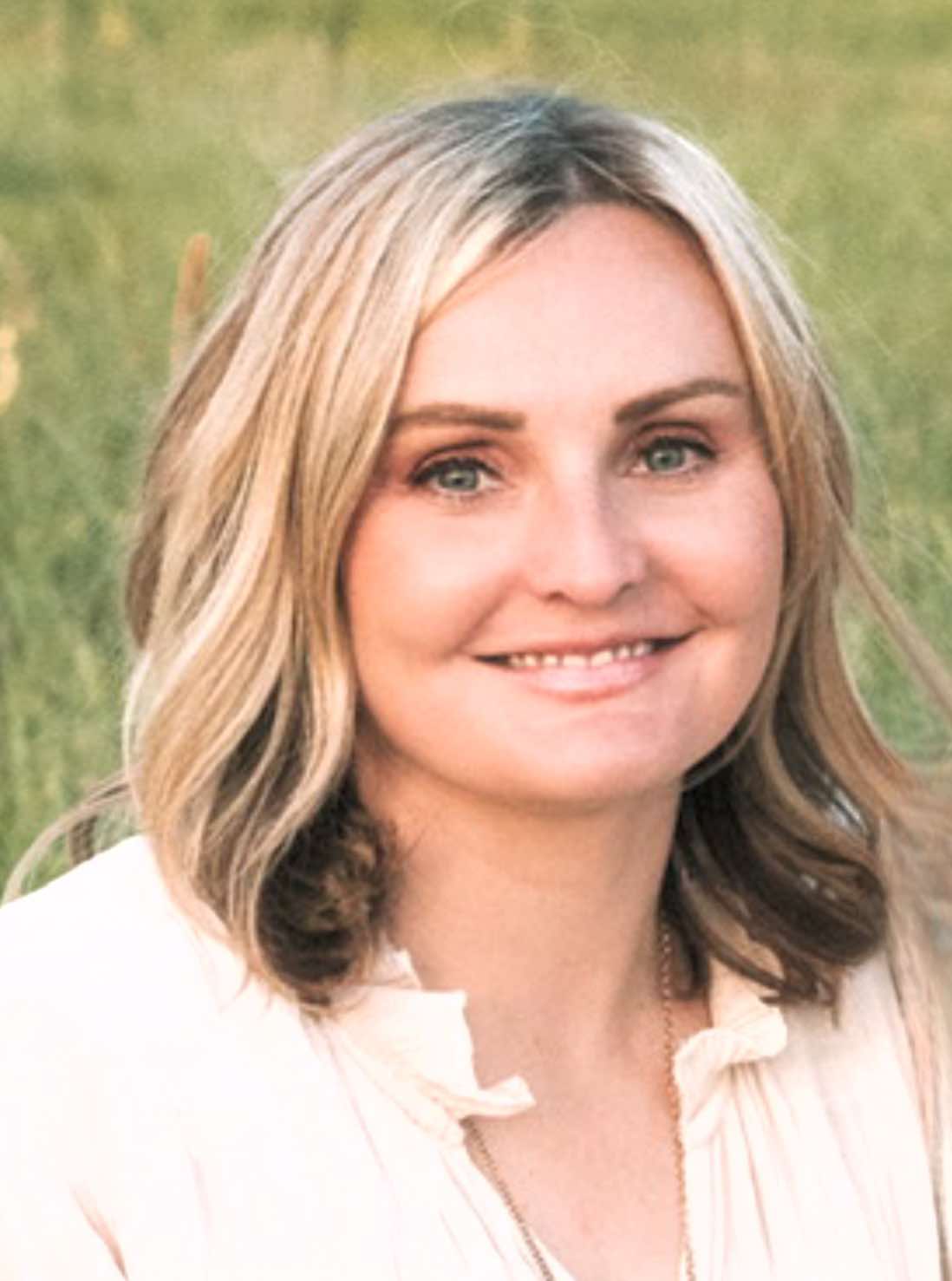
Headshot of Kami Pehrson.

Kami Pehrson

Author, Editor

Kami Pehrson writes historical fiction and essays about witch hunting, supernatural lore, folklore, and faith, exploring the strange and forgotten past. Kami has always believed history makes the best fiction. She lives in Stansbury Park, Utah with her husband, five teenage children, and a suspicious number of Halloween decorations. She loves editing, reading, and playing word games on her phone. She also enjoys growing plants that don’t always survive and listening to audiobooks while half-heartedly doing Pilates in the living room.

    Filed Under: Articles, Craft Skills, Creativity, Editing, Faith & Mindset, Professional Skills, Uncategorized, Writing Tagged With: book editing, Editing, editing and publishing, memoir, nonfiction, personal growth, personal history, personal narrative, Storytelling, Writer, Writing

    Sometimes Things Do Work Out

    February 24, 2022 By Steve Dunn Hanson 28 Comments

    By Steve Dunn Hanson

    I first met Bill in 1987. He was a regional representative for The Church of Jesus Christ of Latter-day Saints and was visiting our stake in Orange County, California where I served as a counselor in the stake presidency. To this day, I can’t tell you why there was almost instant bonding between us, as he was over 20 years my senior. Maybe it was because we both loved to write. In any case, virtually from the git-go we traded writings. Mine, fiction and self-help articles. His, memoirs and personal history. And what a history! From a boy of small stature with a horrific stuttering problem and son of a coal-dust-eating railroad engineer, to a man known throughout the world for his accomplishments and contributions.

    I got the best of the bargain in our exchanges. Bill was not only the consummate “Martha” with his practicality and I’ll-figure-out-how-to-do-it genius, but he was a spiritual, poetic “Mary” as well, an extraordinary hybrid whose writing skill dwarfed my own.

    An Act of Kindness

    One of his stories was particularly poignant. As a boy, Bill lived in Provo, Utah, and his diminutive size and severe stuttering problem contributed to his painfully shy disposition. He was always the last one chosen for a team—if chosen at all—and was the subject of constant derision from many of his peers. He was maybe eight or nine-years-of-age when his grade school teacher gave the children an assignment to write an essay and then read the essay in front of the class.

    Bill’s turn came, and he fearfully stood, knowing what would happen next. His stuttering was so overwhelming that he didn’t get more than a few words out before he stopped. Embarrassed to tears, he started to take his seat when the teacher told him to stay where he was. “You will finish, Bill,” she said. She probably meant well, thinking that forcing Bill to go through this would help him overcome his stuttering. For Bill, though, his teacher’s act bordered on cruel.

    For the longest time, Bill just stood there. Then a remarkable thing happened. One of his classmates, a young girl by the name of Millie, who was sitting on the front row, reached out her hand, took his, then smiled up at him. That simple act of support calmed and strengthened him, and he finished his reading.

    That simple act of support calmed and strengthened him.

    Making Connections

    Such were the Bill Gould stories he shared with me, and for the next few years, we kept in close touch. Bill’s wife, Erlyn, was a beautiful woman. How he idolized her and cared for her. She was a cancer victim and graciously and courageously struggled to stay afloat. She passed away in 1992, and it was as though a chunk of Bill died with her. For the next nearly two years it seemed as though Bill just disappeared, and I had little contact with him.

    Then one day when my wife and I were in the Los Angeles Temple, I saw him. And he was not alone! When he saw me, his face turned total smile, and he pulled the woman he was with close to him. “Steve, do you remember one of my stories about a girl named Millie who held my hand to help me get through an agonizing ordeal when I was a boy?”

    “Yes!” I answered. “Who could forget that story!”

    Bill’s smile got wider. “This is Millie. Millie Gould now. We were married last week.”

    My turn to smile!

    Bill then talked about his funk when his wife, Erlyn, died. He was in an I’m-going-no-where morass, and he finally determined to get out of it. His plan was straight Bill Gould. He reviewed his life to determine those who had given him grace, who had made all the difference for him at critical times. Then one-by-one he sought them out to tell them thank you and to now impart his own grace to them to the extent he could.

    While this was happening, Bill’s daughter, who lived in Provo, was talking to her neighbor, a widow, about her dad. She explained how difficult his life was since his wife’s death and what he was now doing. When the neighbor heard that his last name was Gould, she asked what his first name was.

    “William,” Bill’s daughter replied.

    “Billy Gould?” the neighbor asked surprised. “As a boy, did he go to school in Provo by any chance?”

    The daughter nodded, and her neighbor, Millie, grinned. “Billy Gould and I were classmates in grade school.”

    Bill’s daughter told him who her neighbor was, and Bill put her on his thank you list to contact. The rest, as they say, is history.

    We Must Act for Ourselves

    Sometimes, things do work out, but I think things can just about always work out, but I believe it is our choice. I don’t mean in a Pollyannish kind of way, or that the results will always be what we initially desired. Rather, we can choose how any situation or circumstance we find ourselves in will ultimately affect us. We can literally shape the results of all our experiences. I believe that’s what Lehi meant when he said, “…The Lord God gave unto man that he should act for himself. … They have become free forever, …to act for themselves and not to be acted upon” (See 2 Nephi 2:16,26 emphasis added).

    Things can just about always work out, but I believe it is our choice.

    For a long time, my friend Bill was in a funk because of his wife’s death. Who wouldn’t be? But he was being acted upon. He let his circumstance dictate his mood. It controlled him. He was not free. Then he chose to be grateful. Instead of looking at his wife’s death as an emotional and debilitating black hole, he made her life a symbol of his gratitude. A catalyst for him to act. And, as I said, the rest is history.

    Bill’s experience and example has been an inspiration to me in my writing and in my life. While rejection, writer’s block, and a zillion other things can be gut-punches, I’m finding I can choose to turn the experience: To learn from it. To be a better writer. To be a better person. To make my experience a positive one for me. Granted, how it works out is not usually what I thought or hoped it would be. But because I choose to act, it becomes a blessing. Hopefully, it can for you too.

    Steve Dunn Hanson

    Steve Dunn Hanson is the author of several books, including inspirational and adventure fiction and self-help non-fiction, which have been traditionally published and self-published. In addition, he has had articles published in The Ensign, and writes poetry and hymns. He and his wife, Joyce currently live on a scenic hill in northeast Washington.

    Visit Steve Dunn Hanson at https://stevedunnhanson.com/

      Filed Under: Articles, Faith & Mindset, Gospel Principles, Productivity Tagged With: faith, inspirational, personal growth, resilience

      Primary Sidebar

      Write for Us

      Would you like to see your article featured here on LDSPMA?

      We are currently seeking article submissions. Learn what you need to know and submit your article here. 

      Recent Articles

      Writing Real Life: Eight Fiction Techniques for Narrative Nonfiction

      “I’ve always believed that studying the craft of storytelling helps us understand life, and I feel lucky to have helped Christi share her story. I know that other cancer warriors who read it will find hope and encouragement in her experiences.” -Kami Pehrson

      Delivering—and Receiving—Negative Feedback in a Constructive Way

      “If you remember to give feedback with kindness and sincerity and accept it without being defensive, you just may find your writing career reaching new heights.” -Sabine Berlin

      Catching Up to AI

      “Once we better understand that a loving, interested God created us in His image for a powerful, eternal purpose with a vast—mostly untapped—potential, we will realize that AI should be neither feared nor abused.” -Michael House

      Search the Articles Archive

      Article Topics

      Recent Podcast Episodes

      Footer

      • Email
      • Facebook
      • Instagram
      • LinkedIn
      • YouTube

      Shop the LDSPMA Store

      Support LDSPMA with branded merch, including shirts, hats, water bottles, notebooks, stickers and more! Every purchase helps fund LDSPMA programs.

      Shop Now!

      Copyright © 2026 LDSPMA. All Rights Reserved. LDSPMA is not endorsed by nor affiliated with The Church of Jesus Christ of Latter-day Saints.