• Skip to main content
  • Skip to primary sidebar
  • Skip to footer

LDSPMA

Empowering Latter-day Saints to spread light and truth by connecting them at the intersection of faith, creativity, and professional skill

  • Conference
    • The 2026 LDSPMA Annual Conference
    • Conference Registration
    • The 2026 LDSPMA Annual Conference Schedule
    • Conference Recordings
    • Instruments in God’s Hands
    • Theme Contests
    • Exhibit, Advertise, or Sell at the LDSPMA Conference
    • Partner with LDSPMA
    • FAQs
    • Volunteer at the LDSPMA Conference
    • Past Conferences
      • 2025 Conference
        • Sessions
        • Workshops
        • Awards Gala
        • Internship Fair
        • LDSPMA’s Got (Secret) Talent!
      • 2024 Conference
        • Sessions
        • Workshops
        • ZIFF Networking Dinner
        • Schedule
  • Membership
    • Email Sign Up (Free)
    • LDSPMA NextGen
    • University Chapters
    • Facebook Group
    • NextGen Youth Facebook Group
  • Programs
    • Monthly Zoom Discussions (Free)
    • Mentoring Program
    • Master Classes (2026)
  • Podcast
    • Watch
    • Listen
      • Listen on Apple Podcasts
      • Listen on Spotify
      • Listen on Buzzsprout
    • Called to Create Conversations
  • Articles
    • All Articles
    • Faith & Mindset
      • Gospel Principles
      • Creativity
      • Productivity
    • Craft Skills
      • Writing
      • Media, Film & Theater
      • Podcasting & Speaking
      • Music
      • Fine Art
    • Professional Skills
      • Editing
      • Publishing
      • Business
      • Cultural Diversity
      • Marketing
    • Write for Us
  • Awards
    • 2026 Award Nominations
    • Praiseworthy Awards
    • Spark Awards
    • Lifetime Achievement Awards
    • Past Award Winners
    • Apply to Be an Awards Judge
  • About
    • Mission
      • LDSPMA in the Media
      • Success Stories
      • Viewpoint on LDSPMA
    • LDSPMA Leadership
    • Volunteers
      • Volunteer Year-Round
      • Volunteer at the LDSPMA Conference
      • Mali McKenzie Award Nominations
      • Apply to Be a Presenter
      • Apply to Be an Awards Judge
      • Resources for Current Volunteers
    • Policies
    • Contact US
  • Support LDSPMA
    • Donate
    • Volunteer
    • Partner with LDSPMA
    • Shop LDSPMA

Editing

10 Writing Tips to Make Your Writing Glisten 

September 6, 2024 By Kami Pehrson 1 Comment

I’ve always been the bookish sort, hanging out with imaginary characters in the library while my peers went out to recess, reading about adventures instead of going on them, and scanning the dictionary for sophisticated zingers to wield in future (and unlikely) debates. It wasn’t that I didn’t have many friends—though that is also true—but I believed I had a firm grasp of language arts from a young age. However, it wasn’t until I set out to write a novel that I discovered I’d been making some rookie mistakes. Through my study of the craft, suggestions from editors, and earning an MA in English and creative writing, I’ve compiled a list of tips you might find helpful. While no one wants their artistic endeavors stifled by dos and don’ts, incorporating these suggestions to align with your style will make your writing more effective, engaging, and concise. 

  • Eliminate Adverbs 
    Stephen King once told me to cut out all my adverbs. Well, he didn’t tell me this personally, but I did listen to him narrate his audiobook On Writing, so it felt like he was speaking to me. This advice confused me at first. Why wouldn’t I want to use a million modifiers to clear up any ambiguity a lone verb might create in the reader’s mind? Well, because adverbs can be condescending and lazy. Strong verbs provide narrative context to allow the reader to grasp your meaning without relying on a plethora of -ly words. Readers are intuitive; go ahead and trust them. Use adverbs as you would cayenne pepper—just enough to give your writing a kick. (I learned this the hard way in writing and cooking—sorry, family). 
  • Choose Your Dialogue Tags Carefully 
    I loved assigning a clever tag to each dialogue line in my stories. One character would “exclaim,” the next would “shout,” and another “declare.” However, these expressive tags distract from the dialogue and narrative flow. Stick to simple tags like “said” or “asked,” but even these aren’t entirely invisible. Mix them with action beats, internal thoughts, sensory details, and body language. If dialogue can be understood without a tag, don’t use one. Don’t reiterate a character’s emotion with a redundant tag. Also, be wary of onomatopoeic words like “grunt,” “snort,” “groan,” or “guffaw”—these sounds are hard to make while speaking. 
  • Avoid Clichés 
    The adage “All that glitters is not gold” is as true now as when Shakespeare coined the phrase, but overuse of expressions degrades their literary impact. In dialogue, common idioms can reflect a character’s voice, background, or personality, but avoid them in narrative and descriptive passages. Don’t say, “Listening to him talk was like watching paint dry.” There are countless other boring things in the world. Create something original to complete the metaphor and make your writing stand out. 
  • Eliminate or Change Repetitive Words and Ideas 
    I try to avoid overusing my favorite words when writing. However, searching for a synonym in the middle of a writing session can slow down creative flow, and in my case, lead to deep dives into etymological rabbit holes and distractions like word games and quizzes on the dictionary app. Instead, wait until the revision process and use your word processor’s “find” feature to search for words you tend to repeat. Then delete them or think of alternatives.
  • Ground Your Characters and Set the Stage 
    Even if readers can reasonably assume the scene takes place in a particular city or country, let them know where the characters are at the start of the narrative. Don’t let your characters float in a void for the first few paragraphs. Provide enough description to ground readers, but be careful not to overdo it. Each aspect of the character’s environment should serve a purpose, like carefully chosen decorations in a room. Include enough key pieces and furniture to make the setting feel real, and avoid littering it with unnecessary details that distract from your purpose.  
  • Be Specific 
    Words like “there,” “that,” “those,” “it,” “this,” “here,” and “which,” along with other vague pronouns, can slip into sentences when you’re not looking. While these pronouns might be convenient placeholders in a first draft, carefully examine them during editing. Pronouns are necessary and effective when their antecedents are clear, and they help avoid repetition of nouns. However, when their reference is unclear, they can confuse readers and weaken the impact of your writing. Specific language clarifies your meaning and helps readers form a complete mental image of the scene. 
  • Avoid Heavy-Handed Dialect 
    Overwrought vernacular can cause readers to stumble over dialogue, pull them out of the story, and frustrate them. Avoid phonetically spelling words to make a character seem ignorant or foreign. Misspelling words to mimic pronunciation can make the text challenging to read and disrupt the narrative. Plus, it’s easy to get it wrong unless you’re very familiar with the region or social group you’re trying to represent. The goal is to enhance the narrative, not create barriers between your story and the audience. I once tried to write all my dialogue in Early Modern English because my book was set in the 17th century. Alas! My readers grew tired of slogging through all the “forsooths” and “prithees.” I left some archaisms in because what fun would it be to remove them all? As my linguistics teacher advised, “Remain true to your characters and their language, but don’t sacrifice clarity.” Use dialect sparingly to give a subtle flavor of a character’s education, background, and regional origin.  
  • Limit Adjectives 
    Oh, how I love delightful, beautiful, intrepid adjectives. Why else would I spend my childhood reading the dictionary but to stuff my prose full of sharp-witted, erudite, and droll descriptive words? Are adjectives your darlings too? Kill them. They cling to a sentence like barnacles and drag down the narrative. Scrape off adjectives that don’t serve a purpose before they sink your story. Keep only those that sharpen the image or add essential information. 
  • Get Rid of Filter Words 
    Perception verbs like “feel,” “hear,” “see,” “realize,” “watch,” “notice,” and “wonder” clutter up the story, create distance between the reader and the narrative, and dilute the story’s immediacy. For example, instead of “I saw the car drive by,” you could say, “The car drove by.” Immerse the reader in the action and setting by showing instead of telling. For example, instead of “She felt nervous,” you might say, “She clasped her trembling hands in her lap.” Let the reader experience the story through the POV character, not filtered through an extra layer of interpretation. 
  • Use Active Voice Instead of Passive Voice 
    Look for words like “had,” “were,” “was,” “have been,” and other “to be” verb forms followed by the past participle of the main verb. For instance, instead of saying, “The food was eaten by me,” opt for the more direct, active version: “I ate the food.” Replace weak “to be” verb forms with stronger verbs. Using the active voice whenever possible will make your sentences more engaging and precise. 

Apply or Disregard These Suggestions as You See Fit! 
Don’t be afraid to write for fear of “breaking” a rule. The key lesson I’ve learned is to put your ideas down on paper, then go back later and make your writing glisten.


Happy writing and revising! 
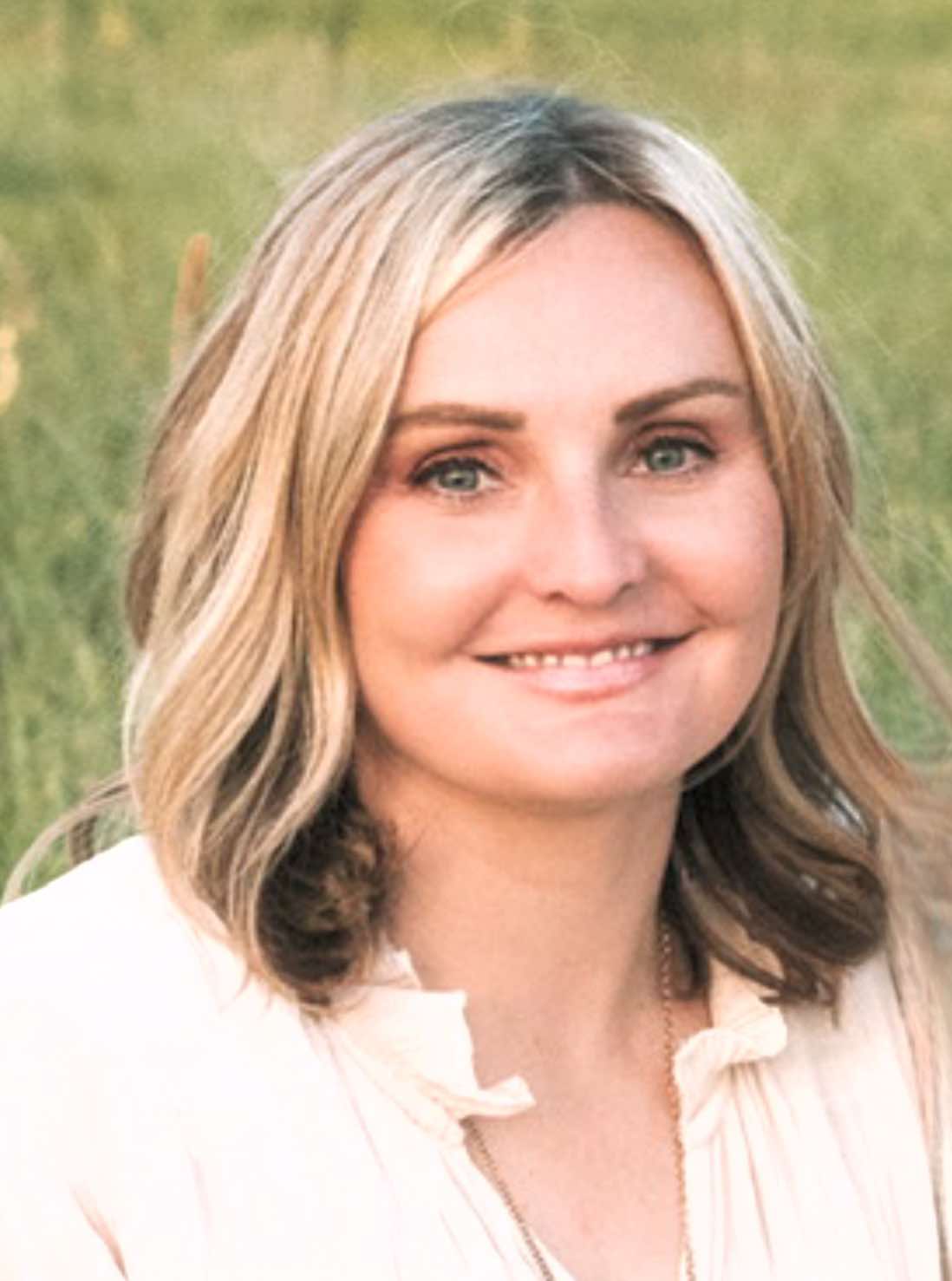
Headshot of Kami Pehrson.

Kami Pehrson

Kami Pehrson lives with her husband and five teenage children in Stansbury Park, Utah. She recently finished her master’s degree in English and creative writing and has written three novels—but is still trying to figure out what to do with them. She loves editing, reading, and playing word games on her phone. She also enjoys listening to audiobooks while half-heartedly doing Pilates in the living room.

    Filed Under: Articles, Craft Skills, Writing Tagged With: Editing, revising, Writing

    LDSPMA Member Spotlight: Cathy Lim!

    August 1, 2022 By Trina Boice Leave a Comment

    Cathy Lim lives in Hoover, Alabama.

    What are some names of the books or other media you have created?
    RatedReads.com is my web creation; I love books and words, and I love to share suggestions with others. Rated Reads is unlike the many other book review websites out there in that I give ratings to books for content: “none” or “mild” for fairly clean books, and “moderate” and “high” for those with more profanity, sexual content or violence. It has almost 2,000 reviews now. I’ve also written all kinds of articles over the past few decades about lots of topics; one set I’m really proud of is a series about plastic surgery for KSL.com.
    What inspired you to become a creator of media?
    I went into journalism in college because I love being able to learn and write about … everything! What I was particularly passionate about right from the start was editing. I’ve primarily done copy editing over the years, and it allows me not just to “fix errors” but to really bring out the best in someone else’s work. Sure, I do clean up copy so their stories and characters can shine, and I often suggest better phrasing or words so their ideas are expressed just as they intend. It’s a collaborative process that results in the best creation.
    What has been the highlight of your career so far?
    After 30 years in the journalism/writing/editing business, it’s really hard to pick one thing. I’d say I’ve enjoyed most working for LDS Living and with Deseret Digital Media as a copy editor because I get to collaborate on producing inspiring and uplifting articles. I’ve met wonderful people. Moving more into editing book manuscripts has been something I have wanted to do for a long time, and I’ve enjoyed working with the authors I’ve edited for so far. I’m liking the trajectory of my career.
    What was the best advice you’ve ever been given in your creative journey?
    Love what you do and do what you love.
    What advice do you have for someone just starting out in your field?
    Don’t be afraid to show how passionate you are about something. You don’t have to always present yourself in a dry, professional manner. Show that spark of excitement and passion you have for what you do and the job you may hope to have.
    What keeps you inspired in your daily creative work?
    I think just reading and learning keep my brain active and my creative juices flowing. I get excited by learning new things and reading something that’s really imaginative, well-written, or thought-provoking. That stimulates me to go out there and similarly create.
    What would you like others to know about you or your creative process?
    Words are currency. Using precisely the right word is a passion of mine. I love how we have tens of thousands of words at our disposal. I love the thesaurus. It’s a wonderful tool. I’ll sometimes sit and stew for five or ten minutes over something I’m writing or editing, clicking through options in the online thesaurus, pondering and searching for the exact word I know is out there to express a thought, an intent. Synonyms don’t often mean words are exactly alike; they have shades of meaning, and I won’t settle for the wrong one.
    In what ways do you feel you have been able to be a voice for good in your creative pursuits?
    I think my book review website, Rated Reads, is a particular force for good. It provides crucial information to thousands of readers (and parents of readers) If we’re seeking after works that are virtuous, lovely, or of good report or praiseworthy, it helps to have pertinent information about the millions of books that are available at our fingertips. Some, it’s pretty easy to tell we won’t find content that’s of good report, but others … it’s a complete mystery until we get into the pages and run into things we’d rather not find. My site is a great service.

    You can learn more about Rated Reads at https://ratedreads.com

    Cathy’s copy-editing site is at https://cathycarmodelim.com

    Filed Under: Member Spotlight Tagged With: book editing, book editor, book reviews, copy editing, copy editor, Editing, journalism, LDSPMA, LDSPMA Member Spotlight, Rated Reads

    Member Spotlight: Devan Jensen!

    February 13, 2021 By Trina Boice 8 Comments

    Our member spotlight this week is Devan Jensen of Orem, Utah. He is the current President of the Latter-day Saint Publishing and Media Association.

    What are the books/products you’ve created?

    As an author, I have written about fifty articles on people and topics in church history. These include Philo Dibble, C. C. A. Christensen, Shoshone history, and the Utah War. In addition, I also wrote God’s Greatest Gifts: 10 Reasons to Rejoice. I compiled Best-Loved Poems of the LDS People, Poems That Lift the Soul, Gradguide, and Latter-day Saint Essentials. I’m working with Rose Ram to write a book called Saints of Micronesia. (I served as a missionary in Micronesia.)

    As an editor at the BYU Religious Studies Center, I have edited thousands of articles and chapters. I also manage social media for BYU Religious Education, BYU Religious Studies Center, Church History News, Religious Educator, and Pohnpei Church History.

    What inspired you to become a writer/editor?

    My parents and elementary school librarians hooked me on reading and inspired me to become a writer. Only later did I realize that editing could become a career.

    What has been the highlight of your career so far?

    A repeated highlight has been traveling with friends to research or to present papers, especially on Pacific history. My favorite places to travel have included New Zealand, Samoa, Tahiti, Guam, Chuuk, Taiwan, and Washington, DC.

    Another real highlight is working with Pacific scholars to write a history of Micronesia that will go in the Yigo Guam Temple.

    What was the best advice you’ve ever been given in your creative work?

    A grab bag of many years of advice:

    • Find the empty spot on the shelf and write for that audience.
    • Ask good research questions.
    • Pluck the low-hanging fruit of the internet and libraries. Then visit archives to dig into original research.
    • Network with other scholars and refine your work through informal peer review and then formal peer review.
    What advice do you have for someone just starting out in your field?

    Pay the price of learning to become an expert in your field.

    What keeps you inspired in your daily creative work?

    Traveling with friends to research or present papers is a huge motivating factor. I hope to travel to New York in 2021 to present at the Mormon History Association conference. I would like to visit the Yigo Guam Temple dedication.

    What would you like others to know about you?

    Like so many of you, I have a voracious appetite for learning, and for challenging my preexisting assumptions. My Facebook page shares my aspirations: As a writer and editor, I’m shaping a more just and sustainable community, nation, and world.

    My wife, Patty, and I live in Orem, Utah. We have four children and an adorable granddaughter. I like to ride my electric bike all over Utah Valley. I perform magic tricks and like to sing and play the piano and ukulele.

    Tell us about your work!

    I enjoy helping authors to publish and helping promote their work. I have more than thirty years of experience working with books, journals, magazines, newsletters, websites, and social media. I’m volunteering as the president of the Latter-day Saint Publishing and Media Association (LDSPMA), which I helped to found.

    I was hired in 2001 at the BYU Religious Studies Center. Since then I have led talented teams to edit about 250 books or book-length projects, which has garnered many awards.

    I have been an adjunct instructor of business writing, editing, and religion for BYU and Utah Valley University. Also, I have been an editor for the Ensign magazine, Church Publishing Services Department, and Deseret Book Company. I have presented at BYU Education Week, Latter-day Saint Publishing and Media Association, Mormon History Association Conference, Sons of Utah Pioneers, Pacific History Association, and Utah State History Conference. As a National Merit Scholar, I received my BA (cum laude) and MA degrees in English from BYU.

    Do you have a website?

    BYU Religious Studies Center, my personal blog and the Pohnpei Church History Blog.

    Where can we find you on social media?
    • Facebook: Devan Jensen
    • Instagram: @devan.jensen
    • Twitter: @devan_jensen
    • LinkedIn: R. Devan Jensen
    • YouTube: BYU Religious Education
    • Podcast: Y Religion

    Filed Under: Member Spotlight Tagged With: Author, BYU, Davan Jensen, Editing, Editor, Voices of Light, Writer, Writing

    Estimating Time for Editing

    February 26, 2016 By LDSPMA 2 Comments

    By Devan Jensen

    When authors turn in a new manuscript, they usually want it printed now. How long does it take from manuscript to printed book? We typically plan on one year from the time the rough manuscript arrives to the time it is peer reviewed, edited, proofread, designed, sent to authors for approval, proofread, indexed, and printed.                                                     

    You can estimate how long it will take to edit a manuscript by looking over all its parts. How many typos do you see on each page? How complete are the notes? Does it have an appendix? How many photos will be used? Are they scanned? Will you edit on hard copy or electronic copy?

    The following guidelines also apply:

    The Chicago Manual of Style, 2.49     Estimating editing time. Estimates for how long the job of manuscript editing should take—a figure generally determined by the publisher and agreed to by the manuscript editor—usually start with the length of the manuscript. Because of inevitable variations in typefaces and margins and other formatting characteristics from one manuscript to another, the length is best determined by a word count rather than a page count (though a word count can be derived from a page count for paper-only manuscripts). A 100,000-word book manuscript, edited by an experienced editor, might take seventy-five to one hundred hours of work before being sent to the author, plus ten to twenty additional hours after the author’s review. This rough estimate may need to be adjusted to take into account any complexities in the text or documentation, the presence and characteristics of any tables and illustrations, and the degree of electronic formatting and markup that an editor will need to remove or impose (see 2.77). If in doubt, edit a small sample to serve as the basis of an estimate. An additional factor is of course the publication schedule, which will determine how many days are available for the editing stage. Also pertinent is information about the author’s availability to review the edited manuscript, amenability to being edited, propensity to revise, and so forth.

    Religious Studies Center
    Visit https://rsc.byu.edu/
    Follow at https://www.facebook.com/byursc/

    Vector Graphics by Vecteezy

    Filed Under: Articles, Editing Tagged With: Editing

    • « Go to Previous Page
    • Page 1
    • Page 2

    Primary Sidebar

    Write for Us

    Would you like to see your article featured here on LDSPMA?

    We are currently seeking article submissions. Learn what you need to know and submit your article here. 

    Recent Articles

    A farmer in a straw hat crouches in a garden full of green vegetables. He leans over a small harvest of freshly pulled carrots.

    Laboring Diligently for Miracles

    “Even when we don’t know the outcome, we must keep going and keep expecting a full bag of miracles.” -Terry Bohle Montague

    A woman looks into the camera over the top of an open book with a purple cover.

    Purple Prose vs. Beautiful Writing

    Beautiful writing enhances the story. Purple prose distracts from it. The term originates from the Roman poet Horace, who compared […]

    Writing Real Life: Eight Fiction Techniques for Narrative Nonfiction

    “I’ve always believed that studying the craft of storytelling helps us understand life, and I feel lucky to have helped Christi share her story. I know that other cancer warriors who read it will find hope and encouragement in her experiences.” -Kami Pehrson

    Search the Articles Archive

    Article Topics

    Recent Podcast Episodes

    Footer

    • Email
    • Facebook
    • Instagram
    • LinkedIn
    • YouTube

    Shop the LDSPMA Store

    Support LDSPMA with branded merch, including shirts, hats, water bottles, notebooks, stickers and more! Every purchase helps fund LDSPMA programs.

    Shop Now!

    Copyright © 2026 LDSPMA. All Rights Reserved. LDSPMA is not endorsed by nor affiliated with The Church of Jesus Christ of Latter-day Saints.