• Skip to main content
  • Skip to footer

LDSPMA

Empowering Latter-day Saints to spread light and truth by connecting them at the intersection of faith, creativity, and professional skill

  • Conference
    • 2026 LDSPMA Anthology Submissions
    • Theme Contests
    • FAQs
    • Exhibitors & Sponsors
    • Volunteer at the LDSPMA Conference
    • Past Conferences
      • 2025 Conference
        • Sessions
        • Workshops
        • Awards Gala
        • Internship Fair
        • LDSPMA’s Got (Secret) Talent!
      • 2024 Conference
        • Sessions
        • Workshops
        • ZIFF Networking Dinner
        • Schedule
  • Membership
    • Email Sign Up (Free)
    • LDSPMA NextGen
    • University Chapters
    • Facebook Group
  • Programs
    • Mentoring Program
    • Monthly Zoom Discussions (Free)
    • Master Classes (2026)
  • Podcast
    • Watch
    • Listen
      • Listen on Apple Podcasts
      • Listen on Spotify
      • Listen on Buzzsprout
    • Called to Create Conversations
  • Articles
    • All Articles
    • Faith & Mindset
      • Gospel Principles
      • Creativity
      • Productivity
    • Craft Skills
      • Writing
      • Media, Film & Theater
      • Podcasting & Speaking
      • Music
      • Fine Art
    • Professional Skills
      • Editing
      • Publishing
      • Business
      • Cultural Diversity
      • Marketing
  • Awards
    • 2026 Award Nominations
    • Praiseworthy Awards
    • Spark Awards
    • Lifetime Achievement Awards
    • Past Award Winners
    • Apply to Be an Awards Judge
  • About
    • Mission
      • LDSPMA in the Media
      • Success Stories
      • Viewpoint on LDSPMA
    • LDSPMA Leadership
    • Volunteers
      • Volunteer Year-Round
      • Volunteer at the LDSPMA Conference
      • Apply to Be a Presenter
      • Apply to Be an Awards Judge
      • Resources for Current Volunteers
    • Policies
    • Contact US
  • Support LDSPMA
    • Donate
    • Volunteer

Posts Archive

March 2022

March 15, 2022 By Jeremy Madsen

March 23: “Be Not Afraid, Only Believe”: A Christian Songwriter’s Journey

A discussion with Shawna Edwards

Shawna Edwards, a prolific Christian children’s songwriter, will share how the Lord has multiplied her efforts to share His message to the world, and what she has learned about faith, music and business along the way.

Her short presentation will be followed by 20–30 minutes of Q&A and discussion.

Bio: Originally a piano performance major, Shawna Edwards returned to BYU to finish her degree when her oldest boys were students there. She graduated with a bachelor’s degree in Media Music in 2009. She put her first song on YouTube in 2010. Her channel now has over 30M views, and her songs have been performed in churches, cathedrals, and Christian schools in over 100 different countries.

Watch Recording

Filed Under: Monthly Zoom Discussion

Called to Create: Interview with New Host Connie Sokol

March 10, 2022 By Rachelle Christensen Leave a Comment

I am excited to introduce the new host of LDSPMA’s podcast Called to Create, Connie Sokol. Connie is a bestselling author, a national speaker, a media personality, and a program founder. She is a regular contributor on the top-rated lifestyle show Studio Five with Brooke Walker. She hosts Disciple Thought Leaders Retreats which teach women how to be influential writers, speakers, and media personalities. She is also the mother of seven.

—-

RACHELLE: The podcast’s name is Called to Create. Can you tell us what that means?

CONNIE: Yes, we chose the title Called to Create because it resonates with creative people. There was discussion and prayer about what it could be that would reach the audience, which includes speakers, writers, musicians, publishers, and people trying to express the gospel through creative abilities. 

RACHELLE: You definitely nailed the title. How did you get into media?

CONNIE: I feel like Heavenly Father has plugged me in and out of experiences. I started speaking for the Church Education System. I was doing Education Week and Especially for Youth. One thing led to another, and I started doing professional speaking on the side. I had seven kids, so I would do a little bit at a time. 

Then Bonneville Communications KSL approached me and asked me to be a host of a women’s radio show. You know that phrase, “Start as you mean to go on”? That was poignant for me. I was going to have another baby, and I said, “I cannot do every day from three to six, but I can give you two days a week from noon to three, because I’m a mom.” 

They ended up having three hosts do one schedule for the week so we could all put our families first. And it was beautiful. The radio show kicked this off for me in a big way, and then I was invited to do TV with Brooke Walker. I’ve been doing that for 16 years now. I sort of fell into it, but I was looking for opportunities for the Lord to use me.

It’s not a talk at you podcast. It’s very much like you’re sitting at the kitchen table enjoying a conversation with people who are extraordinary.

RACHELLE: You’re a best-selling award-winning author, you’ve written 18 books, you do TV and podcasting, and you’re a media personality. How does that impact your ability to interview the guests on Called to Create? 

CONNIE: I see profoundly how Heavenly Father has placed me in different situations so that when I’m interviewing these guests—like Lisa Valentine Clark, Al Carraway, The Jets—I’m able to connect. I understand what it takes to publish a book. I’ve done traditional publishing and self-publishing. I’ve had an agent. I have all these different experiences that the Lord has plugged me in and out of, just enough to be able to connect. 

That’s one of the things I love about this podcast. It’s not a talk at you podcast. It’s very much like you’re sitting at the kitchen table enjoying a conversation with people who are extraordinary. They’re showing us by their process how they made it happen. My experience really helps me to go deep, fast. Through shared experiences we can laugh and learn together and have juicy, enriching conversations.

RACHELLE: We are lucky to have you. Tell us how you connected with LDSPMA?

CONNIE: Well, I’ve had my own podcast. We’re coming up on 180 episodes, and it’s been great. I’ve had wonderful guests on there, like New York Times bestselling authors. Then at the beginning of last year, I had this feeling like I needed to do more with my podcast. But it was already going well, and I didn’t understand what it meant. 

A few months later, the thought of LDSPMA resonated, and I was like, I wonder if they have a podcast? When I asked, it just so happened that their original host, who had done a great job, was leaving and they were looking for a new host. 

I contacted them and we immediately connected. We had the same vision, of getting this out and increasing the reach, and it’s been incredible already. We put 14 episodes in the can within two and a half months. It was unbelievable. The miracles fell into place.

RACHELLE: Can you tell us what’s your favorite part of the podcast process?

CONNIE: We have a beautiful team, and we laugh, and we have all these incredibly talented volunteers. We’re all volunteers. We’re just doing this for Him. So that’s a really fun piece. 

But I think the guests have been incredible—the things that they’ve shared from their heart, the way they’ve shared the gospel in unexpected ways. I’m interviewing The Jets, and they’re talking about a Book of Mormon with Boy George; and then Al Caraway and how when she first came on the scene she was so passionate about the gospel, and then people just shredded her, and she really had to get tight with Heavenly Father. Moments like that where one minute you’re laughing, and one minute you’re crying. 

It’s just the most wonderful experience and blessing to peek into the lives of these amazing people, and I am bettered by every single interview that I have done.

If you have felt called to share His message through your creative abilities, this is the podcast for you.

RACHELLE: What will audience members get from listening to this podcast?

CONNIE: So much. I think tools might be your biggest surprise. We make sure they give takeaways so that you’ll come away with something every podcast to help on your creative journey. What are some of the how-tos? How did they get started in the speaking business? When you hear a show tool, you will just be blown away. You will want to jump out of your chair and become a speaker.

But it’s these tools, these takeaways, these tips that you can start putting into your life regardless of what genre you’re in. You can apply them and start seeing the difference. You’re going to get great stuff.

RACHELLE: For people who don’t listen to many podcasts or don’t think they have the time, what would be a reason to check this one out?

CONNIE: Because it will impact your life. If you have felt called to share His message through your creative abilities, this is the podcast for you, even if you don’t listen to any other podcast. If you have felt a rumble, if you felt called to speak or write a book, or to do something in social media, or to be a musician or an artist or whatever, this will help you on your creative journey for Him. 

This is all about: How do we apply the gospel? How do we navigate the intersection of faith, creativity, and professional skill? How do we make those hard choices that keep us on the straight and narrow to do what we came here to do? That’s the difference in this podcast. It is part devotional, part scripture, part life experience, part kitchen table chat. You’re getting all the things in one podcast.

RACHELLE: Connie, what is one thing that you feel Called to Create?

CONNIE: As you know, I help women with the Disciple Thought Leadership Retreats to do this very thing, so they can get in and make it happen. But beyond that and my family, it’s this podcast. 

I really do feel “called to create” with this wonderful team. We feel so strongly about Elder Bednar’s invitation to sweep the earth as with a flood on media, particularly social media. 

We yearn to help every person who feels called to be able to get their message out, to be distinct and different and articulate, to have the tools and the inspiration. And when they’re like, “I’m so done,” like in Alma when they talk about “when our hearts were depressed and we were ready to turn back,” right? They listen to this podcast, they listen to an episode, and they’ll be like, I can do this. I can keep going. I get what He wants me to do, and I’ll just take the next right step. That’s what we hope.

—-

Fabulous. I love that. This is such a treat. I am really glad that we got to know Connie Sokol a little bit better today. We are so fortunate to have her, I am so excited for the podcast this new season, so everybody listen in. We have a lot of great information in store for you.

Author Profile

Rachelle J. Christensen is the award-winning author of over 20 books, a mother of 5, and organizer of 75+ chickens raised annually by her family. Rachelle enjoys online marketing and harnessing the power of social media. She has worked with a multi-million dollar worldwide company, publishers, and dozens of authors, including New York Times bestseller David Farland and celebrity Merrill Osmond.

Rachelle carves out writing time in between home-schooling kids and her work as a writing and marketing coach for authors. She graduated cum laude from Utah State University with a degree in Psychology and a minor in Music.

    Filed Under: Articles, Craft Skills, Faith & Mindset, Gospel Principles, Member Spotlight, Podcasting & Speaking Tagged With: creative people, developing talents, Inspiration, interviews, podcasting

    February 2022

    February 28, 2022 By Jeremy Madsen

    February 23: Social Media Questions and Answers

    A discussion with social media expert Mimi Bascom

    What is a social media “brand”? How often should I post? How is Instagram different than Facebook? How do I build an engaged audience on Instagram?

    Bio: Mimi Bascom is an influencer and freelance social media manager/strategist. She enjoys creating content for her personal brand to show people that religion is still relevant, and she helps brands organically build an audience online and increase revenue (you can view her work at mimibascom.com). She is a recent BYU graduate with a bachelor’s degree in communications, and she has been working in the social media industry for the past three years.

    Watch Recording

    Filed Under: Monthly Zoom Discussion

    Sometimes Things Do Work Out

    February 24, 2022 By Steve Dunn Hanson 28 Comments

    By Steve Dunn Hanson

    I first met Bill in 1987. He was a regional representative for The Church of Jesus Christ of Latter-day Saints and was visiting our stake in Orange County, California where I served as a counselor in the stake presidency. To this day, I can’t tell you why there was almost instant bonding between us, as he was over 20 years my senior. Maybe it was because we both loved to write. In any case, virtually from the git-go we traded writings. Mine, fiction and self-help articles. His, memoirs and personal history. And what a history! From a boy of small stature with a horrific stuttering problem and son of a coal-dust-eating railroad engineer, to a man known throughout the world for his accomplishments and contributions.

    I got the best of the bargain in our exchanges. Bill was not only the consummate “Martha” with his practicality and I’ll-figure-out-how-to-do-it genius, but he was a spiritual, poetic “Mary” as well, an extraordinary hybrid whose writing skill dwarfed my own.

    An Act of Kindness

    One of his stories was particularly poignant. As a boy, Bill lived in Provo, Utah, and his diminutive size and severe stuttering problem contributed to his painfully shy disposition. He was always the last one chosen for a team—if chosen at all—and was the subject of constant derision from many of his peers. He was maybe eight or nine-years-of-age when his grade school teacher gave the children an assignment to write an essay and then read the essay in front of the class.

    Bill’s turn came, and he fearfully stood, knowing what would happen next. His stuttering was so overwhelming that he didn’t get more than a few words out before he stopped. Embarrassed to tears, he started to take his seat when the teacher told him to stay where he was. “You will finish, Bill,” she said. She probably meant well, thinking that forcing Bill to go through this would help him overcome his stuttering. For Bill, though, his teacher’s act bordered on cruel.

    For the longest time, Bill just stood there. Then a remarkable thing happened. One of his classmates, a young girl by the name of Millie, who was sitting on the front row, reached out her hand, took his, then smiled up at him. That simple act of support calmed and strengthened him, and he finished his reading.

    That simple act of support calmed and strengthened him.

    Making Connections

    Such were the Bill Gould stories he shared with me, and for the next few years, we kept in close touch. Bill’s wife, Erlyn, was a beautiful woman. How he idolized her and cared for her. She was a cancer victim and graciously and courageously struggled to stay afloat. She passed away in 1992, and it was as though a chunk of Bill died with her. For the next nearly two years it seemed as though Bill just disappeared, and I had little contact with him.

    Then one day when my wife and I were in the Los Angeles Temple, I saw him. And he was not alone! When he saw me, his face turned total smile, and he pulled the woman he was with close to him. “Steve, do you remember one of my stories about a girl named Millie who held my hand to help me get through an agonizing ordeal when I was a boy?”

    “Yes!” I answered. “Who could forget that story!”

    Bill’s smile got wider. “This is Millie. Millie Gould now. We were married last week.”

    My turn to smile!

    Bill then talked about his funk when his wife, Erlyn, died. He was in an I’m-going-no-where morass, and he finally determined to get out of it. His plan was straight Bill Gould. He reviewed his life to determine those who had given him grace, who had made all the difference for him at critical times. Then one-by-one he sought them out to tell them thank you and to now impart his own grace to them to the extent he could.

    While this was happening, Bill’s daughter, who lived in Provo, was talking to her neighbor, a widow, about her dad. She explained how difficult his life was since his wife’s death and what he was now doing. When the neighbor heard that his last name was Gould, she asked what his first name was.

    “William,” Bill’s daughter replied.

    “Billy Gould?” the neighbor asked surprised. “As a boy, did he go to school in Provo by any chance?”

    The daughter nodded, and her neighbor, Millie, grinned. “Billy Gould and I were classmates in grade school.”

    Bill’s daughter told him who her neighbor was, and Bill put her on his thank you list to contact. The rest, as they say, is history.

    We Must Act for Ourselves

    Sometimes, things do work out, but I think things can just about always work out, but I believe it is our choice. I don’t mean in a Pollyannish kind of way, or that the results will always be what we initially desired. Rather, we can choose how any situation or circumstance we find ourselves in will ultimately affect us. We can literally shape the results of all our experiences. I believe that’s what Lehi meant when he said, “…The Lord God gave unto man that he should act for himself. … They have become free forever, …to act for themselves and not to be acted upon” (See 2 Nephi 2:16,26 emphasis added).

    Things can just about always work out, but I believe it is our choice.

    For a long time, my friend Bill was in a funk because of his wife’s death. Who wouldn’t be? But he was being acted upon. He let his circumstance dictate his mood. It controlled him. He was not free. Then he chose to be grateful. Instead of looking at his wife’s death as an emotional and debilitating black hole, he made her life a symbol of his gratitude. A catalyst for him to act. And, as I said, the rest is history.

    Bill’s experience and example has been an inspiration to me in my writing and in my life. While rejection, writer’s block, and a zillion other things can be gut-punches, I’m finding I can choose to turn the experience: To learn from it. To be a better writer. To be a better person. To make my experience a positive one for me. Granted, how it works out is not usually what I thought or hoped it would be. But because I choose to act, it becomes a blessing. Hopefully, it can for you too.

    Steve Dunn Hanson

    Steve Dunn Hanson is the author of several books, including inspirational and adventure fiction and self-help non-fiction, which have been traditionally published and self-published. In addition, he has had articles published in The Ensign, and writes poetry and hymns. He and his wife, Joyce currently live on a scenic hill in northeast Washington.

    Visit Steve Dunn Hanson at https://stevedunnhanson.com/

      Filed Under: Articles, Faith & Mindset, Gospel Principles, Productivity Tagged With: faith, inspirational, personal growth, resilience

      Presenting Moral Themes for a Secular Audience

      February 10, 2022 By Emma Heggem 2 Comments

      By Emma Heggem


      Most of us don’t work within an entirely Latter-day Saint community. Many of us work with audiences, co-creaters, gatekeepers, and financial backers who are not of our faith. Sometimes,  in the secular publishing community, it feels like we have to pack our beliefs away during professional moments and save them for personal time. But that approach is never truly possible. Some of our beliefs may be easily removed from our creations, like letting characters drink coffee or swear. On the other hand, some of our beliefs are so deeply rooted that we don’t even realize they show up in our work. We may accidentally include topics such as what makes a good leader, whether people are primarily good, or if good is capable of overcoming evil. Sometimes these influences will be subtle and readers won’t consciously notice them. Other times, these beliefs become an active participant in the plot in the form of a theme. 

      When our beliefs become a theme in our fiction novels, we can still make books that can be published and appreciated by general readership. We just need to make sure we are making these ideas palatable for readers who are not of our faith by handling the theme with honesty and complexity. 

      Explore Your Theme

      When tackling a belief that some of your readers may disagree with, you can’t present a singular and unequivocal answer. For example, in a book with a theme about lying, stating that lying is bad is not going to be convincing. An author can touch their readers much more deeply by exploring the pros and cons of lying. For readers who do not already agree that lying is bad, this exploration—as opposed to explanation—will allow them to inform their own decisions rather than feel as though they are being force-fed your answers.

      Posing your theme as a question can help you make sure that you are exploring both sides of the issue in your book, though not all questions are going to lead to true exploration of a theme. For example, the question “Are serial killers bad?” is likely going to provide a single and fairly predictable answer. I think you’ll be hard pressed to find situations that do anything but show serial killers being bad and will have an even harder time convincing readers that there is any confusion over the answer.

      A better theme might be “Are sociopaths destined to be evil?” as the book I am not a Serial Killer by Dan Wells asked. While related to the topic of serial killers, it is a question that readers had not previously considered, and the book’s main character was determined to prove that sociopaths didn’t have to be serial killers. People were interested in seeing if that answer could hold up.

      Another option, if you don’t want to try to convince people of an unlikely (but possible) answer to an obvious question, is to present one answer out of many. This is the case for the question “Is lying always bad?” Many people will have different answers to that question, and your book can explore several of those answers and which might be right in various circumstances.

      Proposing a Natural Theme

      In order to explore a theme, you need to match it to the right story. The events of your story should naturally lend themselves towards questions and conflicts over the topic. A story about the morality of war will need a war. A story about honesty will need secrets and lies. A story about repentance will need a main character who has made a terrible mistake or who has suffered from someone else’s sins.

      Themes should also match the story in tone. A kids’ book about unicorns would likely not be the right place for a plotline focused on the murky, gray areas of life. An adult novel about deadly political conspiracy would probably fail to carry a theme about the importance of friendship.

      Sympathize with Multiple Sides

      As your story develops and the theme becomes relevant to the plot events, your characters will begin to be affected. They may deal with the fallout of other people’s decisions, or they may make their own decisions and have to deal with the consequences. As this happens, the characters may begin to have opinions or even dialogue about the “answer” to the theme question. 

      No matter what you feel is the “correct answer”, your characters need to come to their own conclusions. A good example of this can be found at the end of the film Doctor Strange. (If you haven’t seen it, the climax is a fight with a demon who was summoned from a realm of destruction by magicians who want to use his powers for their own means. The hero, Doctor Strange, chooses to use forbidden magic of his own to fight the demon.) The overarching question in this movie is: “Can dangerous magic be used for good, or will it always cause destruction?” Doctor Strange and his friend both enter the climax to stop the demon, but they leave the fight with very different conclusions about the overarching question. 

      No matter what you feel is the ‘correct answer,’ your characters need to come to their own conclusions.

      In the end, Doctor Strange believes that forbidden magic could be used for good because he has just saved the world with it. This ties in with his arrogance, which is an important personality trait for him throughout the story. 

      On the other hand, his friend leaves the movie with the opinion that using forbidden magic is what brought the demon to their world in the first place, so not using forbidden magic, or maybe even any magic at all, is the safest course of action. This lines up with his own established personality as a man who believes rigidly in rules. He also has recently learned that someone very important to him has been lying to him. This betrayal breaks his trust in people, and that carries over into his trust in Doctor Strange’s use of dangerous magic. 

      In your own stories, the line between characters who believe in the “correct answer” and the “wrong answer” should not one hundred percent follow the line of “good guys” and “bad guys.” Their backgrounds, personalities, and experiences may lead them to come to different conclusions from you and from each other. Always treat the differing opinions as valid and intelligent. If the only proponents of the “wrong answer” are misguided idiots or actual evil people, you will lose your readers and come across as preachy.

      Proposing an Answer

      When writing a story with a theme, you may frame your plotline around a specific answer, or you may keep it more open-ended and leave readers thoughtful about the topic. If you choose to provide a single answer at the end, you’ll have to be careful to do so gently and without invalidating the individual characters’ beliefs. 

      Have you ever watched one of those twenty-minute kids’ shows where, at the end of the episode, the main characters say, “And that’s why we always tell the truth,” and everyone nods sagely. Yeah, me too. And it wasn’t at all that convincing. Instead, it usually made me want to laugh. And possibly start lying ridiculously. 

      The reason this drove me nuts was because the idea is unbelievable. When was the last time that you got caught having lied to a friend, and they said, “Wow, now I see. I’m never going to lie again.” Never? Me neither. 

      In this example, the character who lied and the character who was lied to are going to have different experiences in the same scene. This may lead to different conclusions and reactions. The liar may feel as though the truth coming out was what got them in trouble, while the character who was lied to feels that the lie itself was the problem. Despite these differing beliefs, you can still have the plot demonstrate a clear answer. When the main character makes a correct decision, the plot should move forward. They should conquer an obstacle and make progress towards their final goal. Likewise, when the main character makes an incorrect decision, the plot should stall, their progress should fail, and negative consequences should occur. This pattern of being punished and rewarded by the plot will leave readers seeing how the “correct answer” is useful, and the “wrong answer” causes problems. Individual characters may believe or react differently, but the overall plot will still clearly send the message. 

      Using a Theme to Share our Faith

      Writing is a deeply personal art form, but we don’t need to hide our religious beliefs to write books for nonmembers. Including complex and nuanced themes will leave room for our beliefs in our books while still creating a story that people from any background can enjoy.


      Author Bio

      Emma Heggem specializes in content editing sci-fi and fantasy novels. She has worked with authors from around the world to prepare their manuscripts for publication. When she’s not editing, she loves to attend writers conferences to give critiques and demystify the publishing industry. She also runs an editing advice blog (www.editsbyemma.com). Emma graduated from Brigham Young University with a degree in English language and a minor in editing.

      Filed Under: Articles, Craft Skills, Faith & Mindset, Gospel Principles, Writing Tagged With: fiction writing, good vs. evil in fiction, themes in fiction

      LDSPMA Member Spotlight: Mattea Gygi

      February 5, 2022 By Trina Boice Leave a Comment

      Mattea Gygi is currently a student at Brigham Young University in Provo, Utah, and serves on the LDSPMA Student Chapter on campus.

      What are some names of the books or other media you have created?

      I currently write for TechBuzz news, a Utah Tech online newspaper. I write about emerging and growing tech companies in Utah.

      What inspired you to become a creator of media?

      I love words and the way they can be used to teach others. Words have helped me expand my view of the world and I hope to create content that also expands minds and encourages learning.

      What has been the highlight of your career so far?

      My career has been insanely short as I am still in college, but a highlight of my career was creating, planning, and writing a series of articles about Polynesian entrepreneurs and founders in Utah tech.

      What was the best advice you’ve ever been given in your creative journey?

      Simple is elegant.

      What advice do you have for someone just starting out in your field?

      Writing is hard, so I applaud you. I am not very experienced, but I have learned that there are many people in this field HAPPY to mentor and help you along the way—so find them and let them take you far.

      What keeps you inspired in your daily creative work?

      I love words, as I said earlier, and working with words and trying to arrange them in the best possible outcome makes me happy and is very satisfying to me.

      What would you like others to know about you or your creative process?

      I love food and have found food to be a great motivator and defeater of writer’s block.

      In what ways do you feel you have been able to be a voice for good in your creative pursuits?

      I love that my publication focuses on unbiased, true news. We write to inform, not to persuade, and I think that kind of writing is really needed in the tech space. If anything, we are positive in our portrayal of businesses, but overall we always tell the truth.

      Filed Under: Member Spotlight Tagged With: BYU, Latter-day Saint, Latter-day Saint Publishing and Media Association, LDS writers, LDSPMA, LDSPMA Member Spotlight, LDSPMA student chapter, Mattea Gygi, TechBuzz

      Why Fiction Is as Precious to God as Nonfiction

      January 27, 2022 By nbay 3 Comments

      By Nicole Bay

      When I first began writing, I dabbled in YA fantasy, early readers, middle grade fiction, and picture books. I loved all these genres and the worlds I had created, but after a while, I started to wonder if I was spending my creative time wisely. I wondered if, rather than writing fantastical fiction, I ought to be researching and writing family history stories or writing nonfiction related to the gospel of Jesus Christ or the Restoration of the Church. I started questioning the value of what I was writing and the wisdom of taking time to write fiction that might be better spent using my talents to build the kingdom of God.

      I thought about it, worried about it, and prayed about it. My prayers were answered in several ways over the course of a few years.

      The Desire to Create Is God-Given

      In the October 2008 General Conference, President Dieter F. Uchtdorf shared an important thing we can do to feel God’s happiness—we can create. “The desire to create is one of the deepest yearnings of the human soul,” he said. He emphasized that as children of a creator, we have a desire to be like Him, to create something that did not exist before. This is something I have felt. Ever since I was little, I have known there was an artist inside me. I took classes and participated in activities that allowed me to learn principles of drawing, writing, sewing, and acting, and I basked in the inner glow that creating provided me. 

      The desire to create is one of the deepest yearnings of the human soul.

      Dieter F. Uchtdorf

      President Uchtdorf continued, “Creation brings deep satisfaction and fulfillment.” Even when I struggle to get just one sentence on the page, I feel better for having taken time to work on my art. And nothing beats the floating-on-clouds feeling of being able to type the words “The End” when I finish a draft of a new story. 

      Taking time to be creative has more benefits than just feeling good. President Uchtdorf added, “We develop ourselves and others when we take unorganized matter into our hands and mold it into something of beauty.” Over time I have realized that development of self and others isn’t just referring to the development of talents. This development is all about the sometimes life-changing effects our work can have on us and those who experience our art. Both parties can learn. Both can grow spiritually, intellectually, emotionally, and socially. And both can discover truth through art.

      “Out of the Best Books” Includes Fiction

      The Lord commands us to seek words of wisdom out of the best books so we can teach each other and strengthen each other’s faith (DC 88:118). Of course, He is referring largely to the standard works and inspired writings of members of the Church. The truths found here are the most important truths to develop a testimony of. 

      But there are also many, many other works that can build our faith and lead people to be better for having read or experienced them. As an avid reader growing up, I was touched by fiction and nonfiction stories of heroism, triumphing over trials, clever thinking, kindness, and forgiveness. I will not soon forget the moving themes woven throughout my favorite books of sacrifice and redemption, good versus evil, the power of love, or the huge effect that one person choosing to stand up for what is right can have on the world. And if those stories can resonate so strongly with me, might I not also be able to tell a story that inspires someone else?

      If fiction stories can resonate so strongly with me, might I not also be able to tell a story that inspires someone else?

      I hope so. Because I believe that the best books can do just that.

      God Cares about Your Creative Gifts

      I’m grateful for a commandment to seek out the best gifts and to develop my talents (D&C 46:7–33). My desire to create is a way that I can enrich my own life and bless the lives of others. 

      And because this is a gift that is important to me, it’s important to the Lord as well. Amulek advised us, “Cry unto him over the crops of your fields, that ye may prosper in them. Cry over the flocks of your fields, that they may increase” (Alma 34:24–25). Whether creating art is my hobby or my living, the Lord wants to bless me in my efforts, so I can pray for that guidance, and my work will be better for it. 

      Any Genre Can Be a Conduit of Light

      When Christ exhorted His listeners, “Let your light so shine before men, that they may see your good works, and glorify your Father which is in heaven” (Matt. 5:16), I believe He was talking about letting our testimonies shine through our actions and work. And that includes our creative work. My writing, whether nonfiction, fantasy, or humor, is a conduit for my testimony.

      I’m thankful for the divine desire to create, for the understanding that all can learn from the best books, for the knowledge that God wants to support me in my work, and for the calling to share my light through my work.


      Nicole Bay teaches linguistics and English language courses at BYU. She is also the Internships Coordinator for the Linguistics Department. She loves to write for children, especially when she can include fun facts about language and linguistics in the story. She spends her non-work time gaming with her family, reading, writing, doing New York Times crosswords, and volunteering for writing conferences. She currently serves as LDSPMA’s director of education.


      Recent Posts

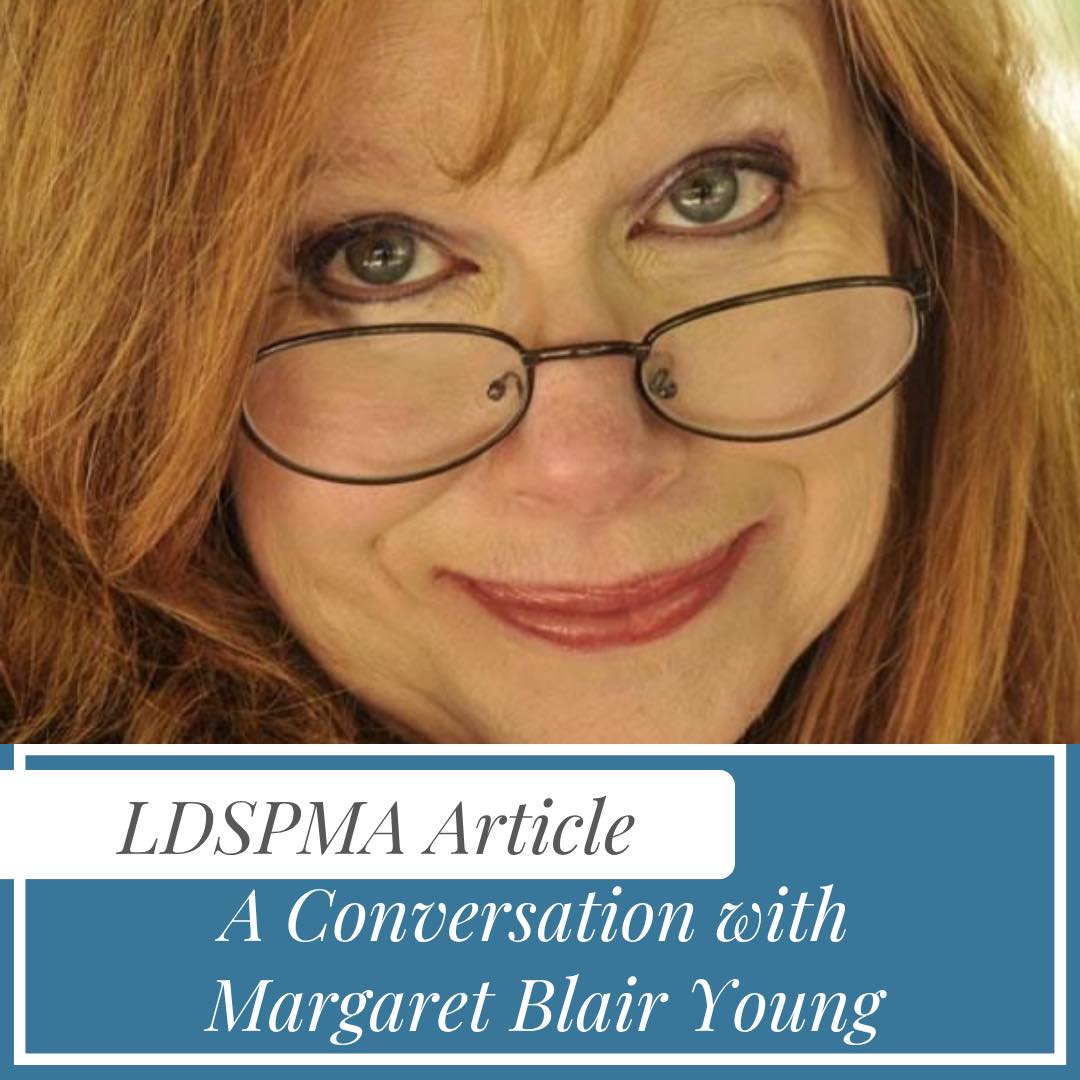
      Margaret Blair Young and the Power of Stories that Matter

      “Pray about what kind of work might bring good into the world, then begin. Be open to anything. Trust that when you start doing something that is truly meant to edify and bring greater light into the world, it will be sustained.” -Margaret Blair Young

      Continue Reading Margaret Blair Young and the Power of Stories that Matter

      A human hand and a robotic hand reaching toward one another.
      Why and How to Recognize AI Writing

      “At the end of the day, readers love, value, cherish, connect with, and pay for books written by humans.” -Amy Guan

      Continue Reading Why and How to Recognize AI Writing

      Three agents, two male, one female, applaud a pitch.
      Networking and Pitching to Agents (Even When You’re Scared to Death)

      “We can act out of character for work we really love. But we should do it mindfully and then restore afterward. …Break the shell, then give yourself a break.” -Sabine Berlin

      Continue Reading Networking and Pitching to Agents (Even When You’re Scared to Death)

      Filed Under: Articles, Craft Skills, Faith & Mindset, Gospel Principles, Writing Tagged With: Creativity, fiction, gratitude, Nicole Bay, spirit of gratitude

      December 2021

      December 31, 2021 By Jeremy Madsen

      Photo of Kaela Rivera
      SONY DSC

      December 16: Empathy, Dignity, and Cultural Diversity

      A discussion with author Kaela Rivera

      How can we effectively portray cultural diversity in our writing? Using her recent award-winning novel Cece Rios and the Desert of Souls as an example, Kaela Rivera will discuss writing latinx characters, the difficulties of bringing Cece Rios’s latinx fantasy world to life, navigating her own mixed heritage, and using empathy as a guiding tool for writing characters with dignity, especially those from marginalized backgrounds.  

      Bio: Kaela Rivera writes about the folktales of her Mexican-American and British parents. When she’s not crafting stories, she’s working as an editor for a marketing company. Cece Rios and the Desert of Souls—which won the 2022 Charlotte Huck Award—is her first novel; the sequel comes out in fall 2022.

      There is no recording available for this Zoom discussion.

      Filed Under: Monthly Zoom Discussion

      • « Go to Previous Page
      • Page 1
      • Interim pages omitted …
      • Page 13
      • Page 14
      • Page 15
      • Page 16
      • Page 17
      • Interim pages omitted …
      • Page 32
      • Go to Next Page »

      Footer

      • Email
      • Facebook
      • Instagram
      • LinkedIn
      • YouTube

      Copyright © 2026 LDSPMA. All Rights Reserved. LDSPMA is not endorsed by nor affiliated with The Church of Jesus Christ of Latter-day Saints.