• Skip to main content
  • Skip to primary sidebar
  • Skip to footer

LDSPMA

Empowering Latter-day Saints to spread light and truth by connecting them at the intersection of faith, creativity, and professional skill

  • Conference
    • 2025 Conference Recordings
      • Purchase Recordings Access
      • Grid Schedule
    • Exhibitors & Sponsors
    • FAQs
    • Volunteer
    • Past Conferences
      • 2025 Conference
        • Sessions
        • Workshops
        • Awards Gala
        • Internship Fair
        • LDSPMA’s Got (Secret) Talent!
      • 2024 Conference
        • Sessions
        • Workshops
        • ZIFF Networking Dinner
        • Schedule
      • 2023 Conference
        • Sessions
        • Workshops
        • Schedule
        • Sponsors & Vendors
      • 2022 Conference
        • Sessions
        • Workshops
        • Schedule and Maps
        • Photo Gallery
      • 2021 Conference
        • Sessions
        • Workshops
        • Schedule and Maps
      • 2020 Conference
        • Sessions
        • Workshops
        • Schedule
      • 2019 Conference
      • 2018 Conference
      • 2017 Conference
      • 2016 Conference
  • Membership
    • Email Sign Up (Free)
    • Monthly Zoom Discussions (Free)
    • LDSPMA NextGen
    • University Chapters
    • Facebook Group
  • Programs
    • Master Classes (2026)
    • Mentoring Program
  • Podcast
    • Watch
    • Listen
      • Listen on Apple Podcasts
      • Listen on Spotify
      • Listen on Buzzsprout
    • Called to Create Conversations
  • Articles
    • All Articles
    • Faith & Mindset
      • Gospel Principles
      • Creativity
      • Productivity
    • Craft Skills
      • Writing
      • Media, Film & Theater
      • Podcasting & Speaking
      • Music
      • Fine Art
    • Professional Skills
      • Editing
      • Publishing
      • Business
      • Cultural Diversity
      • Marketing
  • Awards
    • Praiseworthy Awards
    • Spark Awards
    • Lifetime Achievement Awards
    • Apply to Be an Awards Judge
  • About
    • Mission
      • LDSPMA in the Media
      • Success Stories
      • Viewpoint on LDSPMA
    • Volunteers
      • Volunteer Year-Round
      • Volunteer at the Conference
      • Apply to Be a Presenter
      • Apply to Be an Awards Judge
      • Resources for Current Volunteers
    • Policies
      • Nurturing a Caring Community
      • Political Neutrality Policy
      • Antiharassment Policy
      • Harassment Reporting Form
      • Children Policy
    • Contact US
  • Support LDSPMA
    • Donate
    • Volunteer

authors

Writing with Faith: An Interview with LDS Author Gale Sears

November 27, 2025 By Kami Pehrson Leave a Comment

Gale Sears’ path to becoming an acclaimed LDS historical fiction author began with writing screenplays. She earned a bachelor’s degree in playwriting from BYU and a master’s degree in theater from the University of Minnesota. For decades, Gale’s creative life revolved around the stage—acting, directing, and crafting stories for live audiences.

“I didn’t start writing novels until I was almost 50,” she shares, yet storytelling had always been part of her nature. “When I was about seven or eight years old, just after I’d learned about words, we had a little shed out in our backyard in Lake Tahoe, where I grew up. It was a magical place. I’d go out there with paper and pencil and write stories.”

Exploring Different Genres

The transition from playwriting to novel writing came naturally. “I had a story in my head that I thought would be a very cool play, but it was kind of epic, and it didn’t fit the genre,” Gale explains. “So, I started jotting down thoughts and a skeletal outline of chapters for a book, which I’d never thought of before because my mind always thought in terms of plays. I had to learn a different writing process because plays are composed of dialogue, but novels must include descriptions of place and setting.”

That story became Autumn Sky, the first book in a trilogy published by Covenant Communications.

Writing as a Divine Calling

For Gale, writing is a sacred practice, centered on divine guidance. “I pray constantly. I have no ego when I’m writing my books. I believe that EGO stands for Edging God Out, and I’m not ever going to do that. When I dedicate my work and consecrate it to His purposes, I must include Him in the process.”

The Spirit guides Gale throughout her process. “It’s as if I’m walking along and all of a sudden, I stumble, and something makes me pause. I stop and say, ‘Okay, something’s wrong here. Either I’m pushing it too much, or I’m not telling the right story, or I’m not going in the right direction.’ That’s how I know.”

The Power of Research

This spiritual foundation shapes every aspect of Gale’s work, especially her research approach. She is tenacious about accuracy. “If you’re going to write historical fiction, it needs to be true to the history,” she emphasizes.

For The Silence of God, which explores communism and Christianity in revolutionary Russia, she immersed herself in Russian history and communist theory. “I wanted to tell the story of what a society looks like when they rip God out of their lives,” she explains. She thought she’d have to create a fictional Orthodox Christian family—until she experienced what she calls a “God wink.”

“I thought to myself, I’m never going to find an LDS Russian family back in that time,” she recalls. “Well, I was at the Church History Library and found this article about the Lindelof family—the one and only LDS family in Russia during the Bolshevik Revolution.” This moment of divine serendipity became central to the novel.

For Letters in the Jade Dragon Box, set in China under Mao Tse-Tung, she studied Chinese culture and government systems. The book juxtaposes Mao’s communist regime with the gospel as experienced by early Latter-day Saints in Hong Kong.

Belonging to Heaven draws from George Q. Cannon’s actual journal entries about his mission to Hawaii, exploring his relationship with Jonathan Napela, one of the first Hawaiian converts to the Church.

Her novella, Brilliant, required research into autism, Indian culture, mathematics, and Eastern philosophy to authentically portray its protagonist—a young autistic college professor from India. Gale met with Indian families and individuals who understand autism and reviewed autobiographies to ensure accuracy.

But Gale doesn’t just rely on books. She travels to the locations she writes about—Italy, Russia, Hawaii—with her husband, George, acting as photographer and videographer. She interviews people from the cultures she depicts and visits ethnic markets.

“I’ll go up to people and say, ‘Do you have a minute? Can we talk about Indian food?’ or whatever I need to learn,” Gale explains. “Most of the time, people are gracious and thrilled to help.”

“It’s so important in historical fiction that readers feel as though they’re there,” she says. Whether it’s the food her characters eat, the clothes they wear, or the streets they walk, Gale ensures every sensory detail rings true. Each book ends with an extensive bibliography and notes explaining the historical context. “I stick to the facts as much as possible, but if I need to deviate because of the story, I let readers know.”

Blending Faith and Story

When depicting conversations about faith, Gale uses a subtle touch. “I want to tell the story of God’s Saints in a way that all my readers can appreciate, and weave in Christ’s teachings without beating people over the head with the gospel.”

For example, in The Silence of God, the LDS character Agnes discusses the law of consecration with her Bolshevik friend, Natasha, while chopping cabbage for borscht. The exchange feels natural rather than preachy. “You can push doctrinal discussions too far to where readers feel like they’re in a Sunday school room, or you can just put a little flavor of it,” Gale explains. “You have to honor your readers and trust that they’re smart enough to interpret the story through their own lens.”

This approach has connected with readers beyond the LDS community. “I have a lot of readers who are not LDS who appreciate the structure of the story and how I involve Christ in it,” she says. Universal themes of faith, courage, sacrifice, and family resonate across religious boundaries.

Writing Process and Craft

Despite her theatrical background’s emphasis on structure, Gale describes herself as “pretty much a pantser.” However, she acknowledges the value of structure, particularly in historical fiction, where “the journey has to go through certain historical processes.”

“Normally, I start with a character,” she explains. “Then I ask, ‘What is this character’s journey?’ With historical fiction, that journey is kind of mapped out for me.”

Character development comes through revelatory moments. In Letters in the Jade Dragon Box, the protagonist, Chen Wen-Shan, receives a box from her grandfather containing paintings and letters. This catalyst unfolds her family’s story under Mao’s regime.

Advice for Aspiring Writers

For young LDS creators and writers, Gale offers perspective gained from her unique journey:

  • Don’t worry about starting late or about success, fame, or money. Just stay true to the story you’re called to tell.
  • Focus on impact, not numbers. If your book only touches 10 people, that’s wonderful. If it only touches your family and they love it, that’s wonderful too. Remember, it’s a success just to get your story down on paper…Well done, you!
  • Remember the importance of the individual reader’s testimony. You’re planting a gospel seed, and you may not see it grow, but someday the Lord will use it. Eternity is long.
  • Write stories that inspire. For example, if you’re writing fantasy, you can still include the quest for good against evil. Your character’s struggles and triumph can encourage and lift a young person who’s questioning their abilities and whether life is worth the effort.
  • Consecrate your work. “When I dedicate my books to the Lord, I say, ‘Lord, take this little offering that I’m making and do with it what you want.’ I might not have a huge readership, but that’s not my path, and I don’t really mind.”    

A Legacy of Faith

Gale’s work now extends beyond novels. Her children’s book, Christmas for a Dollar, based on her father’s experiences during the Great Depression after losing his mother and contracting polio, has been adapted into a Christmas movie.

No matter what form her writing takes, Gale ensures it is an act of discipleship. She reminds fellow writers that life is a tapestry, and we’re only seeing the back side. In seasons of trial, the threads look tangled. But eventually, God will turn that tapestry around, and we will see His divine design. Until then, authors can help readers through difficult times by writing good stories that show them there is light ahead.

“These stories, these people’s lives—what a blessing it is for me to be able to share them,” Gale reflects. “And hopefully, prayerfully, the stories will resonate with someone and help them and strengthen them. That’s what I want.” 

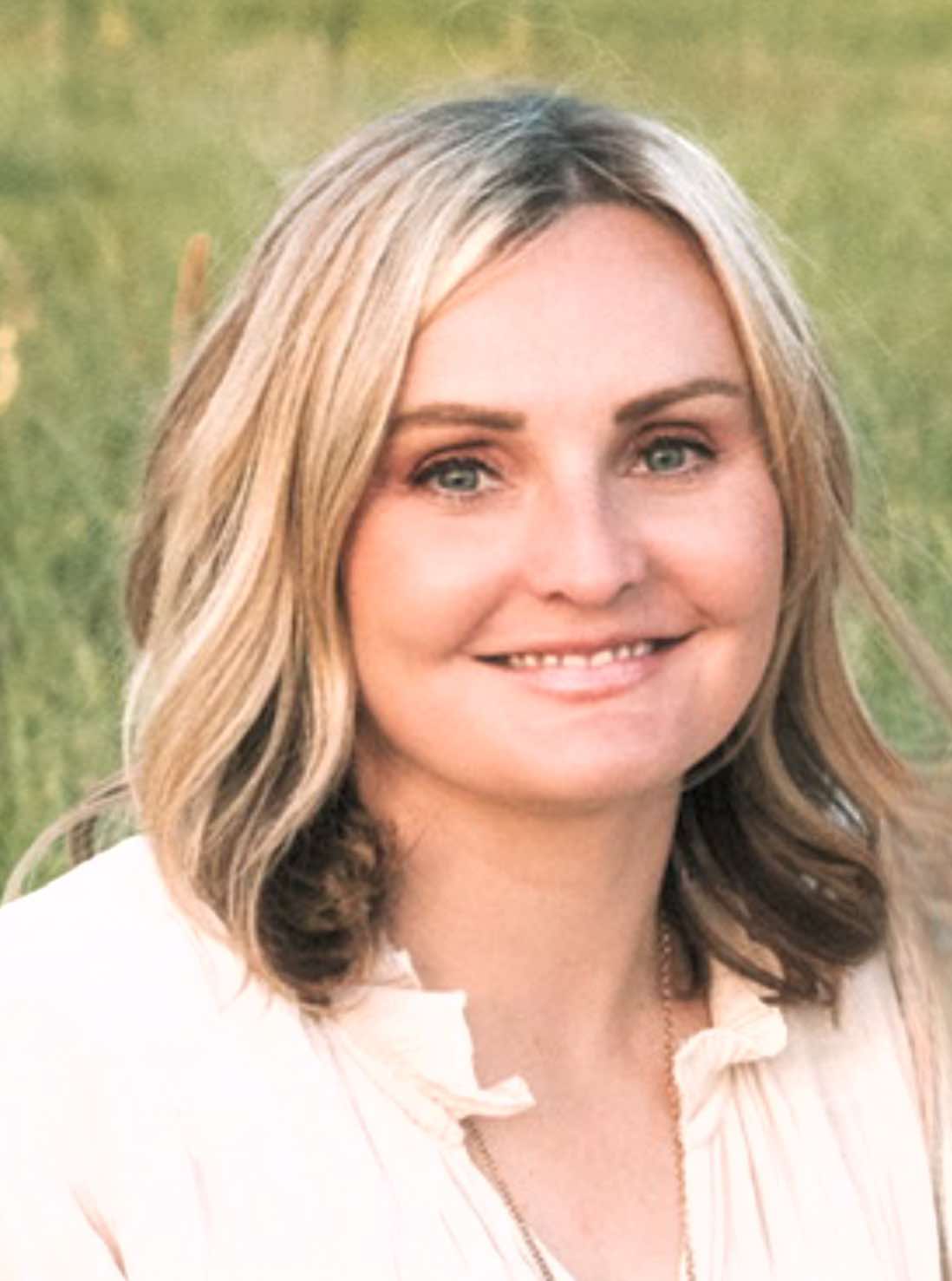
Headshot of Kami Pehrson.

Kami Pehrson

Kami Pehrson lives with her husband and five teenage children in Stansbury Park, Utah. She recently finished her master’s degree in English and creative writing and has written three novels—but is still trying to figure out what to do with them. She loves editing, reading, and playing word games on her phone. She also enjoys listening to audiobooks while half-heartedly doing Pilates in the living room.


    Filed Under: Articles, Creativity, Faith & Mindset Tagged With: authors, interview, research, Writing

    7 Ways To Help Readers Discover Your Books

    May 12, 2021 By LDSPMA 1 Comment

    By Karlene Browning

    When you publish your first book, you aren’t just putting a story out there. You are launching a brand and an identity that will travel with you over the course of your writing career. If you do it right, it will help lead readers to you in a natural and organic fashion. If you do it wrong, it will confuse readers and they will get lost on their way to finding you.

    While each of these tips has its own set of pros and cons, whys and wherefores, rules, and reasons to break the rules, this tip list will help your readers find YOU when they’re looking for a good book to read.

    1. Pick your name

    As your brand, your name needs to be unique enough to differentiate you from other authors with similar names. Do a Google search. If you happen to share a name with another author or a famous person, consider adding an initial, using a middle name, or using a less common pen name.

    When a reader finds an author they like, they will Google the name on the cover of the book. You want them to find you online wherever you are. Whether you’re Jane Doe, Jane S. Doe, or Jane Smith Doe, that is your brand and you need to use it on every book cover and on all your online author accounts.

    2. Claim your name

    Before your name is set in stone, make sure you can get it as a .com, a Google ID and gmail address, and on the social media platforms you prefer. You want identifiable and consistent name branding across as many platforms as possible.

    Here again, Google is your friend. If the .com is taken, adjust your name until you find a variation that you’re comfortable with, then grab the URL and social media account names as fast as you can. Even if you aren’t quite ready to publish, get them NOW!

    3. Avoid too many pen names

    There are several valid and legitimate reasons for having multiple pen names. Just know that for each name, you start all over from scratch to build a brand and platform. You’ll need a website, social media accounts, and emails for each one. Is it worth it?

    In most cases, differentiating genres is not a good reason to create a new pen name. Readers usually find you through the genre they like best. If they like you, they will give your other genres a try. A good website will let them know what to expect in each genre.

    The only time it truly serves you to use a second (or third) name is if one area of writing would offend established readers or damage your reputation. For example, if you write both Middle Grade and soft porn, use a pen name. Or if you write academic papers on quantum physics and Regency Romance, use a pen name or your academic peers will snicker behind your back.

    4. Get a website

    You need an online presence with a permanent URL and an easily searchable website or blog. (Facebook and Twitter are add-ons, not adequate author sites.) Unless you know you are only going to write one book, your URL should be your name (see tips 1 & 2), not your book title. Not only will a website help people find you, but it gives them something to link to when they want to share your books with their friends.

    While you can start with a free site, I recommend a hosted domain as soon as possible. Free sites can change policies or close down at any time. At the very least, point that URL from tip #2 to your free blog, and use that URL on business cards and book bios.

    5. Post your books on your site

    You would think this is one of those “duh” statements, but you would be surprised at how many author sites and blogs I go to that have absolutely no mention of their books. At all.

    Somewhere on your site, you need a tab or button that says BOOKS. A simple list of each book and/or series in suggested reading order is the minimum. Ideally, each book would have its own page with a large cover image, title, release date, publisher, ISBN #, genre category, description, and links to where the books can be purchased. Keep this information current!

    6. You need an About Page

    Readers want to know who you are, not just what you write. A good website always has an About page with a photo, a short professional bio that bloggers and news media can use, and perhaps a longer bio just for fun. It also needs to include links to all of your active social media sites and a way to contact you.

    Your photo should be a nice image that will clearly identify you everywhere. Use this same image on your Amazon, GoodReads, Facebook, Twitter, and all profiles where you are acting as your author identity. Even if you’re camera shy, you can come up with something.

    This isn’t to say you can’t change it up sometimes or use more casual photos on social media. The goal is to have your readers recognize you, no matter where they find you.

    7. Email

    You MUST have a way for people to contact you. I can’t tell you how many times I’ve tried to reach an author for an interview, presentation, or tell them they’ve won an award, only to discover there is no way to contact them.

    As to the email address itself, no self-respecting author would use missfancypants@whatever.com. If at all possible, it should be your name as it appears on your books, JaneDoe@whatever.com.

    These seven simple tips will make it easier for readers, new and old, to find your newest releases.

    Karlene Browning is a publisher, editor, typesetter, and book designer at www.Inksplasher.com

    Filed Under: Articles, Marketing, Professional Skills, Publishing Tagged With: authors, book, book marketing, Karlene Browning, Latter-day Saint Publishing and Media Association, LDS, LDSPMA, social media tips, writers

    Announcing the Praiseworthy Awards for Emerging Authors!

    April 21, 2021 By nbay Leave a Comment

    By Katie Wiscombe, LDSPMA Awards Committee Member   

    How are you like the following people: Gerald Lund, Sarah Eden, or even Brandon Sanderson? I’m sure most of you would say you are nothing like these amazing Latter-day Saint authors. But really, you would be wrong. You probably have several things in common, but I’m looking for just one. Any guesses? No? Well, let me tell you.

    You are like these creators simply because they, too, were once unknown authors with the drive, discipline, and talent to take that first step. The first step for you can be right here. If your dreams are tied up in telling the stories rolling around in your head, you’re in the right place. Let me explain.

    In conjunction with our annual Latter-day Saint Publishing & Media Association conference held in October, we offer an opportunity for previously unpublished authors to submit their work to the Praiseworthy Award for Emerging Authors contest. This is a writing contest specifically for members of The Church of Jesus Christ of Latter-day Saints who are unpublished and unagented. And this opportunity has a wonderful prize waiting at the finish line for the winners: feedback from the industry professionals at Eschler Editing! What?! Truly, the chance to have a professional in the field help you on your way is worth that first step.

    The Details

    Now for a little housekeeping. We open for submissions for all genres on May 1, 2021. Fiction submissions are due by June 1, 2021. Nonfiction submissions are DUE by June 15, 2021. 

    You are welcome to submit up to 2,500 words from any genre and on any topic you would like. Picture books to epic fantasy. Romance to memoir. Historical fiction or nonfiction. Poetry or essays. Do you have a manuscript on how to make goat cheese? Or maybe you have a more serious subject matter that needs to be heard. Send it over.  The sky’s the limit. All you need to do is click here for additional information on submitting your manuscript.

    Winners

    Winners will be announced at the conference in October. Besides the feedback from Eschler Editing, all winners and honorable mentions will receive a certificate and a digital badge to post on their social media pages or website. 

    The Invitation

    I hope you follow that voice in your head that encourages you to take that first step. It’s not impossible to think that you could someday be in the same place as those incredible authors above. Nelson Mandela shared some inspired insight on the subject when he said, “It always seems impossible until it’s done.” So what are you waiting for? Dust off your manuscript, click the link, and submit your 2,500 words. Impossible no more–you just got it done. One step closer to your dream becoming a reality. 

    We can’t wait to hear your stories!

    Filed Under: Articles, LDSPMA News Tagged With: authors, Brandon Sanderson, Eschler Editing, essays, fantasy books, fiction writer, Gerald Lund, Katie Wiscombe, Latter-day Saint Publishing and Media Association, LDS, LDSPMA, LDSPMA annual conference, memoir, nonfiction writer, picture books, poetry, Praiseworthy Awards, romance books, Sarah Eden

    Primary Sidebar

    Recent Articles

    Young woman writes with a quill.

    Working Through Creative Block

    By Mariah K. Porter – “Being stuck doesn’t mean I’m failing. It only means I have more to learn and new ways to collaborate with the Divine.”

    Five Ways to Get Your Scrooge on This Christmas

    By KaTrina Jackson – “Be like Scrooge and let go of your past this Christmas.”

    A young man paints on a canvas.

    A Complete Life of Color

    By Aidan Pehrson -“Christ is my ultimate inspiration for creating art and living fully. He is the first creator and encourages us to be creators as well.”

    Recent Podcast Episodes

    Popular Articles

    A senior couple walking down a quiet lane

    Sometimes Things Do Work Out

    By Steve Dunn Hanson – We can choose how any situation or circumstance we find ourselves in will ultimately affect us. We can literally shape the results of all our experiences.

    Cussing & Creating: 3 Reasons Why You Shouldn’t (& Should!) Use Profanities in Your Writing

    By Lizzy Pingry – Writers must evaluate the way they express themselves: how does our use of language and its profanities build or destroy our stories? 

    Portrait of a Painter: The Journey of Latter-day Saint Artist Dan Wilson

    By Howard Collett – “God is in the very details of our work. That doesn’t just apply to Christian artists working on temple paintings, but it applies to anyone in any career. God can answer specific questions to help us be better providers, better employees, better employers, better husbands or wives, or wherever we need help.” – Artist, Dan Wilson

    More Articles

    Showing Versus Telling to Write Compelling Dialogue

    By Emma Heggem – Don’t waste time with dialogue that isn’t going to strengthen your story. Focus on the moments that readers truly need to hear (read) about and you will end up having a much easier time keeping them interested and invested.

    The Creation of Utah’s Book Marketing Symposium 2018

    By James Beers – No matter how many Facebook friends I garnered, how many blog and social media posts I put up, or how many freebie promos I offered, book sales would not increase. There was something about marketing that I was missing, and I was bound and determined to figure it out. That’s where the idea for Utah’s 2018 Book Marketing Symposium started.

    A headshot of Sister Reyna Aburto.

    A Conversation with Reyna Aburto

    By Reyna Aburto – “If we are trying to glorify our Father in Heaven and our Savior, they will allow us to grow and to learn even more.”

    Footer

    • Email
    • Facebook
    • Instagram
    • LinkedIn
    • YouTube

    Copyright © 2026 LDSPMA. All Rights Reserved. LDSPMA is not endorsed by nor affiliated with The Church of Jesus Christ of Latter-day Saints.