• Skip to main content
  • Skip to primary sidebar
  • Skip to footer

LDSPMA

Empowering Latter-day Saints to spread light and truth by connecting them at the intersection of faith, creativity, and professional skill

  • Conference
    • 2025 Conference Recordings
      • Purchase Recordings Access
      • Grid Schedule
    • Exhibitors & Sponsors
    • FAQs
    • Volunteer
    • Past Conferences
      • 2025 Conference
        • Sessions
        • Workshops
        • Awards Gala
        • Internship Fair
        • LDSPMA’s Got (Secret) Talent!
      • 2024 Conference
        • Sessions
        • Workshops
        • ZIFF Networking Dinner
        • Schedule
      • 2023 Conference
        • Sessions
        • Workshops
        • Schedule
        • Sponsors & Vendors
      • 2022 Conference
        • Sessions
        • Workshops
        • Schedule and Maps
        • Photo Gallery
      • 2021 Conference
        • Sessions
        • Workshops
        • Schedule and Maps
      • 2020 Conference
        • Sessions
        • Workshops
        • Schedule
      • 2019 Conference
      • 2018 Conference
      • 2017 Conference
      • 2016 Conference
  • Membership
    • Email Sign Up (Free)
    • Monthly Zoom Discussions (Free)
    • LDSPMA NextGen
    • University Chapters
    • Facebook Group
  • Programs
    • Master Classes (2026)
    • Mentoring Program
  • Podcast
    • Watch
    • Listen
      • Listen on Apple Podcasts
      • Listen on Spotify
      • Listen on Buzzsprout
    • Called to Create Conversations
  • Articles
    • All Articles
    • Faith & Mindset
      • Gospel Principles
      • Creativity
      • Productivity
    • Craft Skills
      • Writing
      • Media, Film & Theater
      • Podcasting & Speaking
      • Music
      • Fine Art
    • Professional Skills
      • Editing
      • Publishing
      • Business
      • Cultural Diversity
      • Marketing
  • Awards
    • Praiseworthy Awards
    • Spark Awards
    • Lifetime Achievement Awards
    • Apply to Be an Awards Judge
  • About
    • Mission
      • LDSPMA in the Media
      • Success Stories
      • Viewpoint on LDSPMA
    • Volunteers
      • Volunteer Year-Round
      • Volunteer at the Conference
      • Apply to Be a Presenter
      • Apply to Be an Awards Judge
      • Resources for Current Volunteers
    • Policies
      • Nurturing a Caring Community
      • Political Neutrality Policy
      • Antiharassment Policy
      • Harassment Reporting Form
      • Children Policy
    • Contact US
  • Support LDSPMA
    • Donate
    • Volunteer

So You’ve Written a Book. What Now?: 3 Steps from Lisa Mangum

July 17, 2019 By LDSPMA 1 Comment

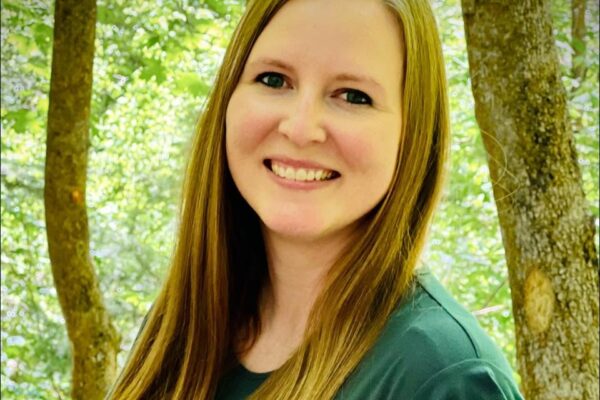
By Lisa Mangum, Managing Editor at Shadow Mountain

So you’ve written a book. Now what? Well, after revising it and polishing it and reading it through one more time, you’re probably ready to send your book to a publisher. Here are three things to get you started on that journey.

1. Do your research. Not every publisher publishes everything, so make sure the publishing house you’re submitting to is actually looking for the type of thing that you write. A house that doesn’t publish children’s picture books will not publish your children’s picture book, no matter how well written it is. You’ll need to research publishers online, look at their backlist titles, and perhaps even follow them or their editors on social media.

Another way to narrow down your list of publishers is to look at other books in your genre. In addition to looking at who the publishers are, check the acknowledgments page, since authors often thank their agents and editors by name.

2. Follow the guidelines. In your research, you’ll likely have found submission guidelines posted somewhere on each publisher’s site. The best thing to do once you’ve read through the guidelines is to follow them exactly. If the guidelines specify to submit 10 pages, do that. If they say to send the pages in the body of an email (as opposed to an attachment), do that. If they say you must have an agent in order to submit, get an agent.

As a general rule, agents, editors, and publishers like to see manuscripts formatted with the following specs: double spacing, 12-point Times New Roman font, and one-inch margins.

3. Write a query letter. Writing a query letter is one of the hardest steps in the process, but the document is required by agents and editors alike. There are a lot of resources online that can help you learn how to write a query letter (a great place to start is AgentQuery.com), but here’s a simple overview of how to structure your first draft:

A basic query letter has three paragraphs. The first is the “hook”—the premise of your story summarized in just one or two sentences. The second paragraph is where you can elaborate on the storyline, introducing secondary characters, plot points, and themes. The final paragraph is a short bio of who you are and why you wrote the book you’re pitching. Somewhere in the letter, you also need to mention the book’s title, genre, and approximate word count.

It can be hard to distill the entire plot of your book in one paragraph, so I recommend focusing on the four Cs: character, conflict, choice, and consequence. Introduce me to your main character. Explain the conflict he or she is facing—the goal that needs to be accomplished and some of the obstacles that are standing in the way. Focus on the choice your main character has to make at the end of the story. Make it clear what is at stake for the main character by presenting the consequences of that choice.

Finding a publisher for your book can feel like a marathon at times, so don’t panic if the path feels long and a bit unpredictable. Just keep moving forward and working on your craft, and you’ll find the path that is right for you.

Filed Under: Articles, Marketing, Publishing

You May Also Like

Young woman writes with a quill.

Working Through Creative Block

By Mariah K. Porter – “Being stuck doesn’t mean I’m failing. It only means I have more to learn and new ways to collaborate with the Divine.”

Five Ways to Get Your Scrooge on This Christmas

By KaTrina Jackson – “Be like Scrooge and let go of your past this Christmas.”

A young man paints on a canvas.

A Complete Life of Color

By Aidan Pehrson -“Christ is my ultimate inspiration for creating art and living fully. He is the first creator and encourages us to be creators as well.”

Writing with Faith: An Interview with LDS Author Gale Sears

By Kami Pehrson – “When I dedicate my work and consecrate it to His purposes, I must include Him in the process.” – Gale Sears

Reader Interactions

Comments

  1. Mark T. Saunders says

    December 9, 2022 at 3:43 PM

    What about non fictional or autobiographies? How does one just begin the process and to whom should he speak? That is to begin to publish as a first time author?

    Reply

Leave a Reply Cancel reply

Your email address will not be published. Required fields are marked *

Primary Sidebar

Recent Articles

Young woman writes with a quill.

Working Through Creative Block

By Mariah K. Porter – “Being stuck doesn’t mean I’m failing. It only means I have more to learn and new ways to collaborate with the Divine.”

Five Ways to Get Your Scrooge on This Christmas

By KaTrina Jackson – “Be like Scrooge and let go of your past this Christmas.”

A young man paints on a canvas.

A Complete Life of Color

By Aidan Pehrson -“Christ is my ultimate inspiration for creating art and living fully. He is the first creator and encourages us to be creators as well.”

Recent Podcast Episodes

Popular Articles

A senior couple walking down a quiet lane

Sometimes Things Do Work Out

By Steve Dunn Hanson – We can choose how any situation or circumstance we find ourselves in will ultimately affect us. We can literally shape the results of all our experiences.

Cussing & Creating: 3 Reasons Why You Shouldn’t (& Should!) Use Profanities in Your Writing

By Lizzy Pingry – Writers must evaluate the way they express themselves: how does our use of language and its profanities build or destroy our stories? 

Portrait of a Painter: The Journey of Latter-day Saint Artist Dan Wilson

By Howard Collett – “God is in the very details of our work. That doesn’t just apply to Christian artists working on temple paintings, but it applies to anyone in any career. God can answer specific questions to help us be better providers, better employees, better employers, better husbands or wives, or wherever we need help.” – Artist, Dan Wilson

More Articles

A pencil and a piece of paper

The Art (and Professional Judgement) of Editing

By Devan Jensen – Editing is both an art and a science. The science part involves technical rules—grammar, punctuation, and so forth…But editing is an art too. It takes a careful eye and a discerning mind to decide how much to change, taking into account the reading audience, the publication’s purpose, and the author’s personality.

A Single-Word Vision

By Lessa Harding – “Choose a single-word vision.” This idea, introduced to me in an LDSPMA workshop by Michelle McCullough, is simple enough that I don’t feel overwhelmed and profound enough to change the way I think about “becoming.”

A magnifying glass showing words.

Common Publishing Terms to Know

By Breanna Call – “As with any trade, there is a plethora of jargon. But there’s no need to be overwhelmed or confused as you step into your writing journey. We’ve got you covered.”

Footer

  • Email
  • Facebook
  • Instagram
  • LinkedIn
  • YouTube

Copyright © 2026 LDSPMA. All Rights Reserved. LDSPMA is not endorsed by nor affiliated with The Church of Jesus Christ of Latter-day Saints.